
AB Testing
5 Experiments Jewelry Brands Should Run
Jewelry is high stakes. Customers take their time. They're often buying for someone else. And when the price tag climbs, trust becomes everything.
Jewelry is high stakes. Customers take their time. They're often buying for someone else. And when the price tag climbs, trust becomes everything.
These aren't impulse purchases. They're considered decisions with emotional weight behind them. That changes what your data can tell you about opportunities worth exploring.
The experiments below aren't prescriptions. They're signals that often indicate opportunities worth investigating. Your data will tell you which ones matter for your specific situation.
1. Gift Packaging and Presentation Options
Your data signal: Seasonal spikes around gifting holidays
Valentine's Day. Mother's Day. Christmas. Your traffic tells you when people are buying gifts. If you're seeing strong seasonal patterns, this could indicate an opportunity to explore how packaging affects purchase behavior.
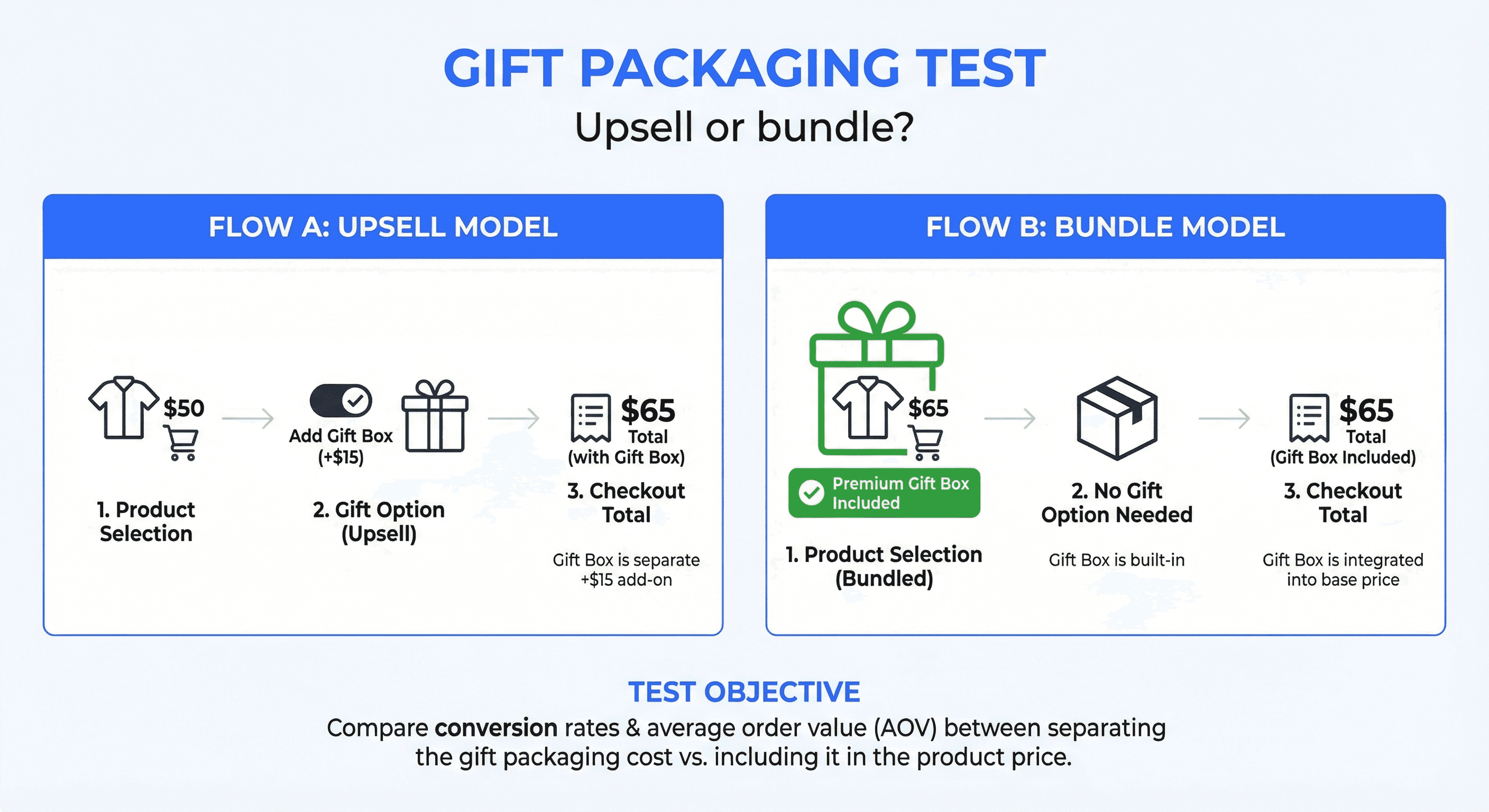
Gift packaging is an obvious upsell. But the execution matters. Is it better to offer premium packaging as an add-on? Or include it by default and bake the cost into the price?
What you might explore: Gift packaging upsell at checkout vs included by default
Track this to understand: Profit per visitor, upsell conversion
Including packaging might increase perceived value. Offering it as an upsell might increase AOV. Exploring both reveals which drives more profit for your customers.
2. Financing and Payment Plans for High-Ticket Pieces
Your data signal: High engagement but low conversion on expensive SKUs
If people spend time on your $2,000 pieces—looking at images, reading details—then leave without buying, this pattern often points to something worth investigating.
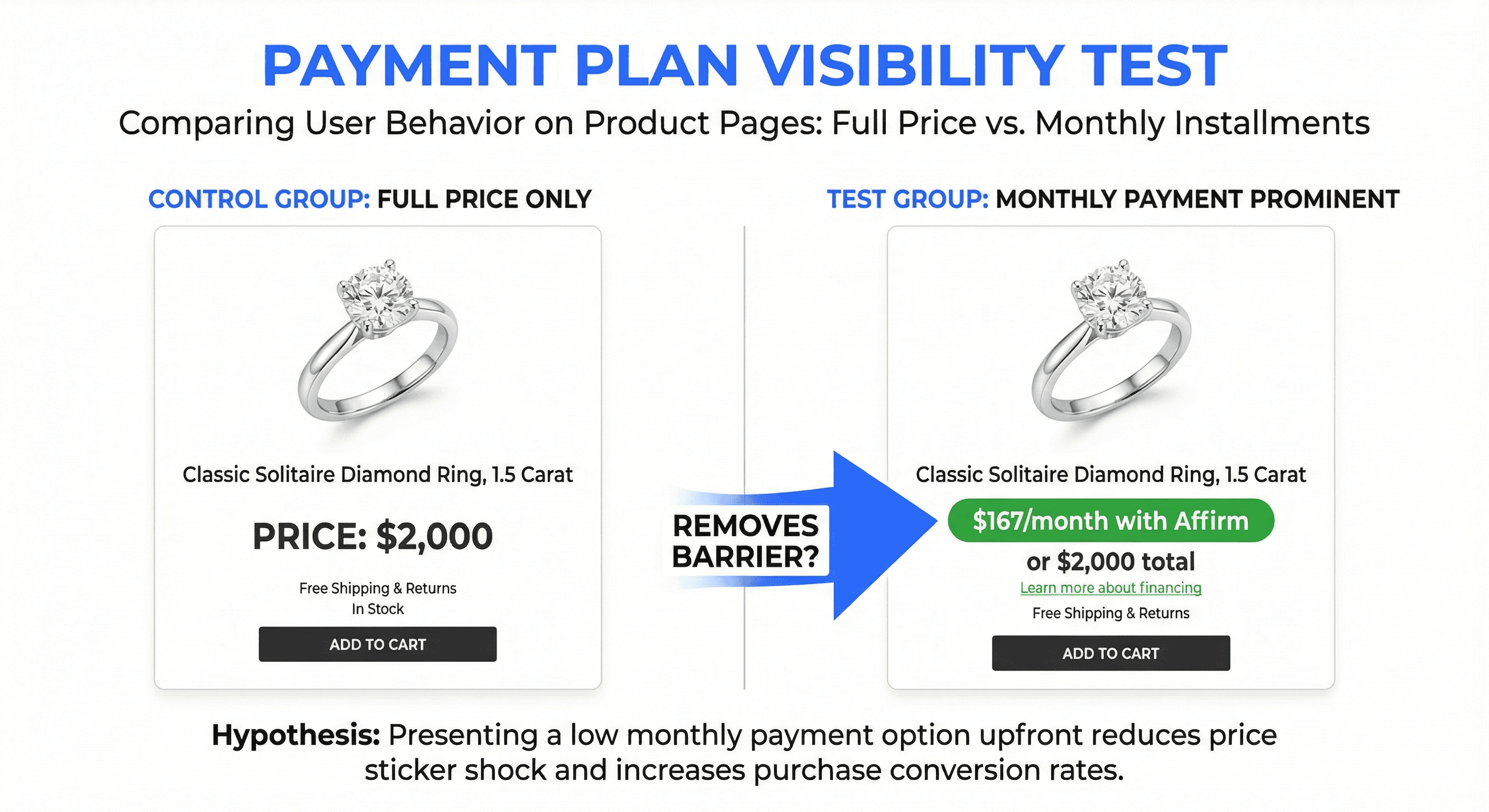
Price isn't necessarily the problem. Payment timing might be. A customer who can't spend $2,000 today might happily pay $167 a month for twelve months.
What you might explore: Affirm/Klarna prominence on product page vs checkout only
Track this to understand: Profit per visitor, conversion by price tier
If financing is only visible at checkout, customers might abandon before they ever see the option. Optimizing checkout often means surfacing key information earlier. Exploring earlier placement could reveal whether timing is the real barrier.
3. Customization and Engraving Upsells
Your data signal: Gift purchases or engagement ring category traffic
Personalization transforms jewelry from a product into a keepsake. An engraved date or initials makes it irreplaceable.
If you're seeing strong gift purchase signals or engagement ring traffic, this could indicate an opportunity to explore when customization works best. On the product page, it's part of the consideration process. After purchase, it might feel like an afterthought.
What you might explore: Customization option on product page vs post-purchase offer
Track this to understand: Profit per visitor, upsell rate
Some customers want to configure everything upfront. Others prefer to complete the purchase first. Exploring different timing reveals which approach resonates with your buyers.
4. Authenticity and Certification Messaging
Price testing 101: Understanding how to explore pricing without risking your brand.
Your data signal: Time on page for high-value items
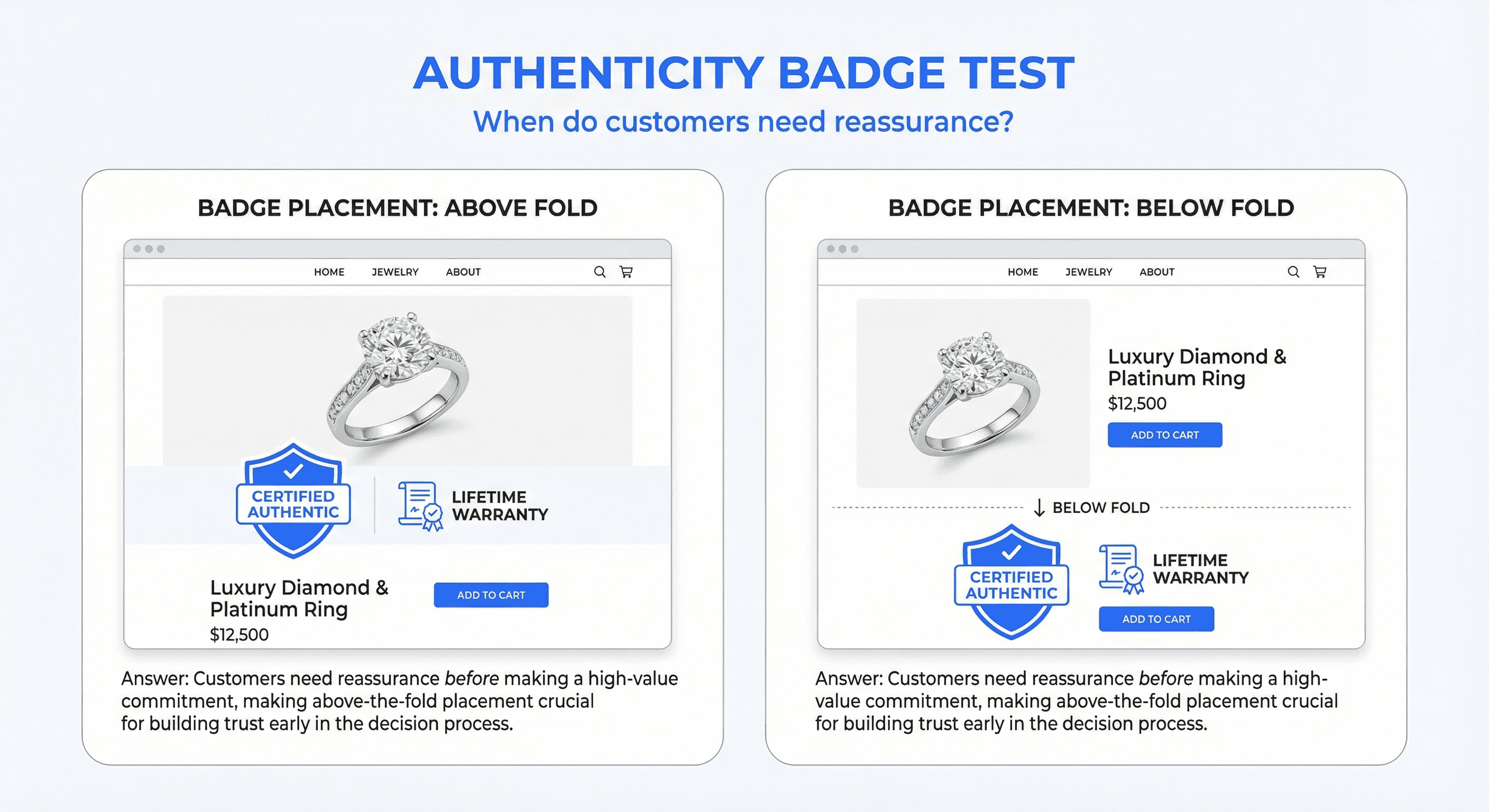
When someone's spending serious money, they want reassurance. Authenticity certificates, quality guarantees, and brand credentials matter more here than in any other category.
If you're seeing extended time-on-page for high-value items, this could indicate customers seeking trust signals before committing. The question is where those signals should live.
What you might explore: Certification badges above vs below fold
Track this to understand: Profit per visitor, conversion
Trust signals are only valuable if customers see them at the moment of doubt. Content testing can help you find that moment. Exploring placement helps you find that moment for your specific products.
5. Seasonal vs Evergreen Pricing
Your data signal: Price sensitivity during promotional vs non-promotional periods
Jewelry has natural gifting seasons. Discounting during those windows might capture customers who wouldn't buy otherwise. But it also trains customers to wait for sales.
If you're seeing different conversion patterns during promotional vs. non-promotional periods, this pattern might be worth investigating. Some brands maintain consistent pricing year-round. Others lean into seasonal promotions.
What you might explore: Consistent pricing vs holiday discounts. Learn how to set this up with price testing.
Track this to understand: Profit per visitor, full-price purchase rate
A discount might win on holiday revenue. But does it hurt full-price sales the rest of the year? Exploring this means measuring the full picture, not just seasonal performance.
Let Your Data Guide What's Worth Testing
Gift purchases have different needs than self-purchases. Exploring those differences can reveal distinct opportunities.
High-ticket items need trust signals and payment flexibility. The question is where and when—your data can point you toward the answer.
Discounting has second-order effects worth investigating. What happens after the promotion ends matters as much as holiday performance.
Your data tells you what to test. These signals are starting points for exploration, not a checklist to follow blindly. What patterns are you seeing in your store?
AB Testing
AB Testing
AB Testing


