
Discounts
How Often Should I Run Promotions?
How often should I run sales and promotions? Finding the right frequency without training customers to wait.
Promotions are one of the few levers that work immediately.
Run a sale, watch the orders roll in. There's no waiting for SEO to kick in or ads to optimize. It just works.
That's also what makes them dangerous. Because the short-term feedback is so positive, it's hard to see the long-term cost until it's already baked into customer behavior.
The question isn't whether promotions work. It's whether you're building a customer base that only responds to them.
The Signal That Matters
Pull up your repeat customer data. Filter for customers who've purchased at least three times.
Look at when they purchased.
If those purchases cluster around promotional periods, you've trained them. They know that if they wait, a discount is coming.
This isn't a failure. It's a natural response to predictable patterns. Your customers are smart. They learned what you taught them.
Full-Price Purchase Rate
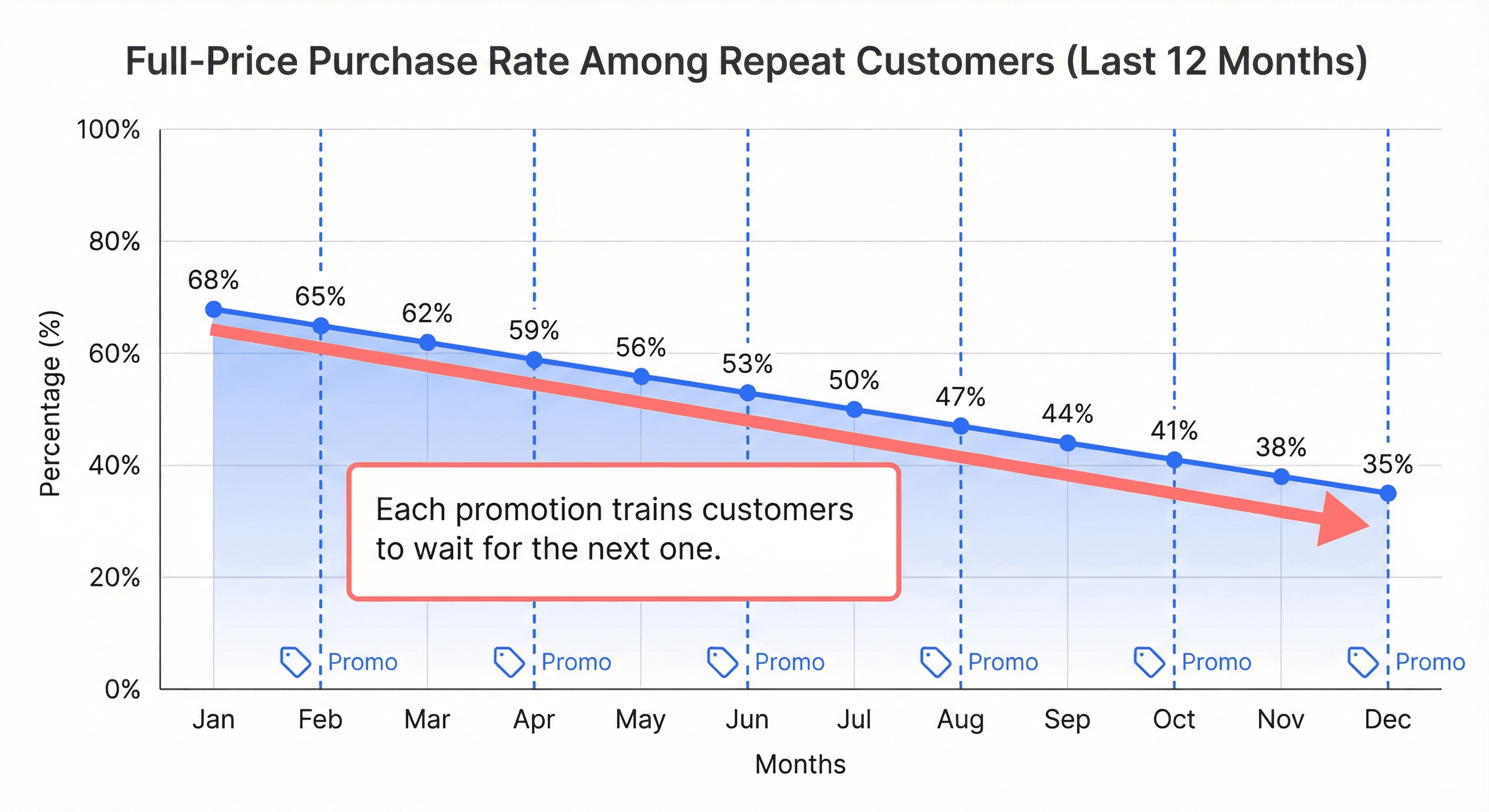
Here's the metric worth tracking: full-price purchase rate among repeat customers.
Is it increasing, flat, or declining over the last 6 months?
If it's declining while your promotional calendar stayed busy, that's your signal. You're converting customers, but you're converting them into discount-dependent buyers.
Now compare profit per visitor during promotional periods versus non-promotional periods. Not revenue. Profit.
A busy promotional calendar might show higher total revenue. But if profit per visitor during sales is significantly lower than during full-price periods, you're working harder for less.
Frequency Patterns
There's no universal rule for how often to run promotions. But there are patterns worth noticing.
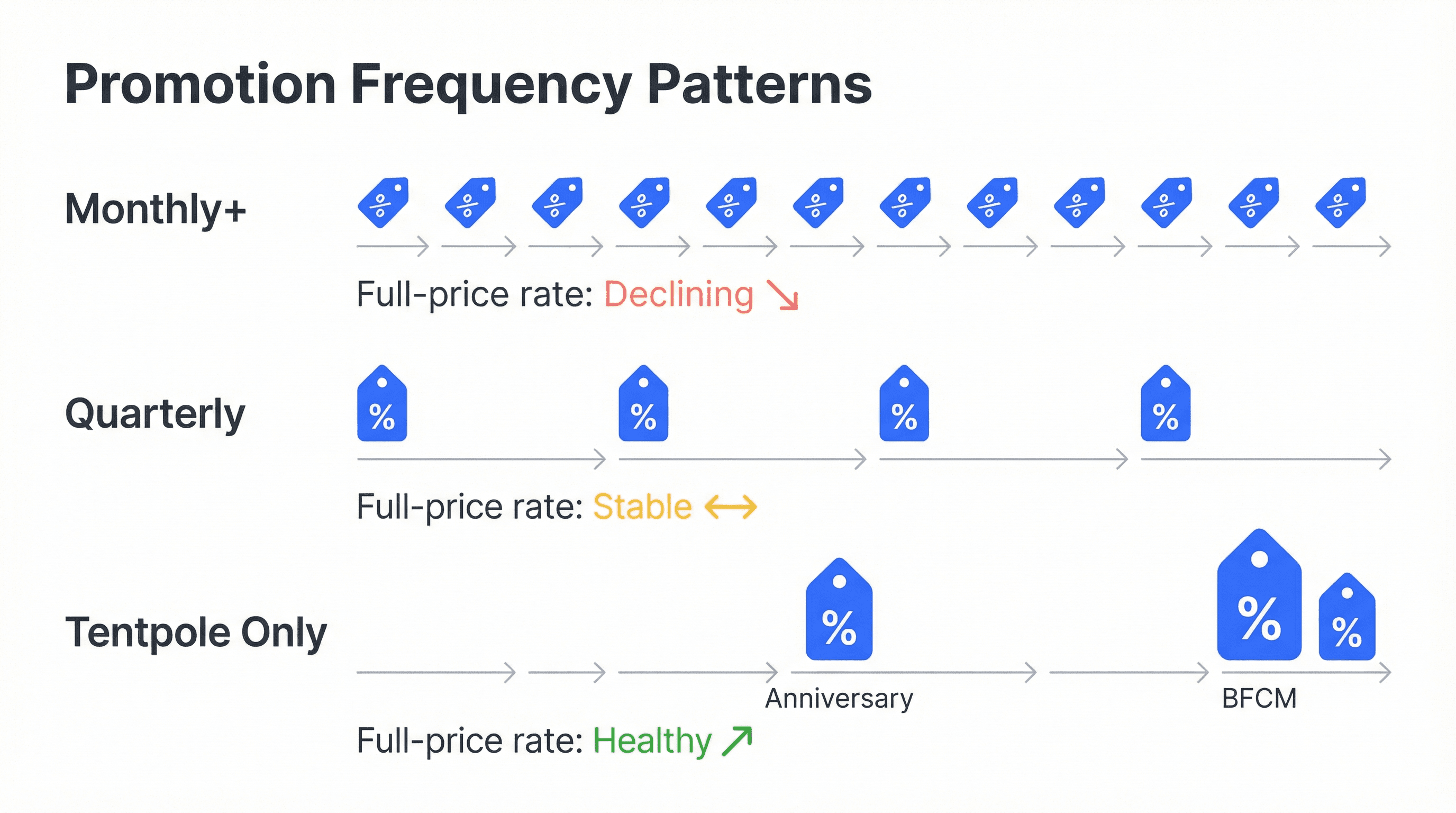
Brands that run promotions monthly or more often see declining full-price purchase rates within 6-12 months. The customers adapt.
Brands that run promotions quarterly tend to maintain healthier full-price purchasing behavior. The gap between sales is long enough that waiting feels like a real trade-off.
Brands that run promotions around tentpole moments only (BFCM, brand anniversary, seasonal launches) usually preserve pricing integrity the best. Customers don't expect discounts because they're genuinely rare.
How to build better BFCM offers without the chaos. Structure promotional offers that don't erode your margins.
The trap is that more frequent promotions feel like they're working. Short-term, they are. Revenue spikes. Orders come in.
But you're borrowing from future full-price purchases. Customers who would have bought next week at full price now wait because they've learned the pattern.
Testing Before You Change
If you're already running frequent promotions and want to pull back, don't go cold turkey. Test it.
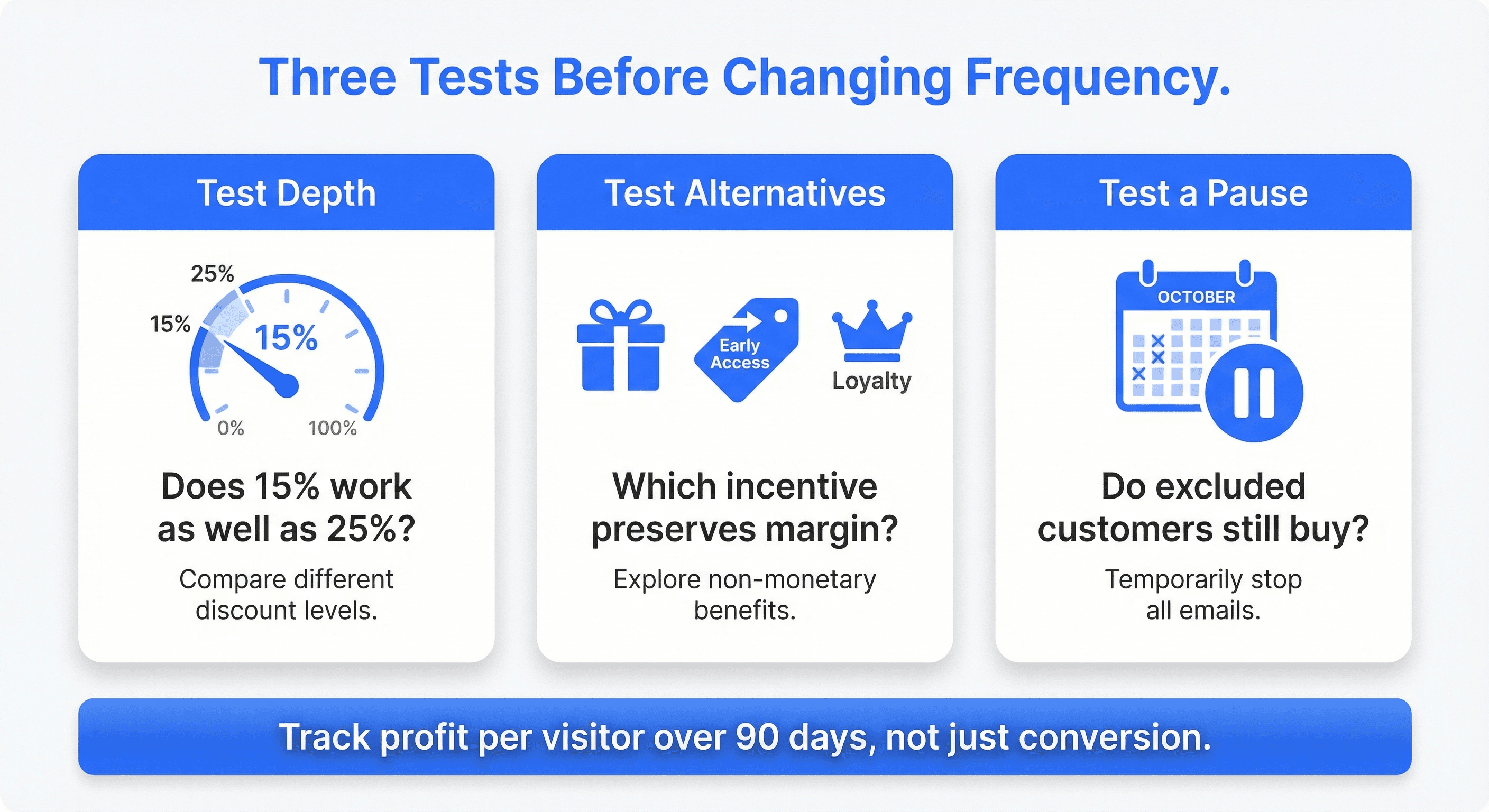
Test promotion depth first. Before reducing frequency, test shallower discounts. If 15% converts nearly as well as 25%, you've found margin you can protect. This is your Minimum Effective Discount. Learn how to set this up with price testing.
Test alternative incentives. Split your audience. One group gets percentage discounts. Another gets early access to new products. Another gets a gift with purchase.
Track profit per visitor across these groups over 90 days, not just the promotion period. The percentage discount group might convert faster. But do they come back at full price?
Test a promotional pause. Pick a segment of your audience. Exclude them from your next two promotional campaigns. Compare their behavior to the group that received promotions.
If the excluded group still purchases at similar rates but at higher margins, you've learned something important.
Alternatives That Don't Train Waiting
The goal isn't to never run promotions. The goal is to build incentive structures that don't teach customers to wait.
Loyalty programs reward purchase history, not timing. Customers earn toward future value rather than demanding immediate discounts.
Early access creates urgency without discounting. Your best customers get first dibs on new products or restocks.
Gift with purchase adds perceived value without changing the price point. A $5 item that feels worth $25 creates powerful value perception without margin compression. You can set these up using offer modifications.
Bundles increase AOV while offering modest savings. Customers feel like they're getting a deal. You're increasing units per order.
The Question Behind the Question
"How often should I run promotions?" isn't really a frequency question.
It's a customer behavior question.
What's the long-term profit per visitor for customers acquired through discounts versus customers acquired at full price? If you don't know that number, you're guessing about frequency.
Run the analysis. Track it over 6-12 months. Let the data tell you what your customers actually respond to.
And if the data says your promotional calendar is creating discount dependency? Now you have something specific to test against.
Ready to see how your promotional strategy affects long-term profitability? Let's talk about testing what actually works.
Price Testing
Ecommerce Strategy
Discounts


