
Ecommerce Strategy
Is Your Conversion Problem Actually a Retention Problem?
When sales dip, the reflex is to chase conversion rate. But a conversion win built on customers who never come back is really a retention problem in disguise. Here's how to tell the difference, and what to test once you know.

Carlos Trujillo

When sales feel soft, the reflex is to chase conversion rate. Redesign the product page, tighten the checkout, test a new offer. That's a reasonable goal, and a higher conversion rate is usually worth having. The trap isn't lifting conversion. It's lifting it by pulling in the wrong customers, shoppers who convert once for a deal and never come back. When that happens, the number on your dashboard climbs while the health of your business quietly slips, and what looks like a conversion win is really a retention problem in disguise. The fix is to measure who you're acquiring, not just how many convert. Here's how to tell the difference.
A Higher Conversion Rate Isn't Always a Better One
Raising conversion is a good goal. More of the people who land on your site turning into buyers is almost always worth it. The catch is that not every tactic lifts conversion the same way. Some raise it by changing who buys, not just how many.
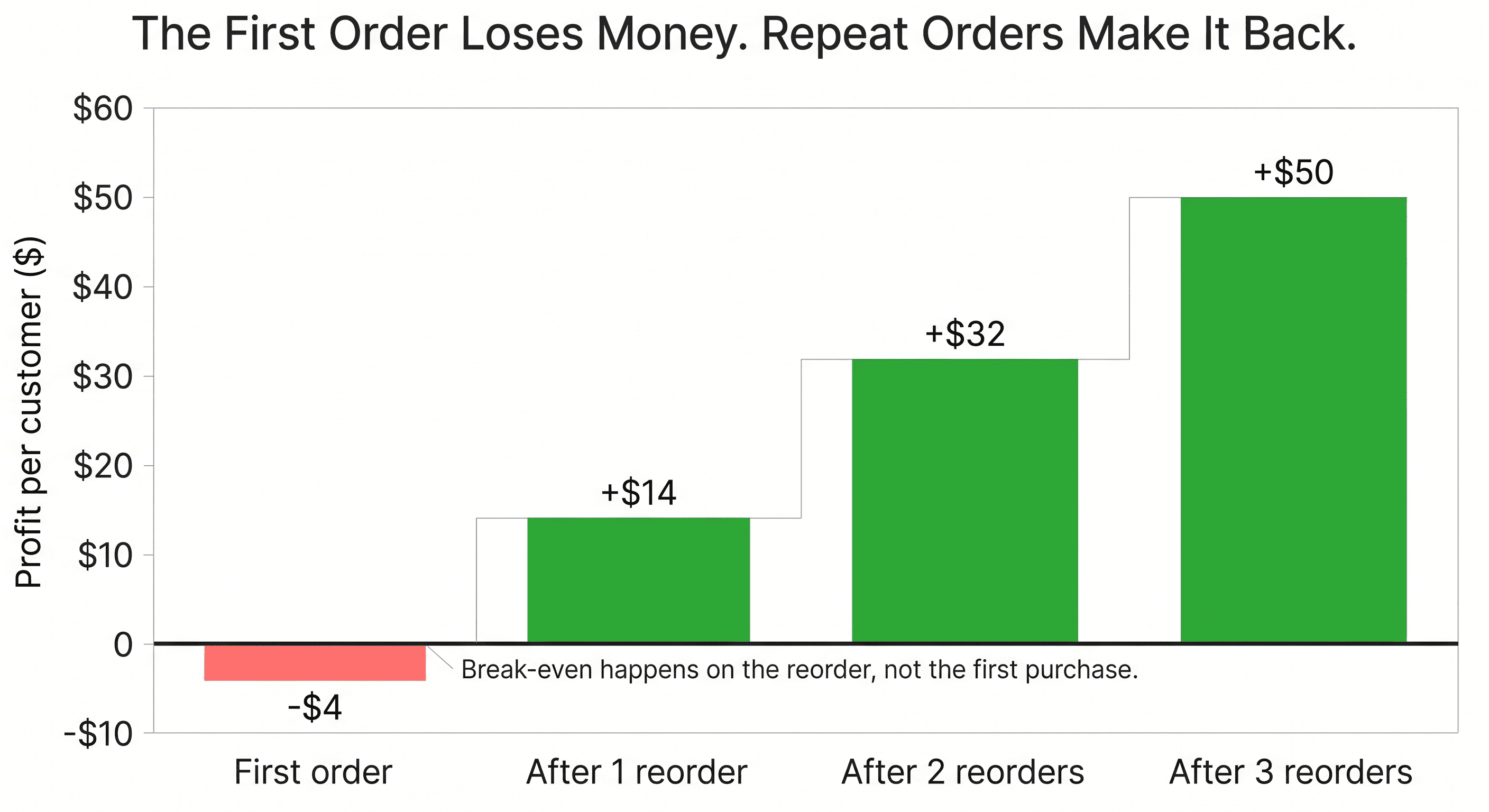
That matters because of how acquisition math works. If you're spending to acquire customers at close to breakeven on the first order, betting on repeat purchases to make the relationship profitable, then everything rides on those repeat purchases happening. A tactic that boosts first-purchase conversion by pulling in deal-driven, one-and-done shoppers can leave you worse off than before. You've added conversions and subtracted customer quality at the same time.
So the more useful question isn't "how do I convert more visitors?" It's "am I converting the right ones?" A conversion win built on customers who never come back isn't really a conversion win. It's a retention problem you haven't measured yet.
How to Tell Which Problem You Have
You don't have to guess. Your store already has the data.
Start with repeat behavior. What share of your revenue comes from returning customers versus first-timers? How long is the gap between someone's first and second order, and how many never place a second one at all? If you group customers by the month they first bought, how much of each group is still ordering 60, 90, or 120 days later? A cohort that drops to almost nothing after the first purchase is a retention signal, not a conversion one.
Then get clear on the money side. Whether that means asking your finance team or pulling up your own numbers, you want to know your real payback period, and whether you're acquiring customers at a loss you expect repeat orders to cover. That tells you where the bigger opportunity sits. A store with healthy repeat revenue but soft traffic conversion has real room to grow at the top of the funnel. A store that converts fine yet watches customers disappear after one order has its upside in the second purchase and beyond, and pushing harder on first-order conversion alone won't get it there.
When a Conversion Win Is Actually a Retention Loss
Here's where it gets tricky. The two problems aren't just separate. Sometimes the work you do on one quietly damages the other.
A quick note on measurement before going further. It's easy to celebrate a jump in conversion rate without checking what happened to average order value or margin underneath it. That's why profit per visitor is the number to watch for anything you test. It rolls conversion, order value, and margin into a single figure, so a conversion "win" that quietly shrank your margins has nowhere to hide.
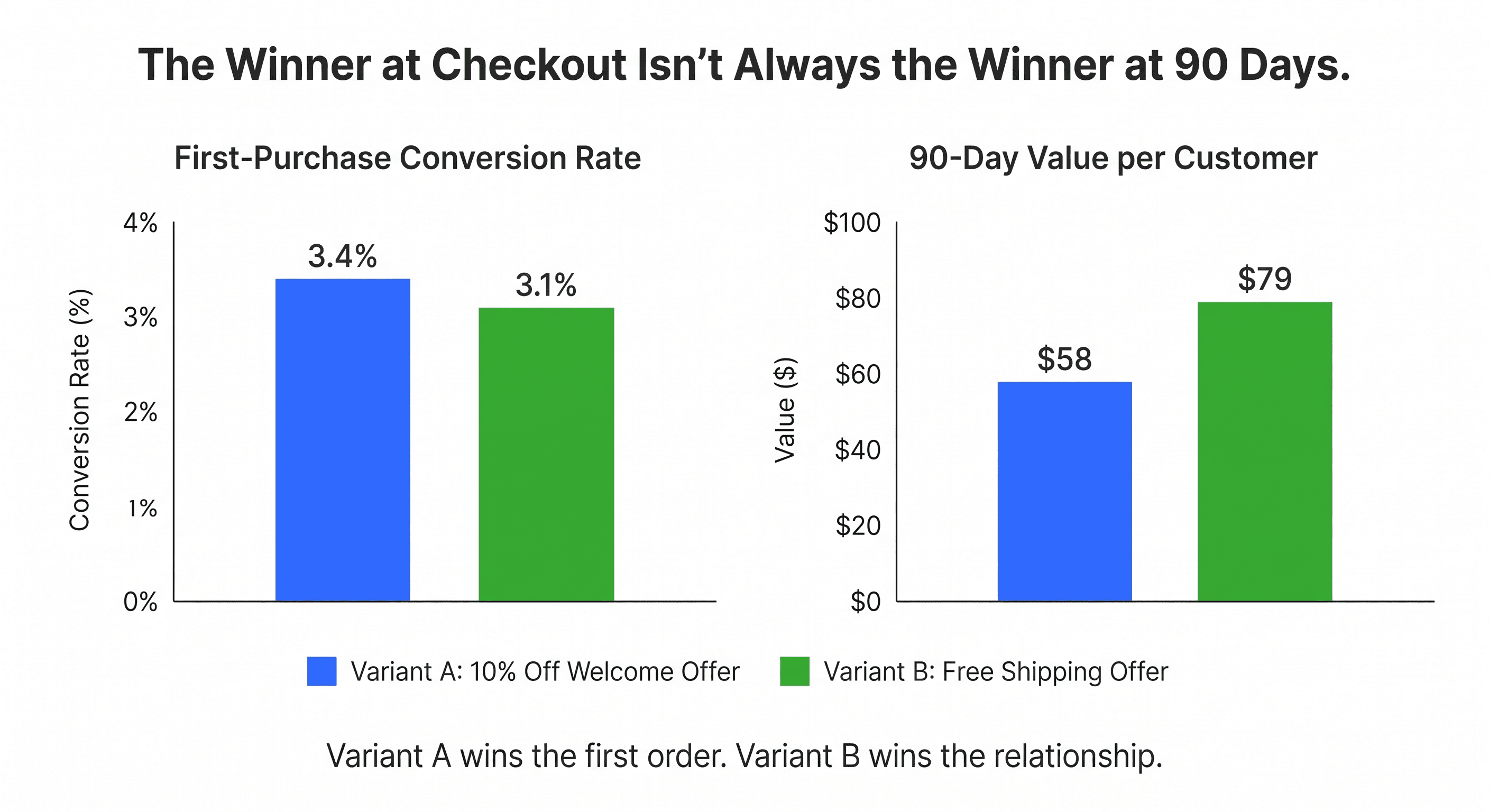
Profit per visitor at the moment of purchase tells you a lot, but on its own it can't tell you whether those customers come back. Say a 10% off welcome offer lifts both first-purchase conversion and profit per visitor. It can still be pulling in deal-driven shoppers who buy once for the deal and never return at full price. A free-shipping offer might look slightly weaker up front while attracting customers who reorder at a much higher rate. If you only measure the purchase moment, the discount looks like the winner and you never see the retention it cost you.
So any time a test could change the kind of customer you bring in, not just the number who convert, it's worth looking past the first order. Intelligems' post-test metrics let you check whether a variant that won on first-purchase conversion actually brought in customers who stuck around, or lower-value ones who didn't. You can measure 90-day value by test group instead of calling the winner at checkout. Long-term behavior is noisy and gets influenced by everything you do after a test ends, so read it in context rather than as a single verdict. Even a rough read can flip which variant you'd actually want to keep.
Testing What Brings Customers Back
Retention teams run experiments constantly, so let's be precise about what's being tested. Retention itself is an outcome, not a dial you can turn... you can't A/B test "more loyalty." What you test are the specific things that shape whether someone comes back, then you read the repeat behavior each one drives. A lot of that work lives in email and loyalty programs. A good chunk also lives on your site, in the offers and prices a shopper sees, and that part you can test the same way you'd test anything else.
A few of the on-site levers worth testing:
Subscription pricing and discounts. How you price and frame a subscription changes who signs up and how long they stay. You can test subscription prices and discount depths the same way you'd test a one-time price.
Post-purchase offers. The moment right after checkout is high intent. The customer just said yes. Post-purchase upsells can lift that first order's value and start the second-purchase habit, and you can A/B test the offer, the product, and the messaging.
Gifts and thresholds. A gift with purchase or a spend threshold can nudge order size and give customers a reason to come back, without leaning on straight discounts that train people to wait for the next markdown.
Whatever you test on the retention side, measure it on a window that matches your business, whether that's 60, 90, or 120 days, rather than waiting on a full lifetime-value number you may not see for a year. You want a read you can act on this quarter.
None of this is exotic. Retention marketers already test with Intelligems the same way growth and pricing teams do. This conversation with our team walks through what that looks like in practice:
How retention-focused teams use experimentation to grow repeat revenue, not just first orders.
Read Past the First Order
You don't have to choose between conversion and retention. Some companies split them across separate teams, but the two effects don't divide as neatly as the org chart suggests. A product-page test can change who buys and whether they come back, the same as an offer or a subscription can.
So the point was never "test retention instead of conversion." It's to read your repeat data and your economics first, so you know what you're solving for, and then measure any test far enough downstream to catch its real effect, not just the checkout-day spike. What looks like a modest conversion result can turn out to be a much bigger retention story, in either direction.
The store that pulls ahead isn't the one running the most tests. It's the one that knows which of its wins are real.
AB Testing
Price Testing
Discounts


