Content Testing
What Should Be on My Shopify Thank-You Page?
Your Shopify thank-you page is one of the highest-intent moments in the store, and it loads for every buyer whether you do anything with it or not. Here's how to decide what belongs there, and why the sale being done makes it a low-stakes place to add the right thing.

Carlos Trujillo

Your thank-you page, the order confirmation screen that loads for every buyer the second they pay, is one of the highest-intent moments in the store, and it's there whether you do anything with it or not. So put it to work: pick the one or two high-value moves that fit your biggest goal. And because the sale's already done, the stakes are lower here than anywhere else in the store... you're building on a purchase that's already yours, not risking one you're still trying to win. Here's how to decide what earns the spot.
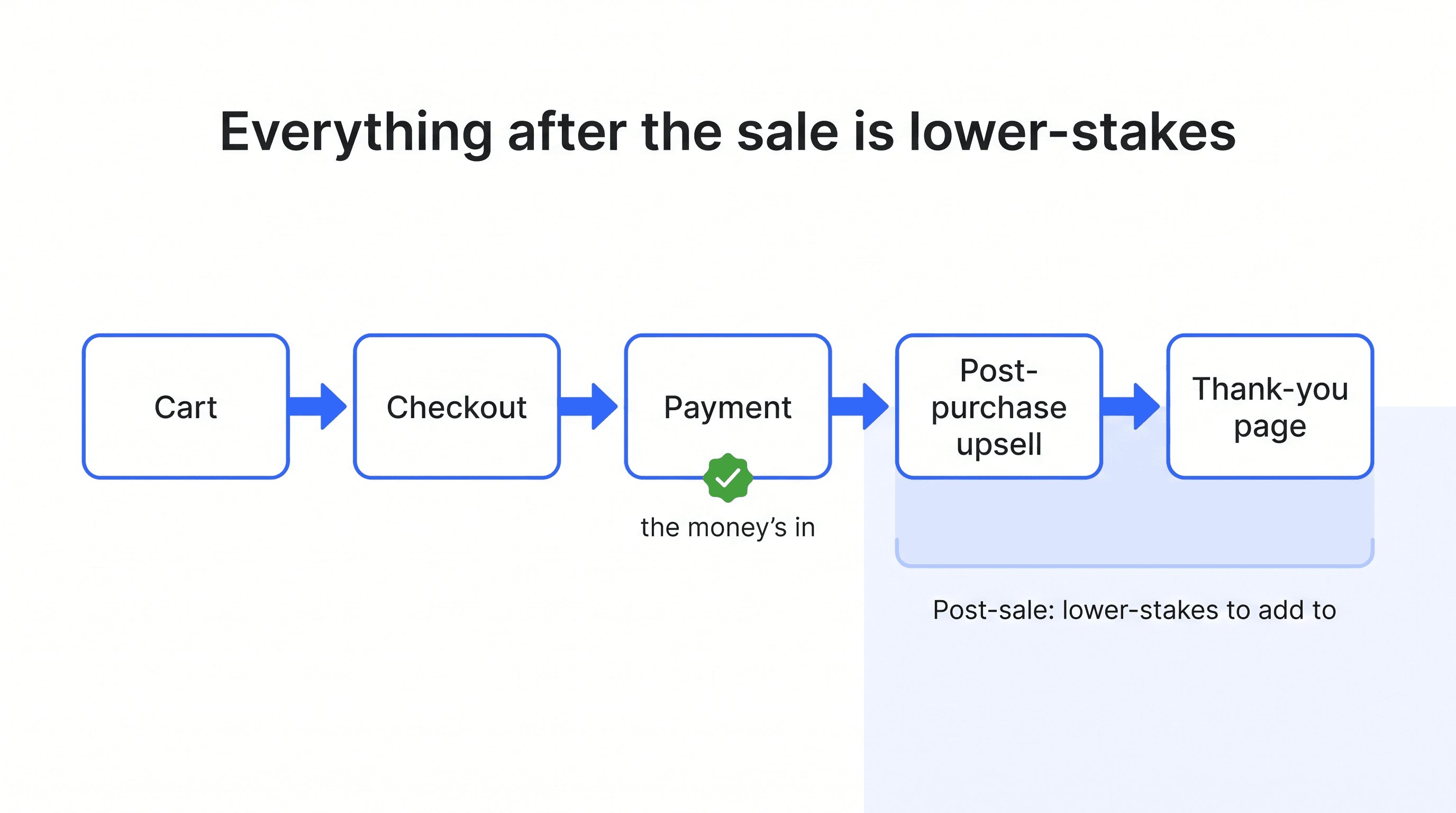
The lowest-stakes place to add something new
Almost everywhere else in your store, adding something carries real risk. A pop-up, an extra checkout field, one more upsell in the cart... anything you put in a shopper's way before they've paid can add friction and cost you the sale. The post-purchase moment is different. By the time a customer gets here, the money's in. The order is placed, so adding something to the page can't scare off a purchase that already happened.
That flips the risk equation. Instead of protecting a conversion you haven't closed yet, you're working with someone who just said yes and is still paying attention. The stakes aren't zero... a pushy or cluttered page can still earn you a cancellation, a refund request, or just a worse impression... but they're far lower than anywhere else in the store. High intent, high trust, and low downside make it a natural place to add the right thing. The mistake isn't adding something here. It's letting the moment pass on autopilot.
Decide what you want the moment to do
Before adding anything, get clear on the one job you want it to do for your business. The options usually fall into four buckets:
More revenue now. A one-click post-purchase upsell or cross-sell, ideally something that complements what they just bought.
More repeat purchases. A nudge to turn a one-time order into a subscription, or to create an account so the next order is easier.
More advocacy. A referral offer ("give $10, get $10") or a prompt to follow and share, while they're at their happiest.
Fewer support tickets. Clear order tracking and "what happens next" info that quietly deflects the "where's my order?" emails.
Lead with the one that matters most right now. You can add a second... an upsell plus a referral, say... as long as each has a distinct job and neither buries the order confirmation. But asking for all four at once turns a clean moment into a cluttered one, and a page that asks for everything tends to get none of it.
What actually earns a spot
For a lot of stores, the highest-leverage move is a single, relevant one-click upsell. Technically this one isn't on the thank-you page itself... it fires in the step right after checkout, just before the confirmation screen loads. Same post-purchase moment, though. The customer sees one complementary offer, adds it with a single tap (no re-entering card details), and it merges into the order they just placed as incremental revenue on top of the original purchase. That near-zero friction is why it converts.
Running that offer as a test is what Intelligems' post-purchase upsells are built for. You can show different post-purchase offers to different buyers, see which one actually lifts revenue, and attribute the result to the winning version. The catch is relevance. "You bought running shoes, here are the socks runners reorder most" lands. A random bestseller doesn't.

On the confirmation page itself, there's a second set of moves, and you don't necessarily need a testing tool for these:
Order tracking and a clear "what happens next." Reassures the buyer and quietly cuts "where's my order?" tickets.
A referral offer. Catches people at peak goodwill, when they're most likely to share.
An account or subscription nudge. Makes the next order easier and starts the repeat-purchase habit.
An SMS opt-in. The customer's engaged and happy, so it's a natural moment to capture a direct line back for the next launch, restock, or reorder reminder.
Shopify and a handful of apps can add most of these to the order status page directly.
Whatever you add, keep the core job of the page intact: confirm the order went through and say what happens next. Burying that reassurance under offers can create the exact support tickets you were trying to avoid. And keep in mind a lot of this traffic is on mobile, so anything you add has to earn its space on a small screen.
How to know what works for your store
The right mix depends on who your customers are and what they came for, so the honest answer to "what should be on my thank-you page?" is test what you can and let your customers tell you. The post-purchase upsell is the most directly testable piece: show it to some buyers and not others, then compare the metric tied to your goal, not just the click rate on the offer... post-purchase revenue for an upsell, take rate for a subscription, repeat-purchase rate for account creation.
When you run that upsell test, two things keep a "win" honest. Give it enough time to reach a high likelihood of beating control before you call it, the same as any A/B test. And watch the downstream signal, not just the immediate one. An upsell that lifts today's revenue but drives up returns or cancellations isn't actually winning.
Start with one job, then prove it
The thank-you page is just one of the questions Shopify operators keep asking, and like the rest, the answer is specific to your store. This is the one place where you have the customer's full attention, their trust, and nothing to lose. You don't have to fill it. Lead with the job that matters most for your store, put the thing that does it front and center, and confirm it's working before you add more. Start with one move, measure the outcome your goal actually cares about, and build from there.
Ecommerce Strategy
Campaigns
Expert Guide