
AB Testing
How Do I Prepare My Store for Valentine's Day?
Your Valentine's shoppers aren't buying for themselves. That changes everything.
Valentine's Day shopping can be different.
For many of your customers, this isn't a regular purchase. They're buying for someone else. That can change how they think, what they worry about, and what tips them toward (or away from) a purchase.
Understanding that psychology helps you know what to look for. Every brand's customers experience these pressures differently. Some see shipping anxiety dominate. Others see gift hesitation. Others see ad-to-site disconnect.
Your data already shows which pressures YOUR customers are feeling. That's what should guide your preparation.
What Makes Valentine's Day Different
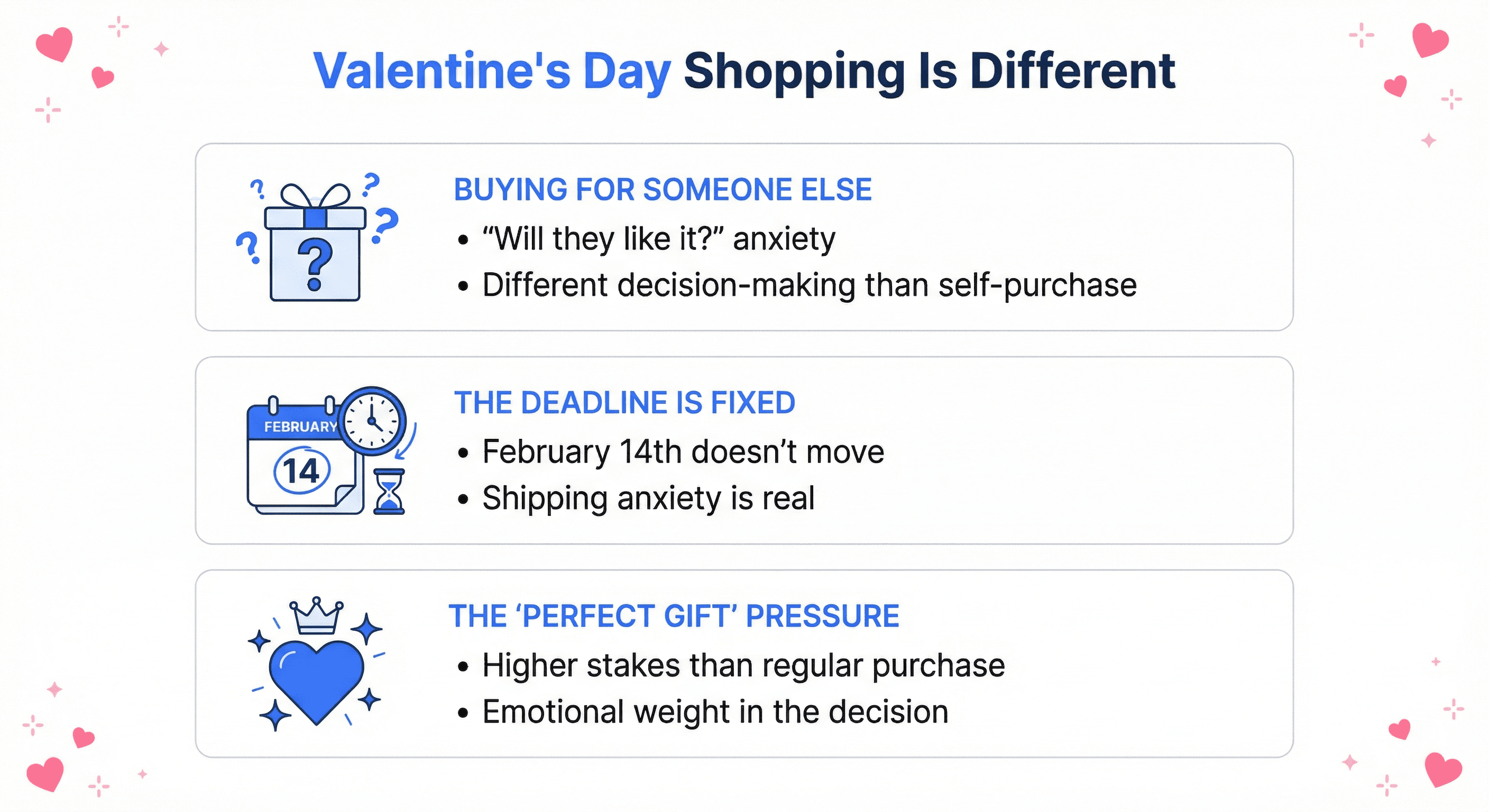
Many Are Buying for Someone Else
For gift-givers, this isn't a self-purchase. The decision-making can shift.
"Will they like it?" often becomes the dominant question. Presentation might matter more. The fear of getting it wrong can create hesitation that doesn't exist when someone's buying for themselves.
The Deadline Is Non-Negotiable
February 14th doesn't move. Customers know this. The ones who care about Valentine's delivery are anxious about timing in ways they aren't for regular orders.
Last-minute shoppers behave differently than planners. Some start early and deliberate. Others wait until the final days and need certainty, not options.
The "Perfect Gift" Pressure
Stakes feel higher. There's social pressure wrapped up in this purchase. What will they think? Did I pick the right thing?
This isn't "I need running shoes." It's "I need the gift that shows I thought about them." That emotional weight can change how people browse, consider, and decide.
So What Should You Do?
It depends entirely on YOUR customers.
Your data shows which of these pressures matter for YOUR store. But if you wait until you see shipping anxiety spike this week, it's already too late to run a meaningful test.
Look at historical data instead. Pull last year's Valentine's window (February 1-14). Or check similar gifting pressure dates like Mother's Day or holiday season. The signals are there: checkout drop-offs, CS inquiries about delivery timing, bounce rates on paid traffic.
Customer psychology around gifting deadlines tends to repeat. What caused friction last February will likely cause friction this February.
The better question isn't "what should I do for Valentine's Day?" It's "what should I test?" And your historical data tells you where to start.
The Deadline Pressure
The psychology: February 14th doesn't move. Customers who care about Valentine's arrival are anxious about timing.
Signals that confirm this is YOUR customer's pressure:
Cart abandonment spiking at checkout, specifically where shipping appears
Customer service inquiries asking "Will this arrive by Valentine's Day?"
Social DMs about shipping speed or cutoff dates
If you see these signals, shipping timing is a real concern for YOUR customers. Without the signal, you're guessing. With it, you're designing a test worth running.
What to test:
Control: Current messaging (or no shipping messaging)
Variant A: "Arrives by February 13th" prominently displayed
Variant B: "Order by [date] for guaranteed Valentine's delivery" with countdown
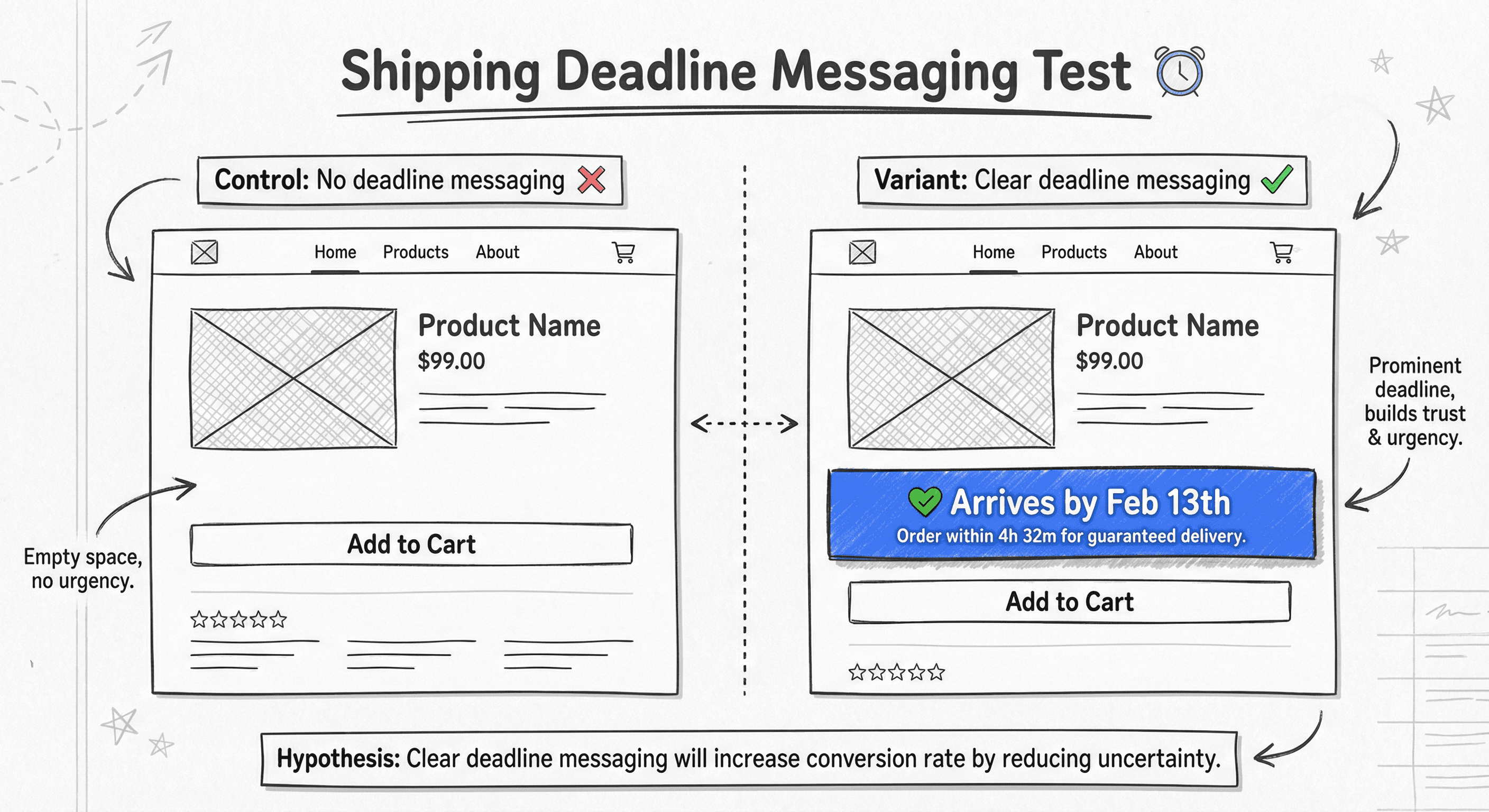
One brand's customers respond to urgency. Another's respond to certainty. You can't know until you test.
Need help setting up shipping tests? Check out the Shipping Testing Getting Started Guide.
The Gift Hesitation
The psychology: Buying for someone else can create doubt. "Is this the right gift?" Gift with purchase might tip the scale without training them to wait for discounts.
Signals that confirm this is YOUR customer's pressure:
High traffic to product pages, but lower-than-expected conversion
Strong engagement (time on page, scroll depth) with drop-off before add-to-cart
Customers browsing multiple products without committing
These patterns suggest customers are interested but hesitating. Something's preventing them from pulling the trigger.
The signal tells you there's hesitation. The test tells you if GWP resolves it.
What to test:
Control: No gift with purchase
Variant A: Free gift with purchase (something with high perceived value but low cost to you)
Variant B: Small discount instead of GWP (to isolate whether it's the "extra" or just value reduction)
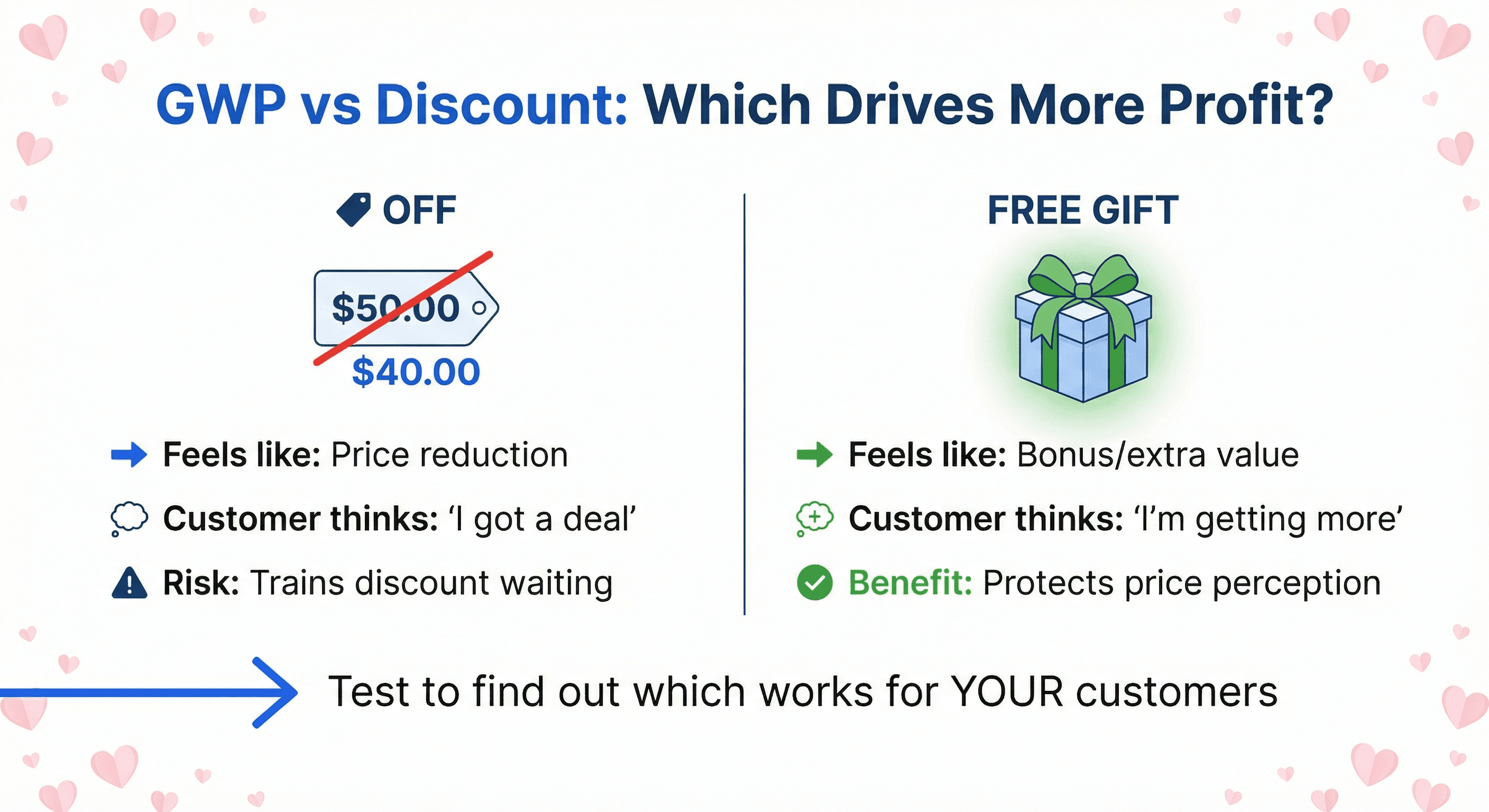
Some brands discover their customers respond better to a $5 item that feels worth $25 than a $10 discount. Others find the opposite. That's the point of testing... you're discovering what works for YOUR customers.
Curious about the psychology? Read Should I Offer Gift With Purchase? for a deeper dive.
The Experience Gap
The psychology: They clicked an ad that said "perfect Valentine's gift." Does your site continue that conversation?
Signals that confirm this is YOUR customer's pressure:
Valentine's-themed ads running, but evergreen landing pages
Higher bounce rate on paid traffic compared to organic
Ad comments asking "Is this for Valentine's?" or "Do you have Valentine's specials?"
When your ad starts a conversation and your landing page doesn't continue it, visitors often leave. Paddy from PM Digital Design calls this a lack of "congruency."
Congruency is king. If your ad says "Perfect Valentine's gift" and your landing page looks like any other Tuesday, you've broken the promise.
What to test:
Control: Current landing page (evergreen)
Variant A: Valentine's-themed headline and hero that matches the ad's promise
Variant B: Dedicated Valentine's gift guide landing page
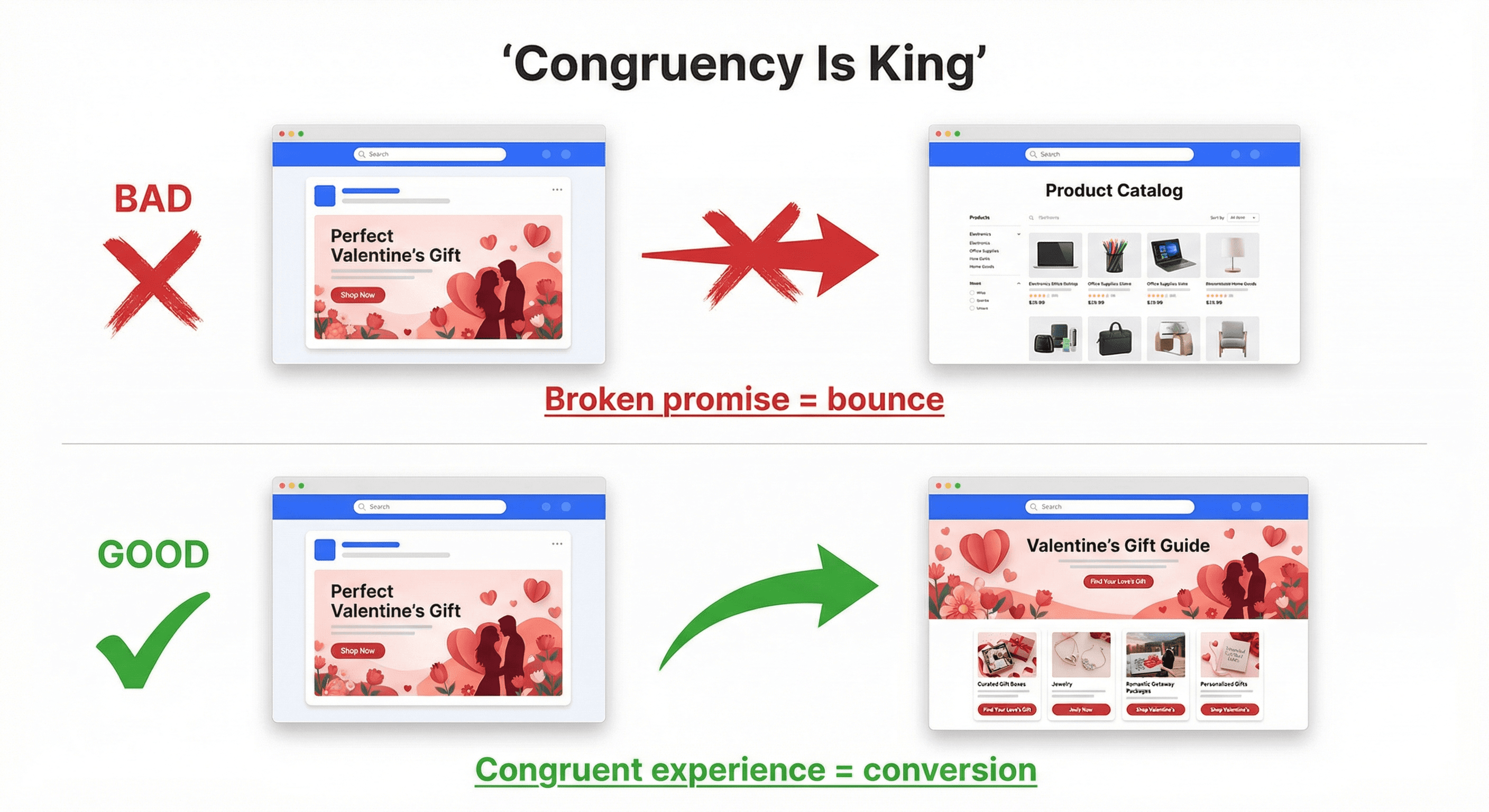
You don't need to redesign your entire site. Even matching the headline to the ad hook can improve profit per visitor. The test reveals how much.
Learn how to set up these experiences in the Content Testing Getting Started Guide.
Start Somewhere
It's easy to overthink this. To wait until conditions are perfect. To decide there isn't enough time.
But the only wrong move is standing still.
Even a few days of data won't give you statistical certainty... but it can reveal direction. You'll see which variant is trending. You'll gather learnings you can act on for the next holiday.
Next year, you won't be guessing. You'll know what actually worked for YOUR customers.
Stop Guessing. Start Knowing.
Read your data first. Look for signals that reveal which Valentine's pressures YOUR customers are feeling.
Match tests to signals. Design experiments your data supports, not generic tactics.
Measure profit per visitor. Conversion rate alone doesn't tell you if you're winning. Track what matters.
Don't guess how to prepare for Valentine's Day. Test and know.
Ready to run your first Valentine's experiment? When you're ready to stop guessing, let's get you testing.
Ecommerce Strategy
AB Testing
AB Testing


