Shipping Testing
Should I Pass Rising Carrier Costs On to Customers?
Raising shipping fees doesn't always hurt conversion. Sometimes it doesn't move the needle, sometimes you just make more money. Here's how to figure out which camp you're in before you commit to anything.

Carlos Trujillo
When fulfillment costs spike, the question that lands in every merchant's lap is the same: do you absorb it and protect conversion, or do you pass it on and protect margin? The answer isn't obvious. But the way most brands try to figure it out is.
When the Variables Aren't Yours to Control
Fuel prices went up over the last few months. If you ship physical products, you definitely noticed. Carrier surcharges climbed, fulfillment costs shifted, and suddenly the margin on an average order looked a little different than it did six months ago.
It won't be the last time. Trade policy shifts, fuel spikes, carrier rate increases... these are variables you don't control. They move for reasons that have nothing to do with your brand, and when they do, they go straight to your bottom line.
The reflex is predictable: raise the fee, then stare at conversion rate waiting for it to drop. If it dips, panic. Revert. Absorb the cost. Repeat next time costs go up.
The problem isn't that the reflex is wrong. It's that you're prescribing before you've diagnosed. You're reacting to a symptom without knowing what's actually driving your customers' behavior.
Check Your Data Before You React
Your customers might respond to a fee change completely differently than you'd expect. That's exactly why you check your data before you touch anything. Three questions worth asking first:
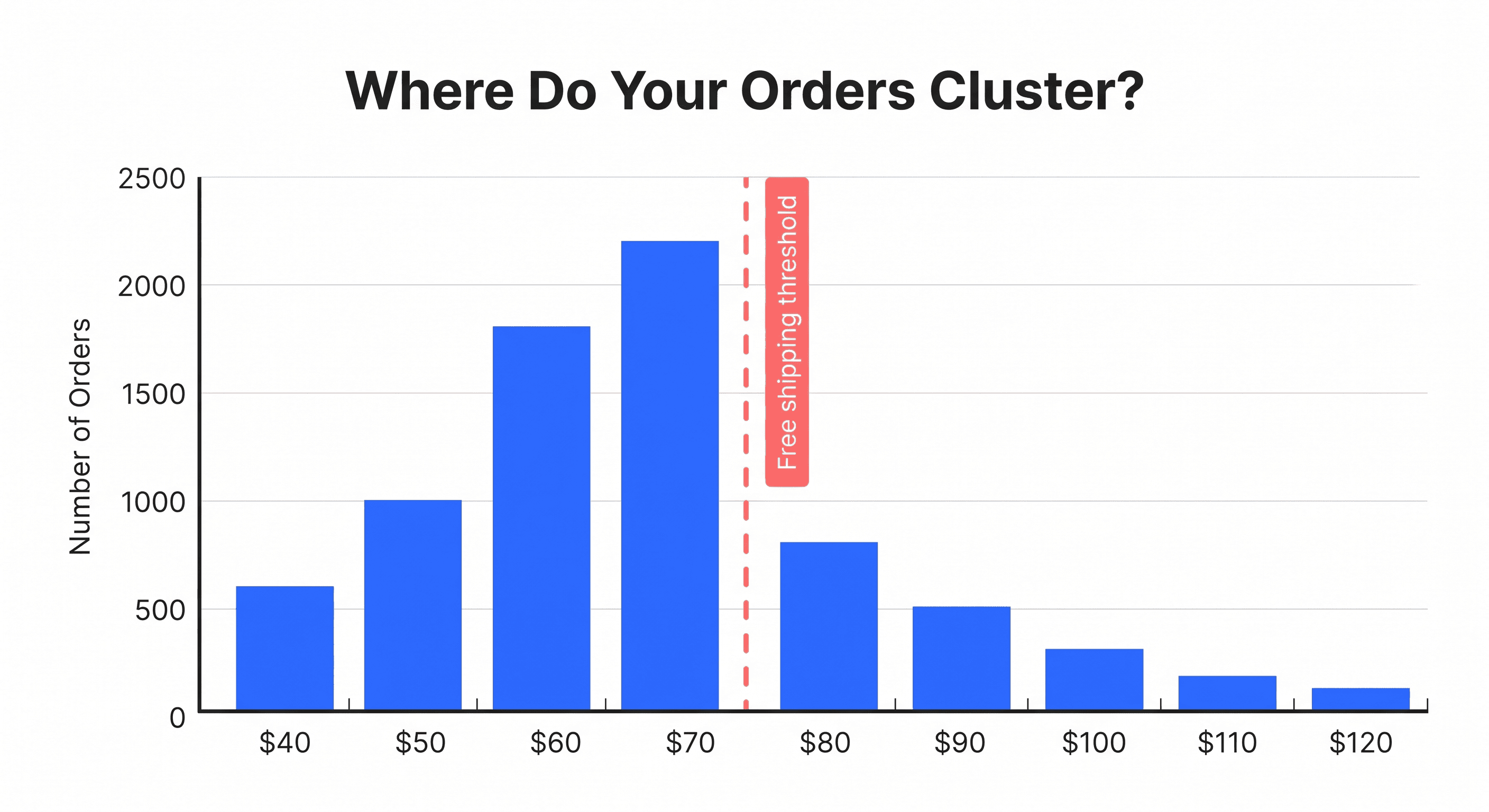
Where do your orders cluster? Pull 90 days of order values sorted by size. If a meaningful chunk sits just below your current free shipping threshold, customers are already sensitive to shipping costs. They're nudging their carts to avoid the fee. That context matters before you shift anything. If you're using Intelligems, the Order Value Distribution chart in the Order Distribution tab of Sitewide Analytics shows this directly.
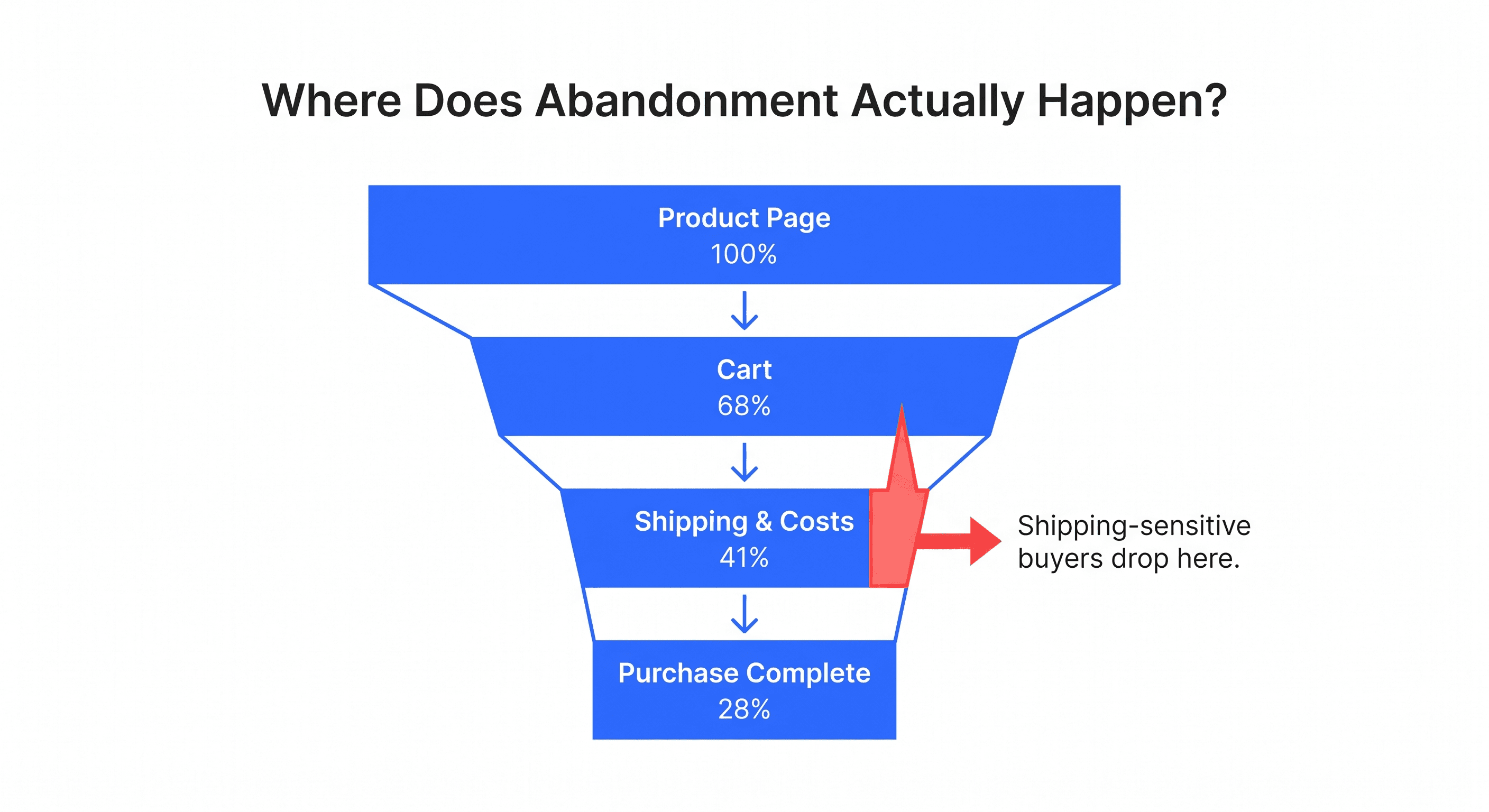
Where does abandonment spike in checkout? If the drop-off happens specifically when shipping costs appear, you have price-sensitive buyers. If abandonment is spread evenly through checkout, shipping fees may not be the friction point you think they are.
What share of your orders already include paid shipping? If a meaningful portion of customers already pay for shipping, you have a cleaner baseline for measuring what actually changes when you adjust the rate.
None of this tells you what to do. It tells you what you're working with before you make a reactive call you might need to undo.
Which Move Makes the Most Sense to Test First?
The real question isn't whether to raise fees. It's which adjustment your customers can absorb without flinching. And the answer has less to do with price sensitivity than with how much they value what you sell.
Test raising your shipping fee directly. This is the question the title is asking, and it's a legitimate test to run. If you charge $5.99 for standard shipping, test $7.99. If you offer a flat rate, test a higher one. This one is worth running regardless of what your data signals show, because the result is often counterintuitive. A small conversion dip with a higher fee can still be a net win if profit per visitor holds. You won't know until you run it.
Test raising your free shipping threshold. If you're at $75, test $85 or $90. This works best when a meaningful chunk of your orders already cluster just above your current threshold. Customers are already motivated to hit it. Some will add an item to qualify, which improves both revenue and margin. The customers most likely to bail at the higher threshold were often your lowest-margin orders anyway.
Test introducing a modest flat fee instead of free. A $4.99 or $5.99 flat rate can absorb a meaningful portion of the cost increase while staying well below the number where most customers stop and reconsider. Worth testing first if your checkout data shows abandonment spread evenly across the flow, meaning shipping cost isn't already a known friction point.
Test building shipping into your product prices. The hardest to set up cleanly, but potentially the highest upside. "Free shipping" on a product priced $3 higher often outperforms a separate $4.99 shipping line. The psychology of "free" is that powerful. Worth exploring if your margins give you room to absorb the adjustment at the item level.
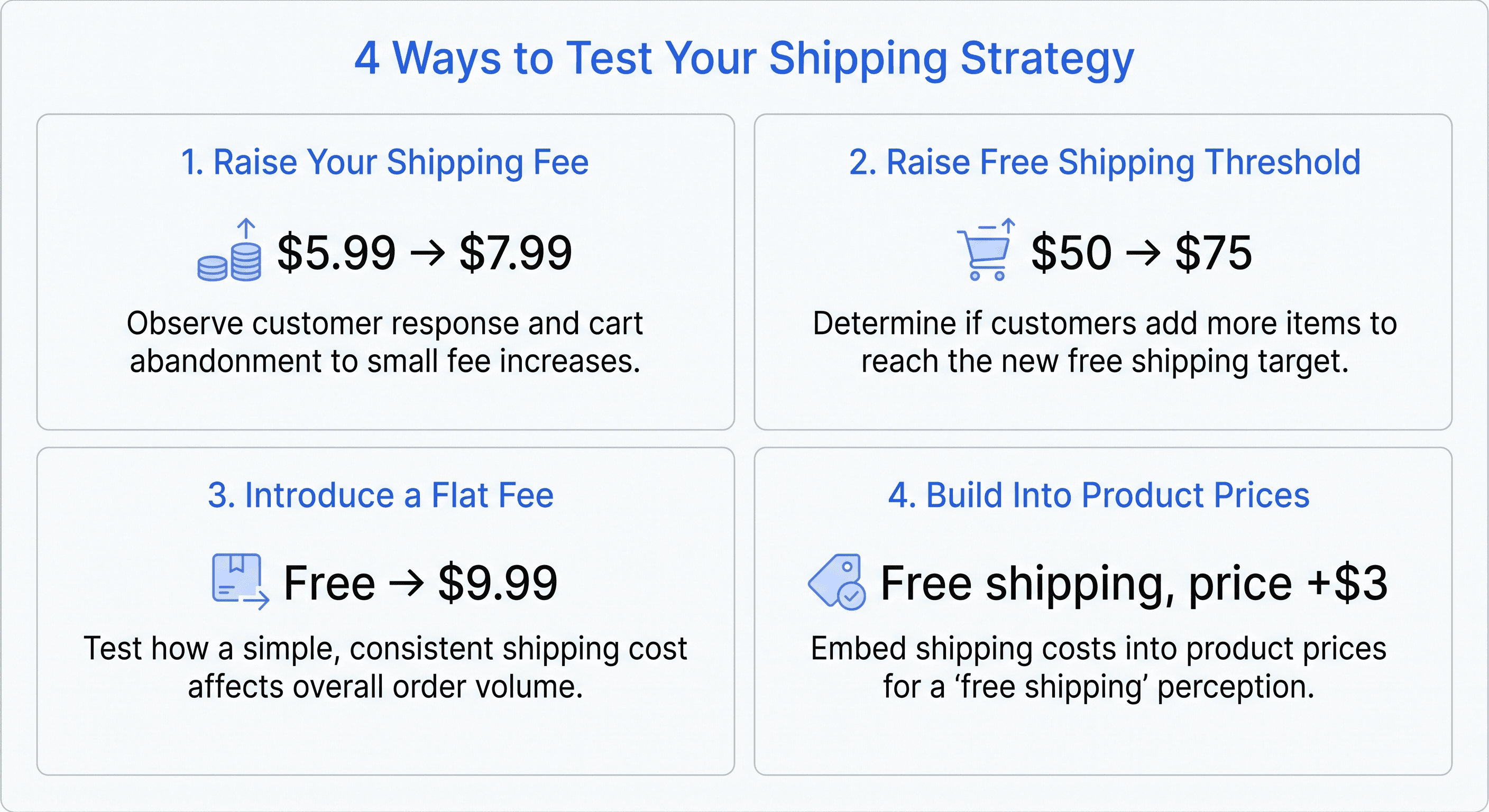
Whichever test you pick, the setup is the same: run it long enough to capture real buying patterns, and read profit per visitor, not just conversion rate.
EP 019 of IntelliJAMS covers how to actually run a shipping rate test. Worth watching before you set up your experiment.
How to Know If You Made the Right Call
The metric that matters here isn't conversion rate on its own. It's profit per visitor. Intelligems calculates it automatically when you add your COGS. If you haven't set that up yet, revenue per visitor is a solid proxy to start with.
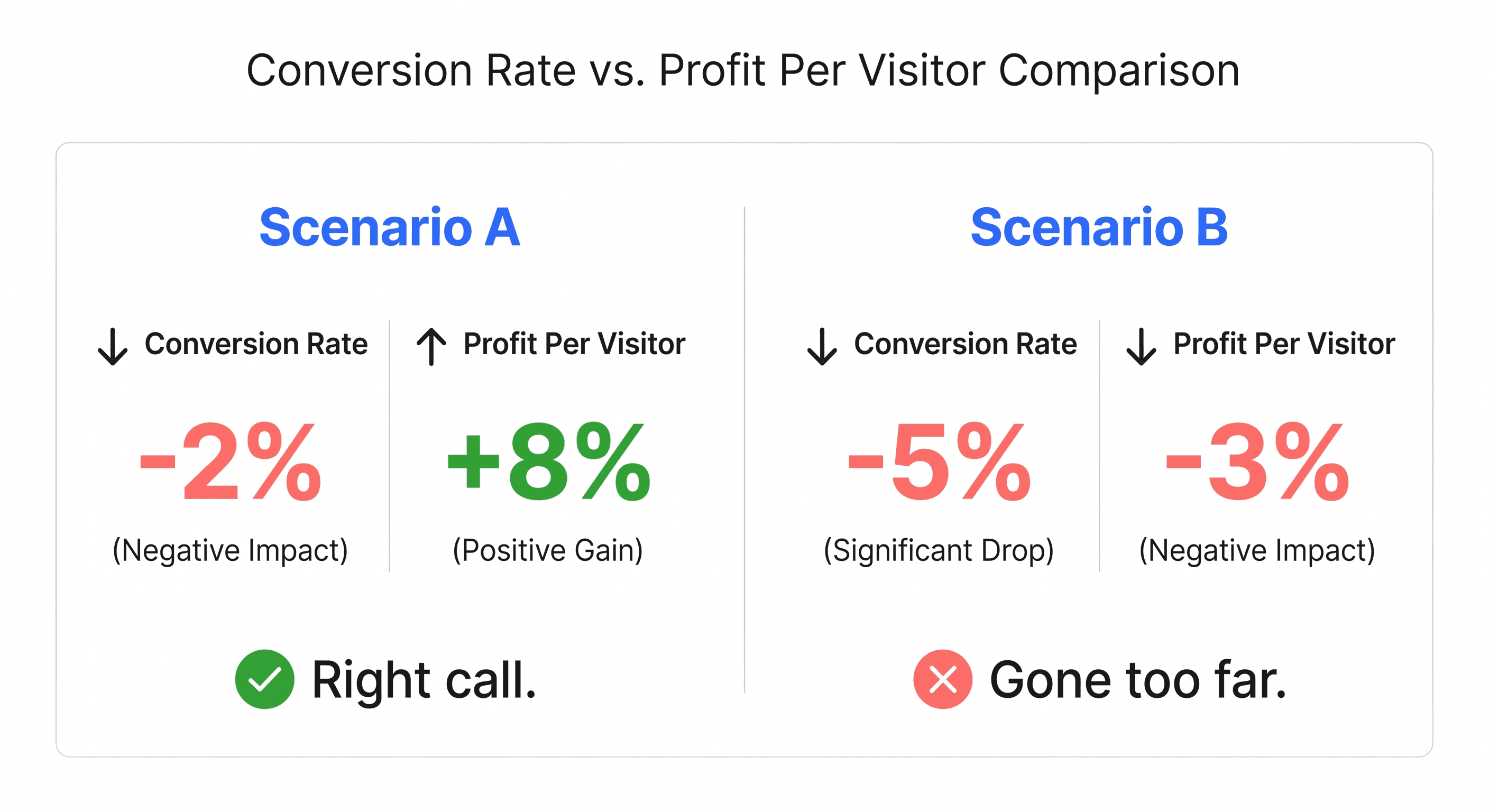
A conversion rate shift can be misleading when shipping costs are involved. If your conversion drops 2% but profit per visitor increases because you're no longer subsidizing shipping for low-intent browsers, the adjustment probably made sense. If conversion drops 5% and profit per visitor falls with it, you've gone too far. That's the number to watch.
The Decision Isn't About Shipping. It's About What You Measure
The environment will keep shifting. Fuel prices, trade policy, carrier costs... none of it is predictable, and none of it is yours to control.
What you can control is how you respond. And the most important shift isn't in your shipping settings. It's in what you measure afterward.
A conversion drop when you raise shipping fees doesn't mean you made the wrong call. If profit per visitor held or improved, you probably made the right one. That's the reframe that turns a reactive decision into an informed one.
Tips for Intelligems Users: Find This Data Faster
If you're already using Intelligems, the diagnostic work (figuring out where your orders cluster, where abandonment spikes, and what share of orders include paid shipping) doesn't require pulling reports manually.
Sitewide Analytics: the Order Value Distribution chart in the Order Distribution tab shows exactly where your orders cluster relative to your free shipping threshold. Checkout abandonment patterns are in the same place.
Intelligems MCP: ask your AI tool of choice directly. Where do orders cluster? Where does abandonment spike? What share of orders include paid shipping? It'll pull it for you.
@intelligems Slack bot: same questions, straight from Slack.
Ecommerce Strategy
Expert Guide
AB Testing