How a lifestyle brand grew profit per visitor 15% with one shipping change

It swapped free shipping on everything for free shipping over $75, and shoppers kept buying.
GROSS PROFIT PER VISITOR
REVENUE PER VISITOR
ORDERS IN THE TEST
The quick version
A lifestyle accessories brand offered free shipping on every order, with no minimum. It tested two alternatives at once: a flat rate of about $7 below a $75 threshold, and about $6 below an $85 threshold. The $75 threshold grew profit per visitor and revenue per visitor about 15% each, and conversion did not drop. The $85 threshold went too far and lost conversions.
The setup
Free shipping on every order means a brand pays to ship even its smallest orders.
Many brands assume that removing it will cost more in conversion than they gain from shipping fees and higher order value.
This brand tested that common assumption with two thresholds to see whether a shipping fee on smaller orders would pay off, and at what order value.
What they tested
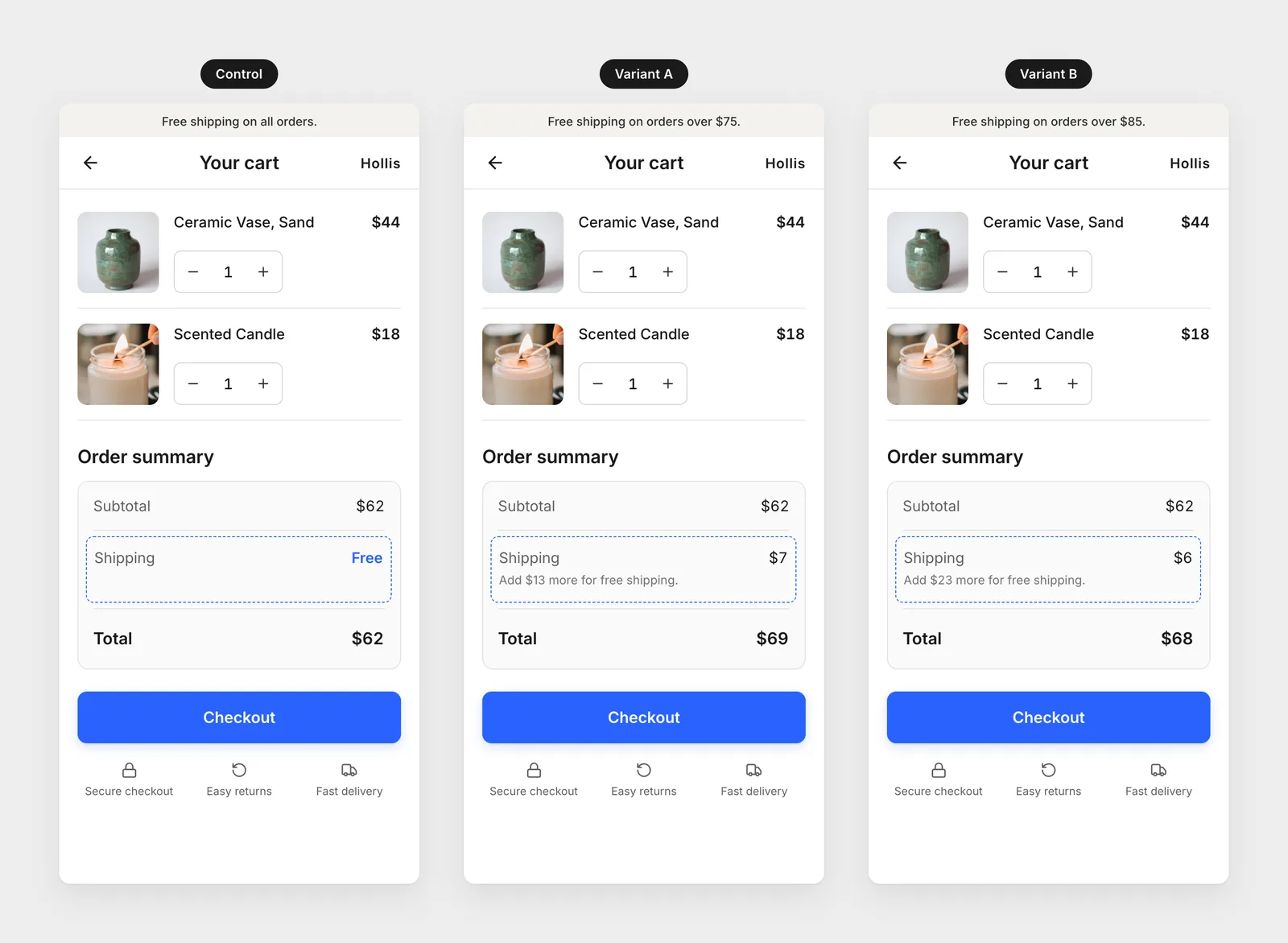
Three groups ran at the same time. The shipping message was updated in the announcement bar, the cart, and the shipping callouts on the product page.
Control: Free shipping on all orders.
Variant A: Free shipping over $75, with a flat rate of about $7 below it.
Variant B: Free shipping over $85, with a flat rate of about $6 below it.
The results
The test ran for 15 days, with roughly 132,000 visitors and just over 4,000 orders split evenly across the three groups.
Gross profit / visitor: +15% ($75 threshold), flat ($85 threshold)
Revenue / visitor: +15% ($75 threshold), flat ($85 threshold)
Gross profit / order: +10% ($75 threshold), +10% ($85 threshold)
Average order value: +10% ($75 threshold), +10% ($85 threshold)
Add to cart rate: +5% ($75 threshold), flat ($85 threshold)
Conversion rate: +5% ($75 threshold), -5% ($85 threshold)
Both thresholds raised order value by about the same amount. The difference was how many people still bought. At $75, conversion held. At $85, it fell.
The takeaway
Adding a shipping fee under $75 didn't cost the brand any conversions. Shoppers bought at the same rate as with free shipping on every order, so the brand collected shipping fees on smaller orders without losing sales.
In Variant A, about half of orders came in under the $75 threshold and paid their own shipping fees. Those fees, plus slightly larger carts, raised order value and profit per order by about 10% each.
In Variant B, about 60% of orders came in under the $85 threshold and paid for shipping. Order value rose about 10%, the same as Variant A, but conversion fell 5%. The extra revenue from each order only offset the lost sales, so profit per visitor stayed flat.
If the brand had tested only the $85 threshold, it would have seen no gain and likely kept free shipping on every order.
Why it worked
A threshold gives shoppers a reason to add to their cart. Shoppers just under the line can pay for shipping or add an item to get it free.
Testing two thresholds showed how far the brand could push. A shipping fee only costs sales when the threshold is set higher than shoppers are willing to spend.
Success was measured by profit per visitor, because it accounts for both the shipping fees collected and any sales lost to the fee.
Test your own free shipping threshold
With Smart Shipping, you can A/B test shipping rates and free shipping thresholds against each other, the same way this brand did. Set up two or three thresholds around your average order value, run them against your current policy, and compare profit per visitor. Once you have a winner, you can roll it out to everyone or apply it only to specific audiences. Get started here.