A subscription-first product page built a much larger recurring base without costing total revenue.
SUBSCRIPTION SHARE OF ORDERS (18% → 35%)
REPEAT CUSTOMER RATE (44% → 54%)
REVENUE PER CUSTOMER AFTER FIRST ORDER
About
Organics Ocean is a health and wellness supplement brand, sold directly through its online store and on major marketplaces like Amazon and Walmart.
Like most brands, Organics Ocean had defaulted its product page to a one-time purchase, and with good reason. A one-time option asks less of a first-time buyer, and leading with subscription can feel like a fast way to lose a sale. They had a hunch and wanted to know whether that caution was protecting revenue or quietly capping it.
Challenge
Was it worth trading some upfront order value to increase subscriptions and customer lifetime value?
A subscription-first default could grow the recurring base, but likely at some cost to first-order conversion and order value. The real question was whether the long-term gain in customer value would outweigh that short-term hit.
Solution
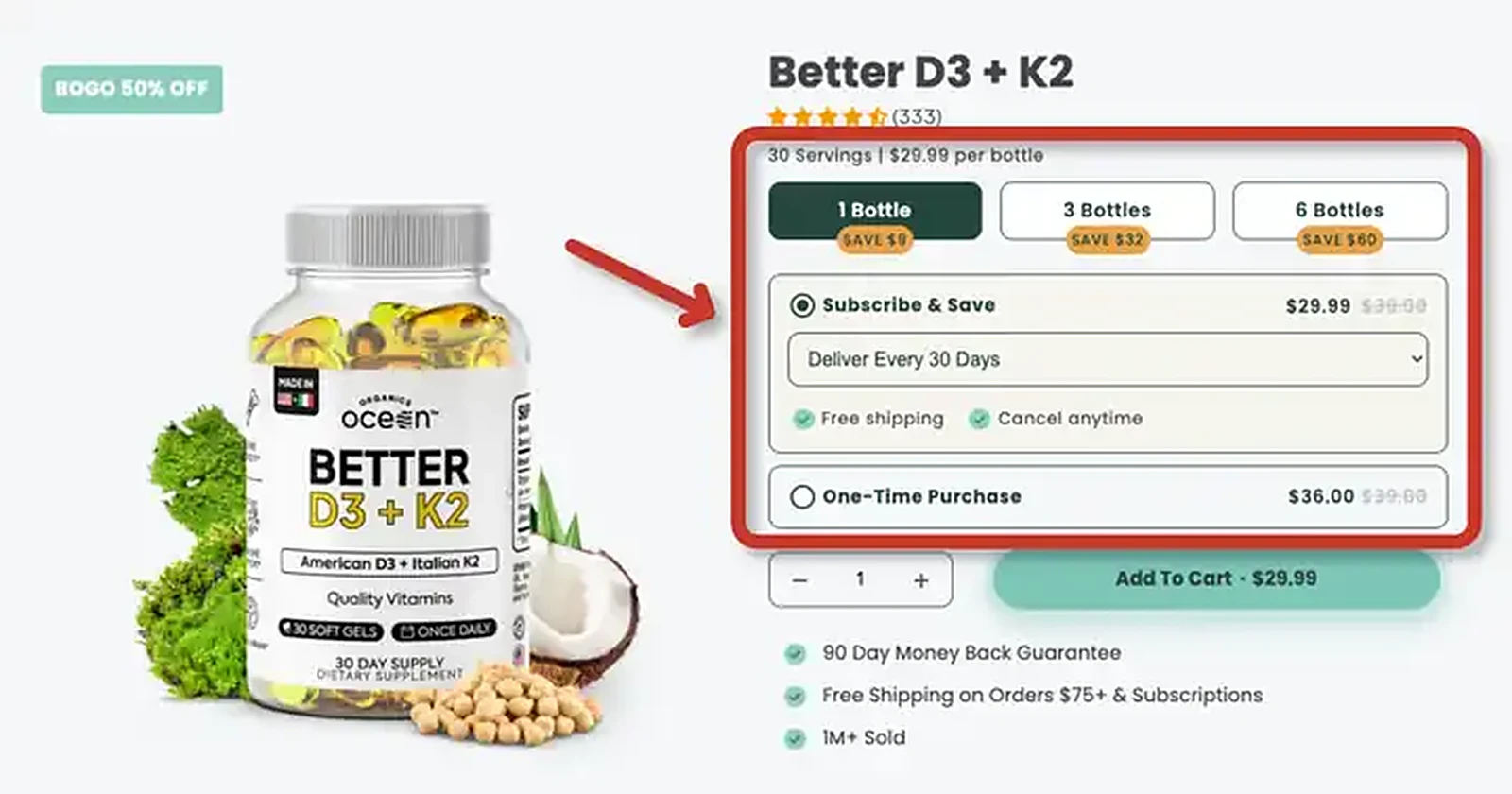
Organics Ocean tested defaulting the product page to subscribe-and-save using Intelligems
The brand ran a clean 50/50 split test that changed only the default purchase option on the product page:
Control: product page defaults to one-time purchase
Variant: product page defaults to subscribe-and-save
The test ran for eight weeks and more than 2,000 orders per variant. The team tracked what customers did well past the first order. With subscriptions, the payoff comes later, in reorders, not at the first checkout. Cut a test like this short, and you’d call it a loss. Give it enough time, and the real result shows up.
Results
Subscriptions jumped, and repeat purchases recovered from the near-term dip
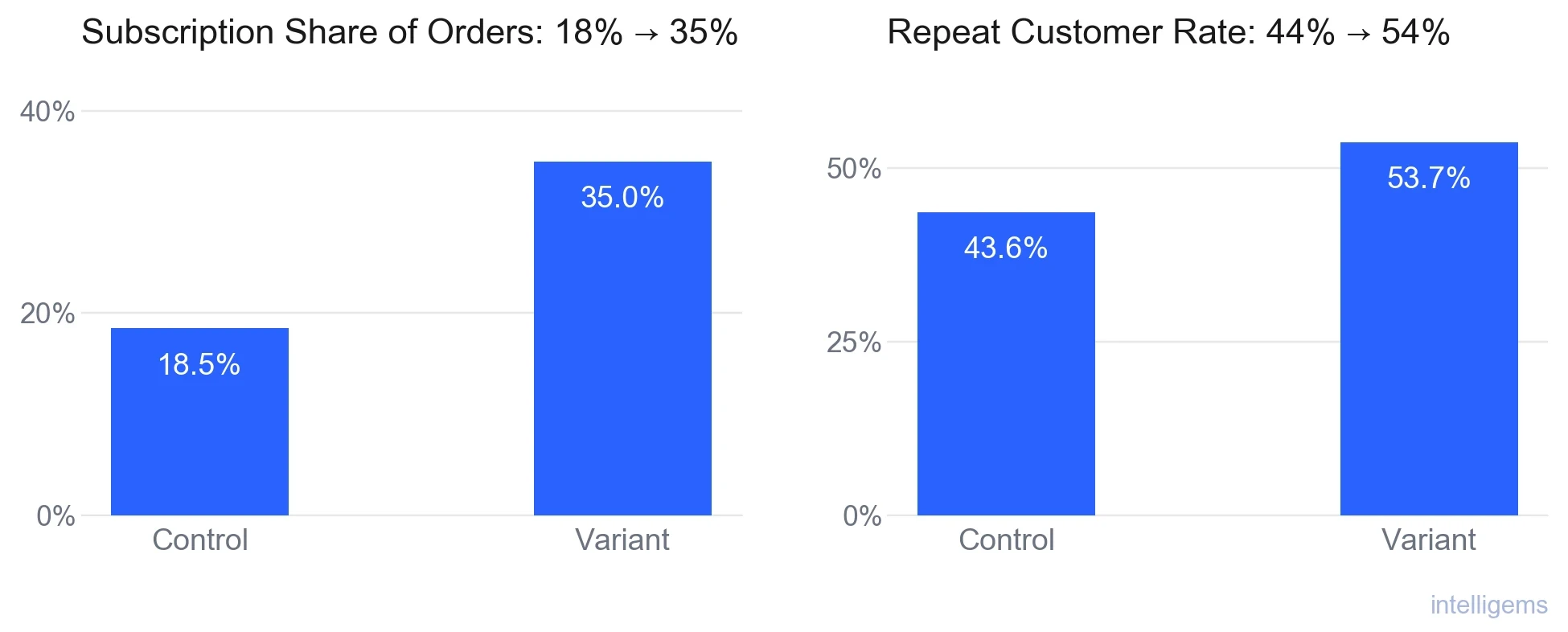
Subscription share of orders nearly doubled, from 18% to 35%.
The trade-off hit the first order: conversion dipped about 7% and average order value about 5%, since a subscription-first default is a bigger upfront commitment.
But those customers were worth far more over time: after the first order, revenue per customer rose about 26%, and the repeat customer rate climbed from 44% to 54%.
Over the full window, total revenue per visitor came out roughly even, so Organics Ocean grew its subscriber base at no net revenue cost.
“The first-order dip was expected. What surprised me was how fast it recovered, repeat rate went from 44% to 54%, and revenue per customer jumped 26% after that first purchase. That’s when I knew we’d made the right call.”
—Ally Petretti, Growth Optimization Manager
Key Takeaways
Defaulting to subscription-first is a deliberate trade: a little less upfront conversion and order value in exchange for more subscribers and stronger retention. For a replenishable product, that trade paid off.
Measure beyond the first order. Repeat rate, orders per customer, and revenue over time are what reveal the real outcome.
“If we’d only looked at the first order, we would have killed this test. But a little less conversion upfront in exchange for a customer who sticks around isn’t a loss, it’s the whole point of subscription. Tracking what happened after that first purchase is what proved it.”
—Ally Petretti, Growth Optimization Manager