
AB Testing
5 Experiments Petcare Brands Should Run
Pet owners spend differently than almost any other consumer group. They'll clip coupons for themselves and then drop $80 on premium dog food without blinking. The emotional connection changes everything.

Pet owners spend differently than almost any other consumer group. They'll clip coupons for themselves and then drop $80 on premium dog food without blinking. The emotional connection changes everything.
But that emotional spending comes with high expectations. Pet parents want to feel like they're making the right choice. They research. They worry. They're willing to pay more, but only if they trust you're worth it.
What follows aren't universal rules. They're data signals that often reveal opportunities specific to petcare. Your numbers will tell you which ones are worth investigating.
1. Multi-Pet Household Discounts
Experimenting with subscriptions: How to test whether subscription models fit your customer behavior.
Your data signal: Customers ordering the same product in multiple quantities
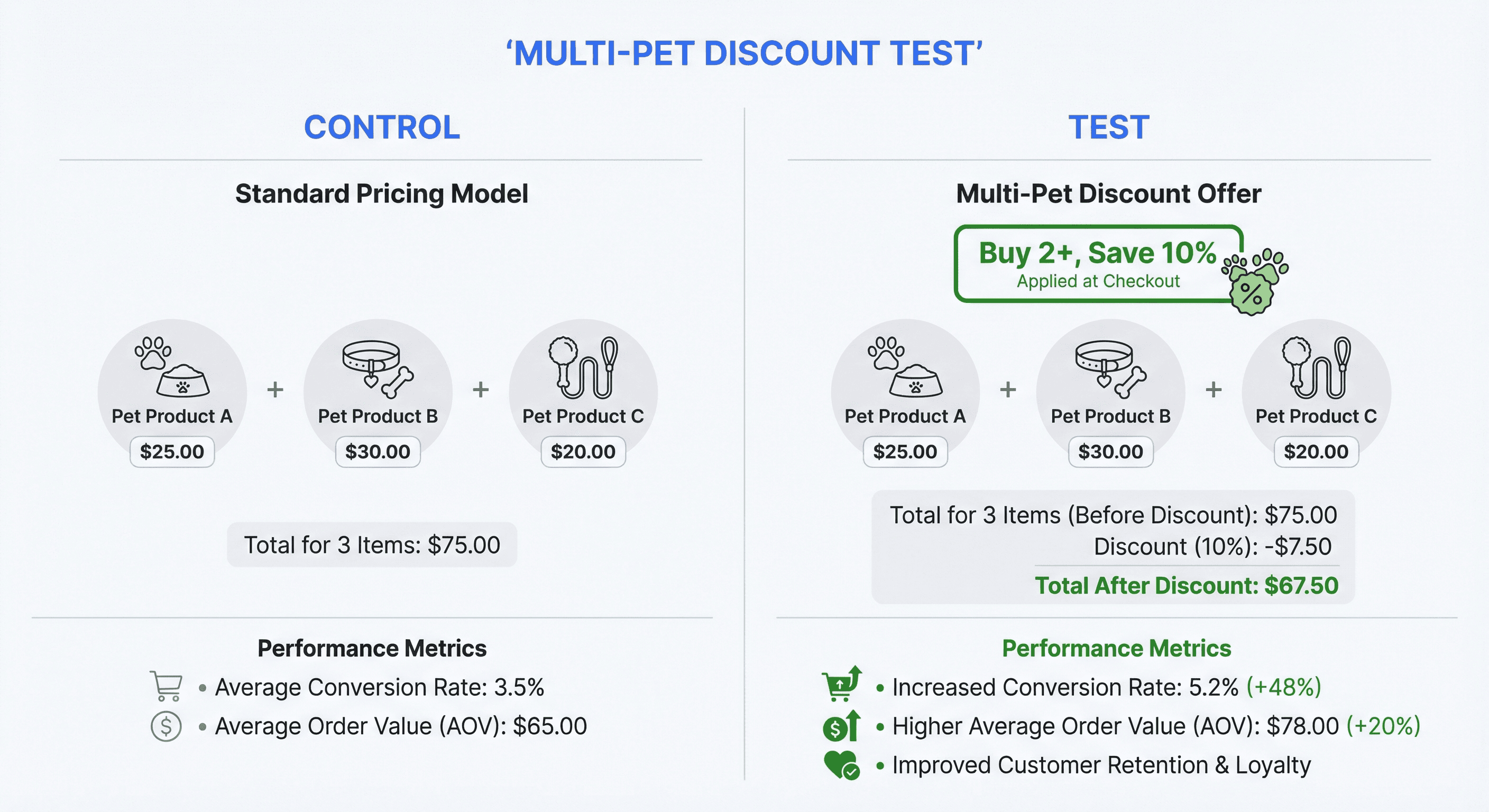
If you're seeing customers order two bags of the same food, three of the same toy, or bulk quantities of the same treat, that pattern is telling you something. They're not stockpiling. They have multiple pets. And they're doing math in their heads.
This could indicate an opportunity to acknowledge how they actually shop. Making multi-pet discounts visible changes that mental calculation. The question of how much to discount depends on your margin structure. It signals you understand their situation. Whether it prevents them from splitting purchases across retailers depends on your specific customer base and pricing structure.
What you might explore: Multi-pet discount prominently featured on product pages and cart vs discount only visible after adding multiple items
Track this to understand: Profit per visitor, units per order, customer retention at 90 days
2. Subscription Pre-Selection for Consumables
Your data signal: Consistent reorder intervals for food, treats, or litter
If your data shows customers reordering consumables at predictable intervals, that pattern reveals existing behavior. Pets eat on schedule. Litter boxes fill predictably. Customers have already decided they want this on repeat. The question is whether the purchase experience matches their intent.
This often points to a default setting worth investigating. When customers are already behaving like subscribers, pre-selecting subscription might reduce friction rather than create pressure. Understanding how to price subscription plans is key. Your reorder data by product category can help you explore which consumables show the strongest patterns.
What you might explore: Subscription pre-selected as default on consumable product pages vs one-time purchase as default
Track this to understand: Profit per visitor, subscription uptake, subscription retention at 60 days
3. Health vs Enjoyment Messaging
Your data signal: Search terms and landing page traffic sources
If you're seeing different traffic sources bringing different types of customers, that variance is worth investigating. Customers arriving from health-related searches are in a different headspace than customers browsing from Instagram.
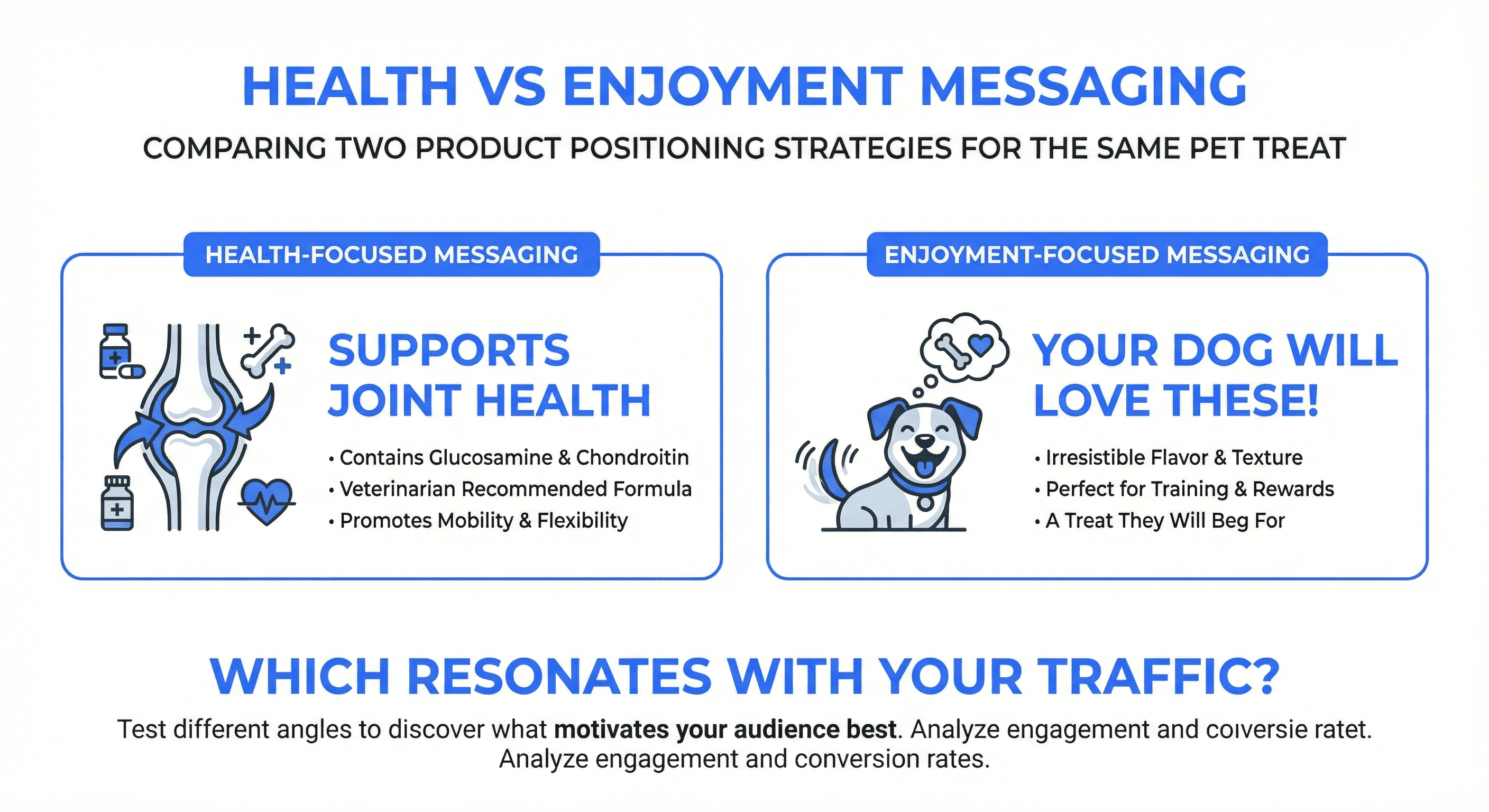
This could indicate a messaging opportunity. The same product can be positioned as "Supports joint health" or "Your dog will love these." Which framing resonates might depend entirely on what brought the customer to your site. Your traffic source data can guide where to explore using experiences.
What you might explore: Health benefits emphasis vs taste and enjoyment emphasis on product pages
Track this to understand: Profit per visitor, conversion rate by traffic source, average order value
4. Veterinarian Endorsement vs Customer Reviews
Your data signal: High time on page for health-related products
If customers are spending significant time on health product pages, that's worth investigating. They want reassurance they're not making a mistake. They're researching, weighing options, trying to feel confident.
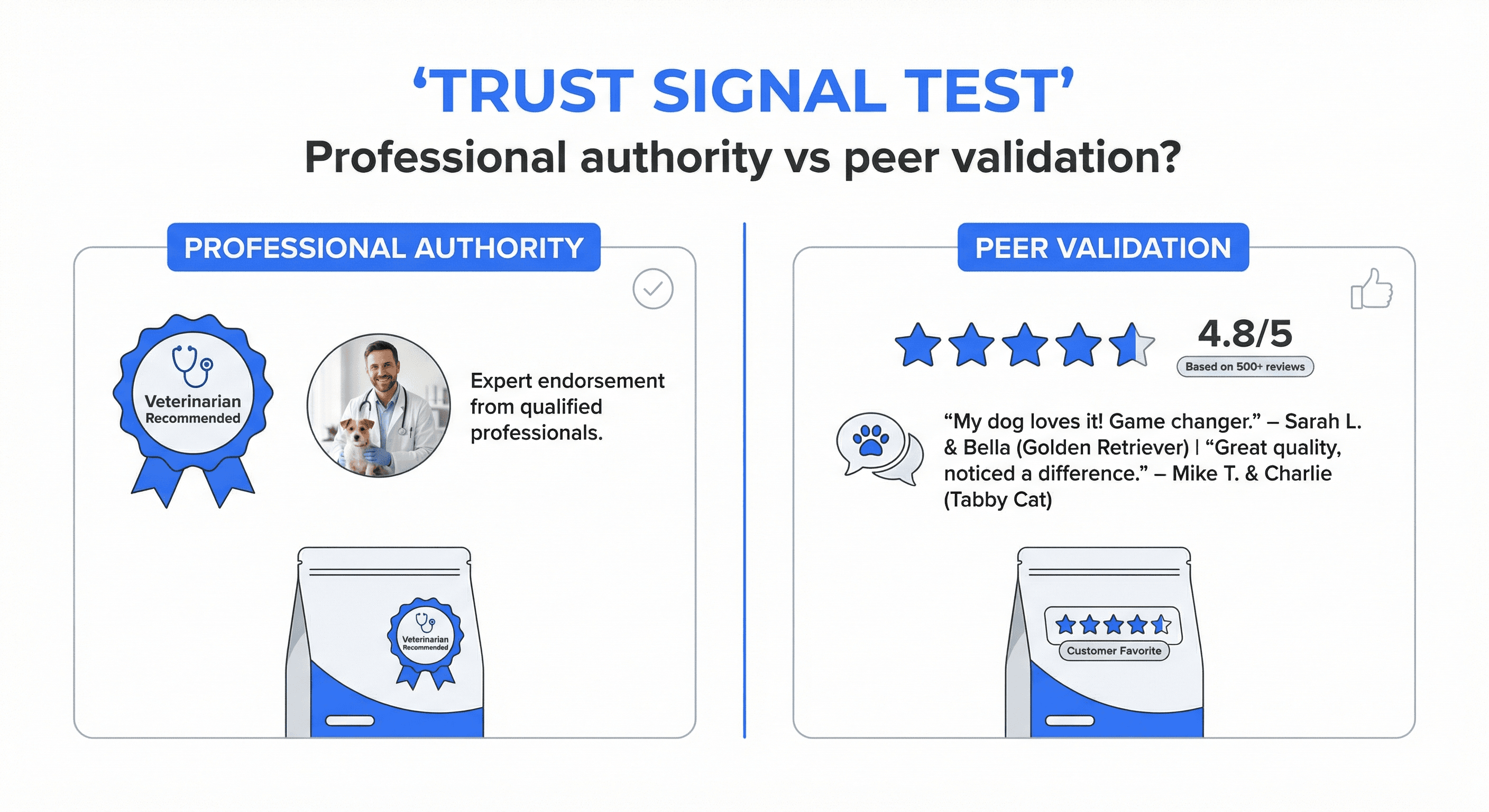
This pattern often points to a trust question that content testing can answer. Two types of proof compete for credibility: professional authority (vet recommended) and peer validation (customer reviews). Both have power in different contexts. Which matters more for your specific products and customers is something your data can help you explore.
What you might explore: Veterinarian recommendation badge prominent vs customer testimonials prominent vs both equally weighted
Track this to understand: Profit per visitor, conversion rate on health-focused products, add-to-cart rate
5. Subscription Frequency Options Visibility
Your data signal: Time between repeat purchases varies widely across customers
If reorder intervals spread from 21 days to 35 days or more, that variance is telling you something. A bag of dog food lasts different amounts of time in different households. Cats eat at different rates. Multi-pet homes go through supplies faster.
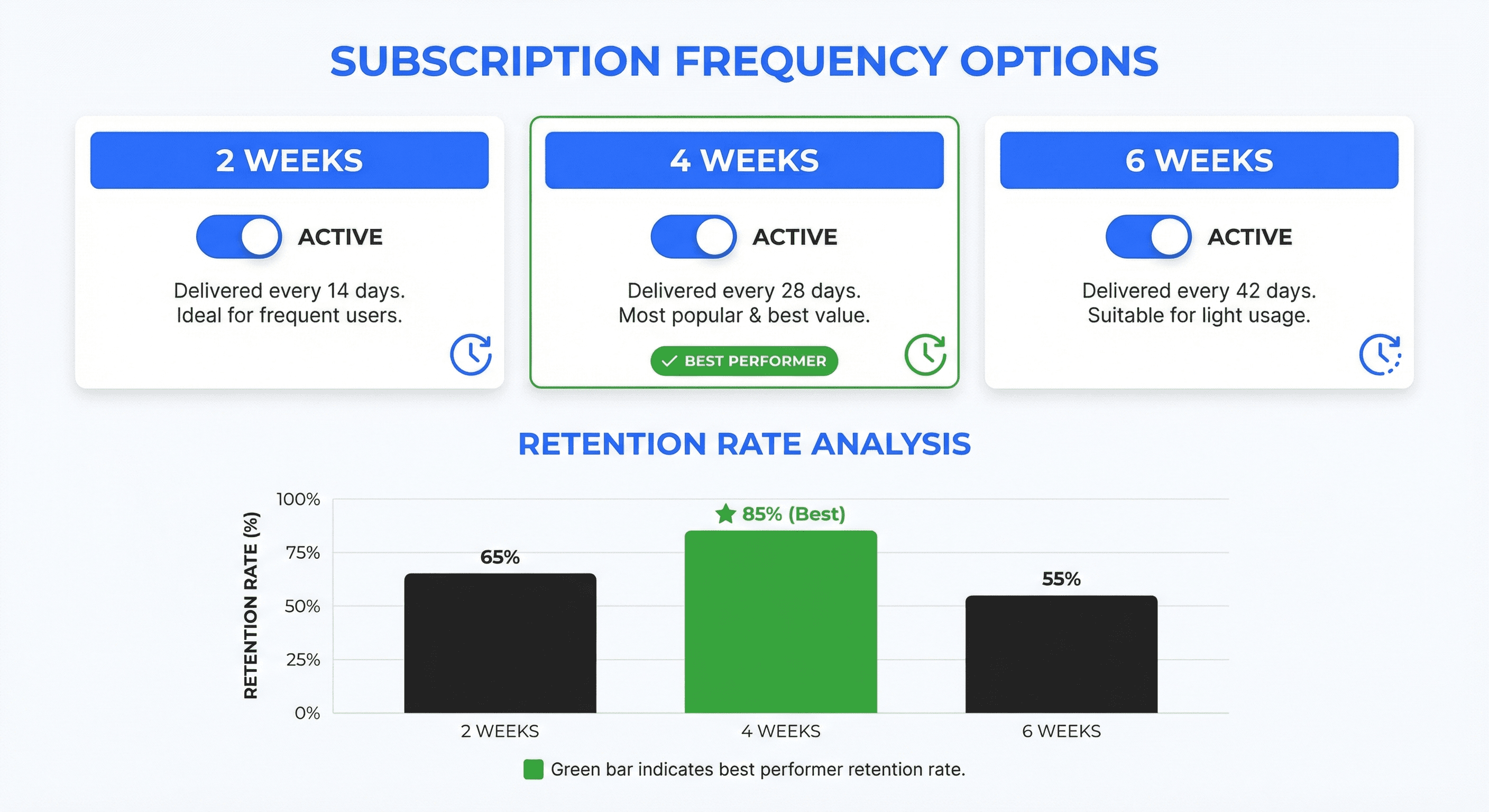
This could indicate that one subscription frequency doesn't fit everyone. The question is how many options to show. Some brands default to monthly and hide alternatives. Others present a full menu of choices. Whether flexibility helps or overwhelms your customers depends on what your data reveals about their behavior.
What you might explore: Multiple frequency options shown prominently (every 2/4/6/8 weeks) vs single default frequency with option to change vs simplified "monthly or bi-monthly" choice
Track this to understand: Profit per visitor, subscription uptake, subscription retention at 60 days
Your Data Points the Way
These signals are starting points, not a checklist. The experiments worth running for your brand depend on what your own data is telling you.
If customers buy in multiples, multi-pet discounts might match how they actually shop
If reorder patterns are predictable, subscription defaults could reduce friction
If traffic sources differ, messaging tests might reveal what each segment needs
If health products see long page times, social proof experiments could build confidence
If consumption rates vary, flexible frequency options might improve retention
Your data tells you what to test. Start there.
AB Testing
AB Testing
AB Testing


