
AB Testing
How Should I Price Subscription Plans?
Small enough to protect margins. Big enough to convert.
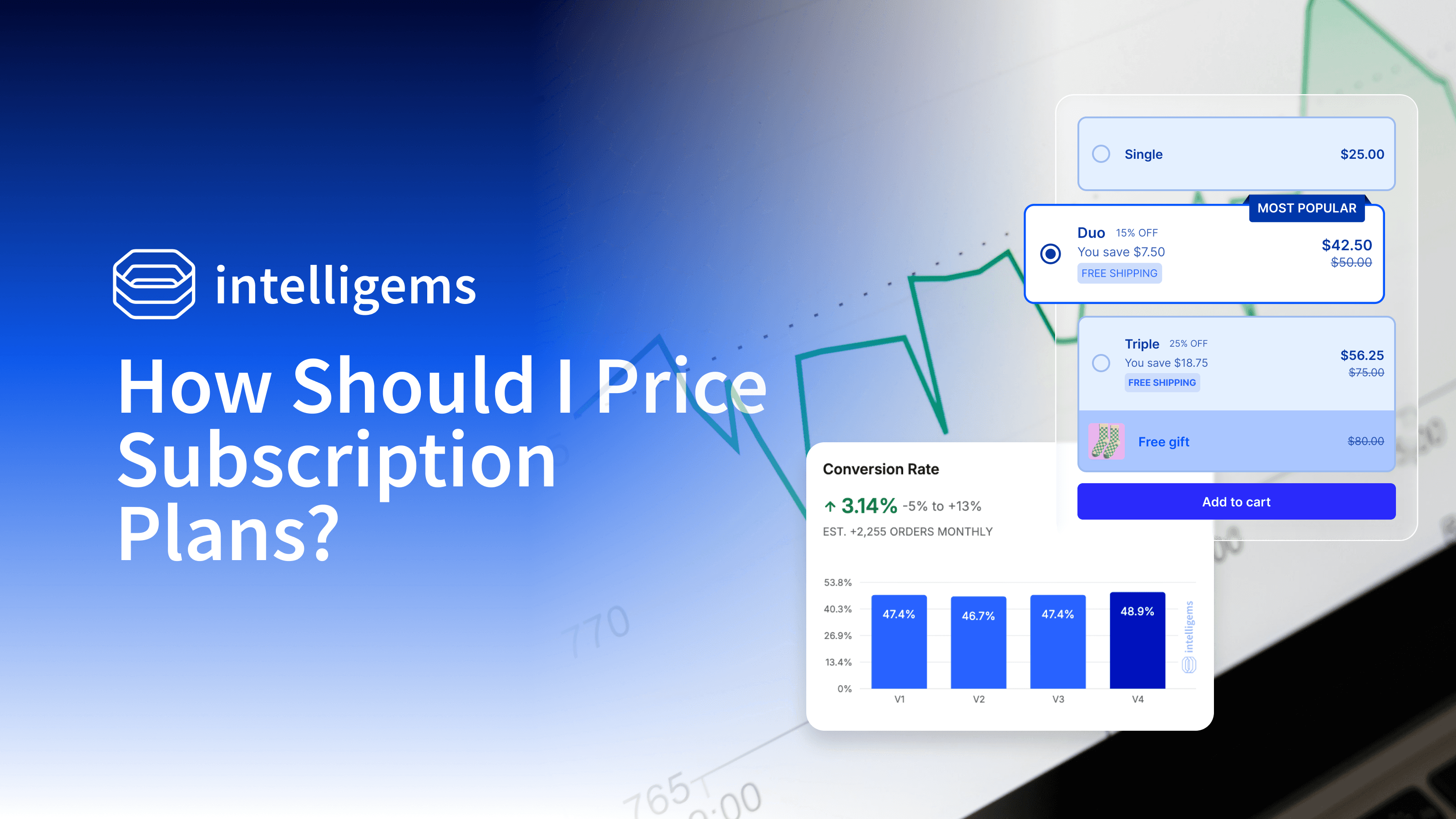
Small enough to protect margins. Big enough to convert.
That's the subscribe-and-save pricing sweet spot. But how do you know what's "enough"? Most brands default to 10-15% because that's what everyone offers. Your customers might subscribe at 5%. Or they might need 20%.
The only way to know is to test. Let's explore how to find the subscription discount that maximizes your profit without leaving money on the table.
What Makes Subscription Pricing Different?
You're not pricing a single purchase. You're pricing a relationship.
One-time pricing optimizes for today's transaction. Subscription pricing optimizes for customer lifetime value. This changes everything about how you should think about discounts.
A subscriber who pays 10% less every month for 12 months is worth far more than a one-time buyer at full price. That math seems obvious. But the flip side is equally important: give away too much discount and you're subsidizing customers who would have subscribed anyway.
Subscription businesses have high repeat behavior. A large percentage of your profit comes from future purchases, not the initial order. This means subscription pricing errors compound over time. An unnecessary 5% discount on your highest-value customers erodes your margins month after month.
This episode dives deeper into subscription experimentation, exploring how to measure true subscriber LTV beyond initial conversion metrics and why waiting 60-90 days reveals the real impact of subscription strategies.
How Do Most Brands Price Subscribe & Save?
Most pick a number that sounds good, not a number that's optimal
When brands set subscription discounts, they typically rely on one of these approaches. Each sounds logical but leaves you uncertain about whether you're over-discounting or under-converting.
Industry benchmarks: "Everyone offers 10-15%" is the common refrain. But your margins and customers differ. What works for a supplement brand might destroy profitability for a coffee roaster.
Matching competitors: Easy benchmark, but you're optimizing for their business, not yours. Your competitors have different margins, different customer acquisition costs, and might simply be wrong.
Gut feel: "20% feels generous enough to convert." Maybe. Or maybe it's 5% more than you need, which compounds into significant margin loss over a subscriber's lifetime.
Platform defaults: Using whatever Shopify or ReCharge suggests without testing whether it's optimal for your specific business.
These approaches miss the fundamental question: What's the minimum discount that converts a one-time buyer into a subscriber?
Why Does Finding Your Minimum Subscription Discount Matter?
Every unnecessary percentage point compounds into lost profit over the subscriber's lifetime
Your subscription discount has a minimum effective amount: the smallest discount that achieves your conversion goal. Anything above that is margin you're giving away to customers who would have subscribed anyway.
The math is brutal. If you're offering 15% when 10% would convert equally well, that 5% compounds across every order for every subscriber. On a $50 monthly subscription with 10-month average retention, that's $25 per subscriber in unnecessary discounts.
Scale that across thousands of subscribers and the numbers get uncomfortable quickly.
Your subscription customers are your highest-value customers. Over-discounting them hurts the most. Here's how to think about it:
Subscriber LTV = (Monthly margin x Average subscription length) - Acquisition cost
The discount you offer directly reduces monthly margin. A deeper discount might increase subscription length slightly, but rarely enough to offset the margin hit. Testing reveals where this trade-off optimizes.
What's the Simplest Test I Can Run?
Test different subscription discounts and measure subscriber behavior, not just conversion
Step 1: Establish Your Baseline
Before testing, know where you stand. Pull your subscription analytics and calculate:
Current subscription conversion rate (visitors who subscribe vs. buy one-time)
Average subscription length in months
Current subscriber profit per visitor
Step 2: Test 2-3 Discount Depths
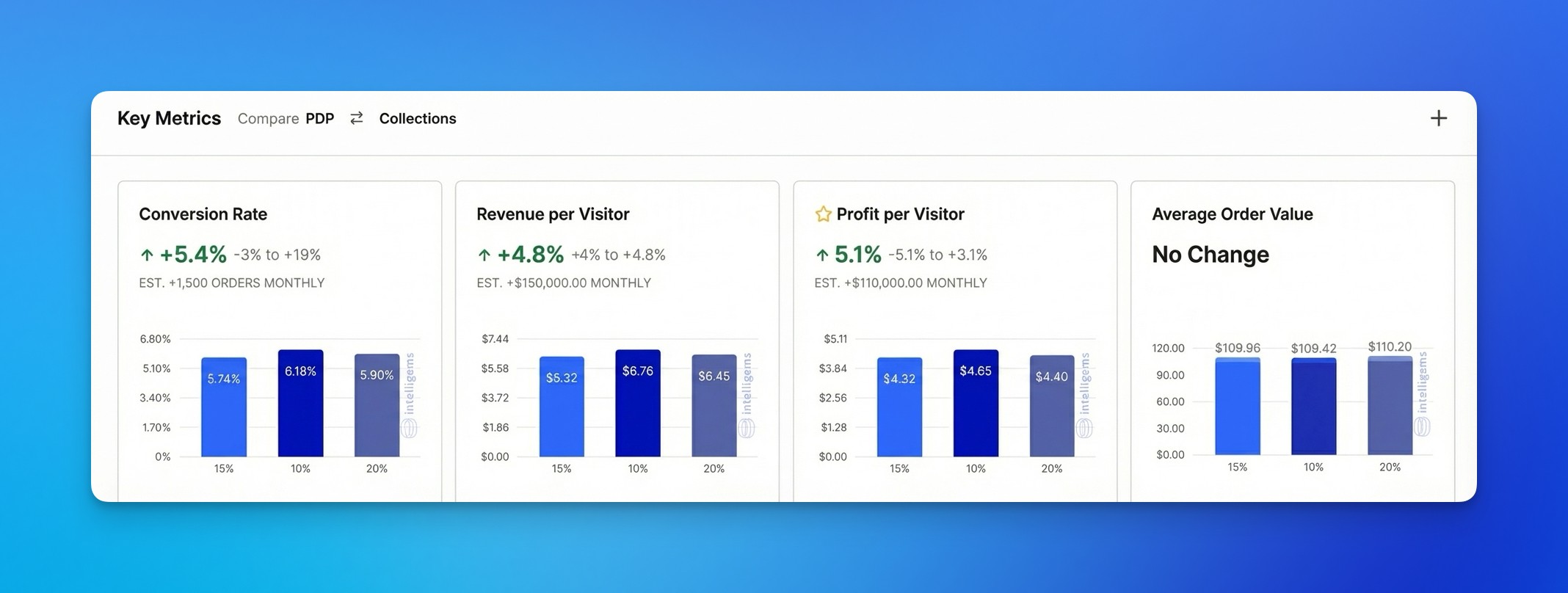
If you currently offer 15%, test:
Control: 15% (current)
Variant A: 10% (shallower)
Variant B: 20% (deeper, to confirm you're not under-discounting)
Start with one shallower option. You might discover 10% converts nearly as well as 15%, recapturing 5 percentage points of margin on every subscription order.
Step 3: Measure Beyond Initial Conversion
Don't just watch subscription conversion rate. Track:
First-order profit per visitor
Subscription conversion rate by variant
Average subscription length by discount group (this emerges over time)
Churn rate by acquisition discount
Step 4: Run Longer Than Typical Price Tests
Subscription tests need more time. You're measuring not just who subscribes, but who stays subscribed. Run for 4-6 weeks minimum to start seeing retention differences between groups.
Early conversion data can mislead. The 20% discount group might convert 30% better initially but churn 50% faster. Only time reveals the full picture.
Common Mistakes With Subscription Pricing
Subscription pricing errors compound over time
Measuring only initial conversion: Higher discounts convert better initially but might attract deal-seekers who churn faster. A 15% discount that retains customers for 8 months beats a 25% discount with 4-month retention.
Ignoring churn by acquisition discount: Track whether subscribers acquired at different discount levels behave differently. The kind of customers you gain matters as much as how many.
Assuming all subscribers are equal: Subscribers acquired at deep discounts may have different lifetime values than those who needed only modest incentives.
Not testing because "subscriptions are complex": The same A/B testing principles apply. Same Monday morning, same products, different discount. When behavior differs, the discount caused it.
Changing subscription terms mid-test: You invalidate everything. Let tests run their course, even if early results make you nervous.
Stop Guessing. Start Knowing.
Most brands pick subscription discounts based on benchmarks or gut feel, then never test whether those discounts are optimal. They're leaving margin on the table with every subscription order.
Your minimum effective subscription discount exists somewhere between 0% and your current offer. It's the precise point where conversion justifies the margin sacrifice. Every percentage point above it compounds into lost profit over each subscriber's lifetime.
Find certainty in your subscription pricing:
Test your current discount against shallower alternatives
Measure subscriber behavior, not just initial conversion
Track churn and retention by acquisition discount
Run tests long enough to see lifetime value differences
Act on what the data tells you
Don't guess what subscription discount to offer. Know!
Ready to find your minimum effective subscription discount? When you're ready to stop over-discounting your highest-value customers, let's get you testing beyond what's typical.
Price Testing
Ecommerce Strategy
AB Testing


