
AB Testing
How Should I Price New Product Launches?
The conventional wisdom says new products need discounts to overcome the lack of reviews and social proof. But that wisdom misses something: new products also have something established products don't. Scarcity. Novelty. The excitement of being first.
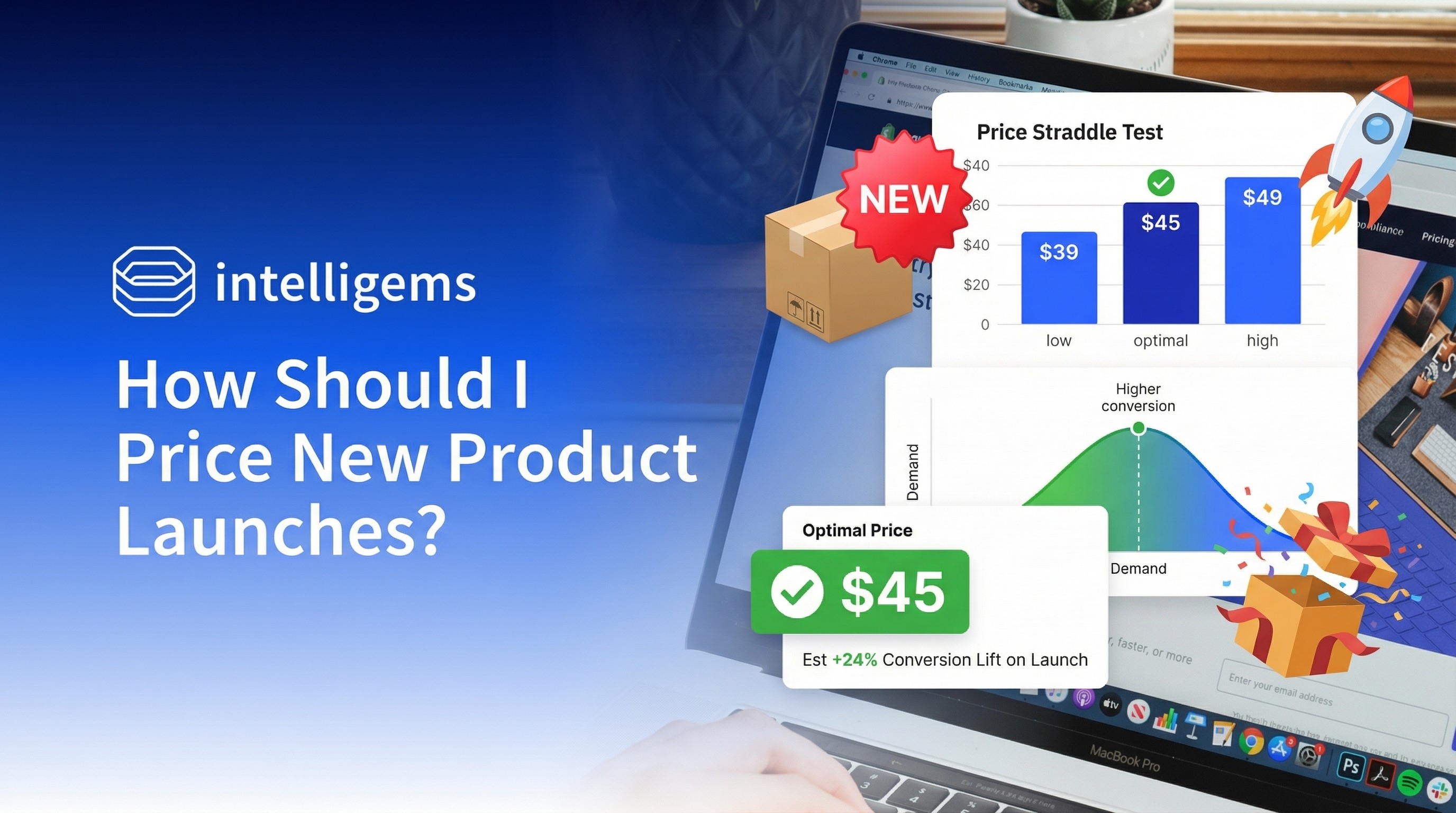
Should your newest product launch at a premium? Or does it need an introductory discount to get traction?
The conventional wisdom says new products need discounts to overcome the lack of reviews and social proof. But that wisdom misses something: new products also have something established products don't. Scarcity. Novelty. The excitement of being first.
Early adopters often pay more, not less. The question isn't whether to discount. It's whether your specific product, with your specific customers, performs better at premium prices or with introductory offers. The only way to know is to test.
What Actually Happens When You Launch a New Product?
New products create pricing dynamics that established products don't have
New product launches sit at a unique intersection. On one side, you have the power of novelty. Customers who want to be first. Limited availability that creates urgency. No price anchoring from previous purchases.
On the other side, you have uncertainty. No reviews yet. No social proof. Customers taking a risk on something unproven.
These forces pull in opposite directions. Novelty and scarcity suggest you could charge more. Raising prices might not hurt your sales as much as you fear. But uncertainty suggests you might need to lower the barrier with a discount.
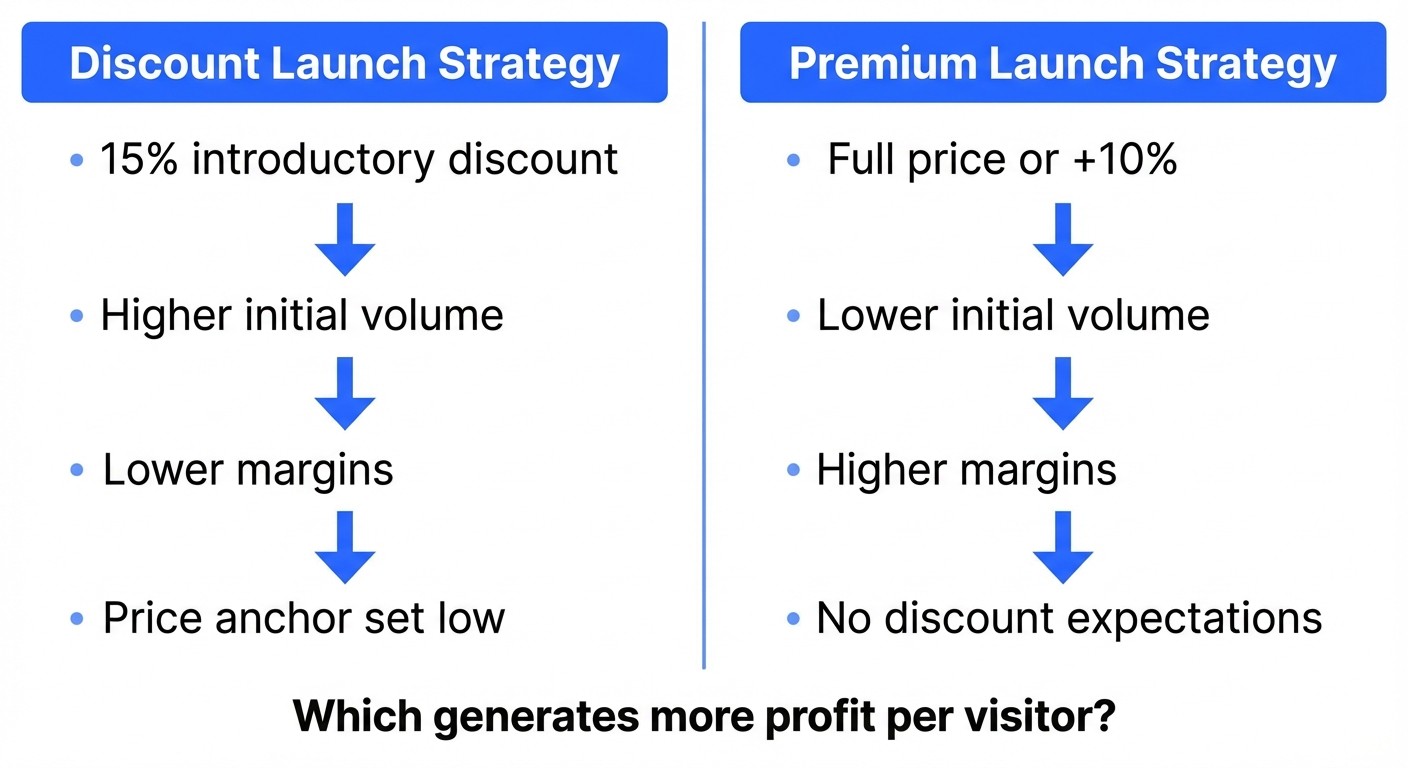
Consider two brands launching similar products. The first offers 15% off to drive initial sales. They get volume but set a price anchor that's hard to escape. The second launches at full price, betting on scarcity. They get fewer initial sales but higher margins and no discount expectations.
Which approach wins? It depends entirely on how your customers respond to your product.
This episode dives deep into the raise vs. lower pricing debate, revealing that two-thirds of price tests show lower prices win—but margin profile is the deciding factor for new product launches.
How Do Most Brands Approach New Product Pricing?
Most approaches rely on assumptions, not data
When brands launch new products, they typically default to one of these approaches. Each sounds logical but leaves you guessing about the actual profit impact.
Existing margin targets. Apply the same margins you use for established products. Simple, but ignores that new products have different dynamics. Your bestseller earned its margins over time.
Category pricing. Price similar to existing products in that category. Treats new products like established ones when they're fundamentally different. A new release isn't comparable to something that's been selling for two years.
Default to discount. Launch with an introductory offer because that's what everyone does. But you might be giving away margin unnecessarily. Your minimum effective discount could be zero.
Premium then adjust. Start high and lower if needed. Risky. You might kill momentum before the product ever gets traction.
Copy competitors. Launch the same way they do. But their customers aren't yours. Their costs aren't yours. Their brand positioning isn't yours.
The challenge with all these approaches: you have no data on this specific product yet. You're making assumptions about customer behavior you haven't measured.
Why Does Profit Per Visitor Decide the Answer?
Only profit per visitor shows which launch strategy actually wins
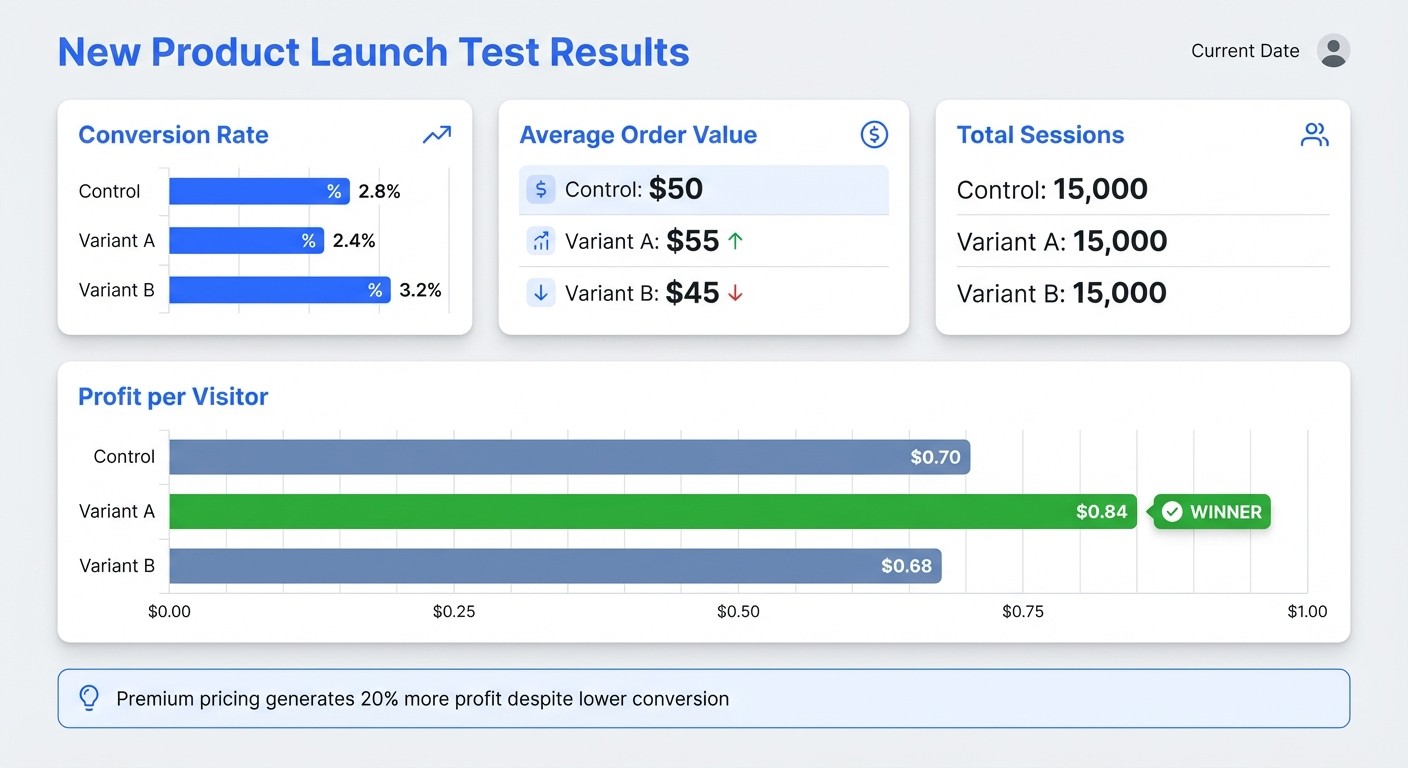
Conversion rate alone won't tell you if your launch pricing is right. A discount might boost conversion 30% but compress margins so much that profit drops. Premium pricing might reduce conversion 20% but increase profit per visitor significantly.
The formula that matters: Profit per visitor = (Revenue - Costs) / Total visitors
This captures everything. Higher prices with lower conversion? Reflected in profit per visitor. Discounts driving volume? Reflected in profit per visitor. It's the only metric that tells you if you're actually winning. Understanding whether tiered discounts or flat discounts work better for your launch can also impact this calculation.
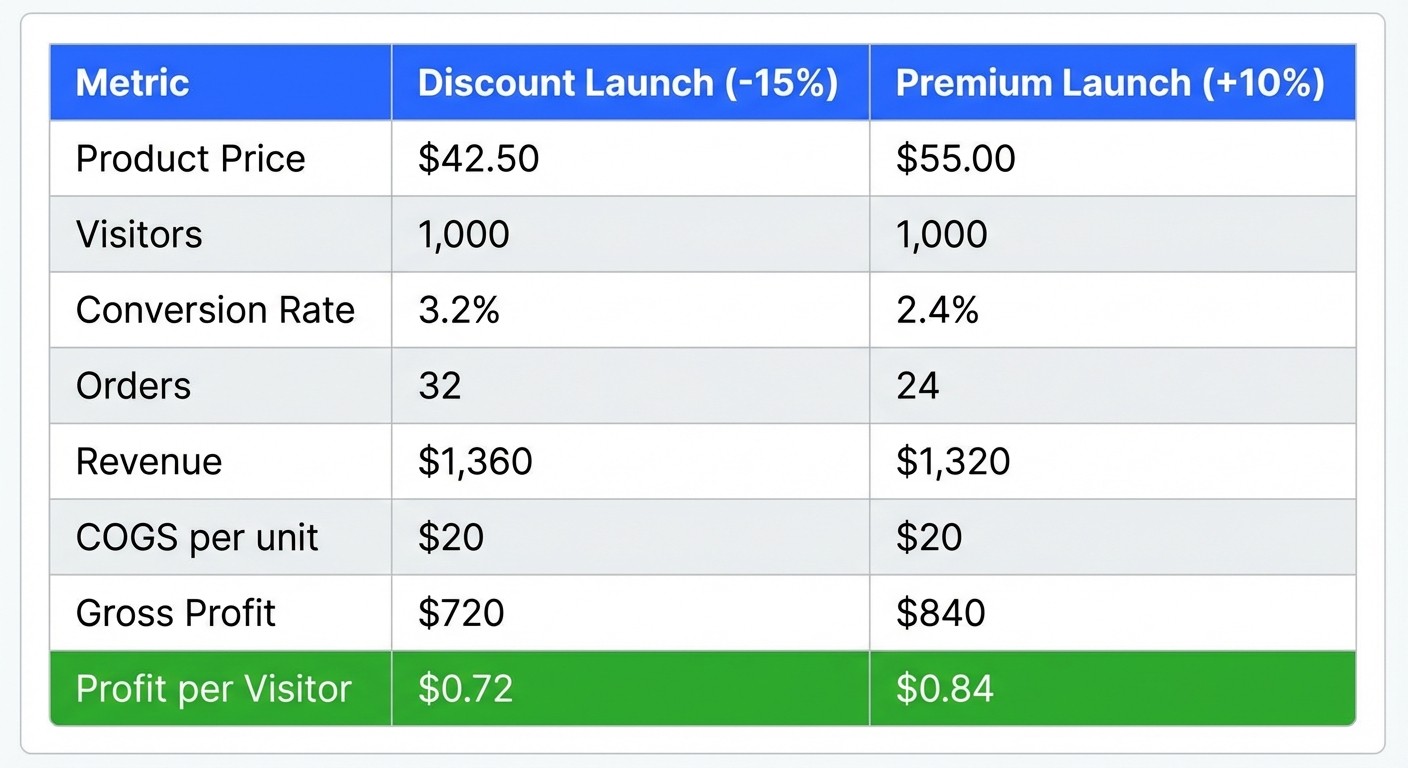
Customer quality matters too. Discount-acquired customers often have lower lifetime value. They came for the deal, not the product. Premium-price customers might return more often because they weren't trained to wait for sales.
What's the Simplest Test I Can Run?
Test launch pricing during your launch window to discover what works
Your product launch is actually your best testing opportunity. You have natural buzz, focused attention, and no historical pricing to anchor against.
Step 1: Choose Your Launch Strategies to Test
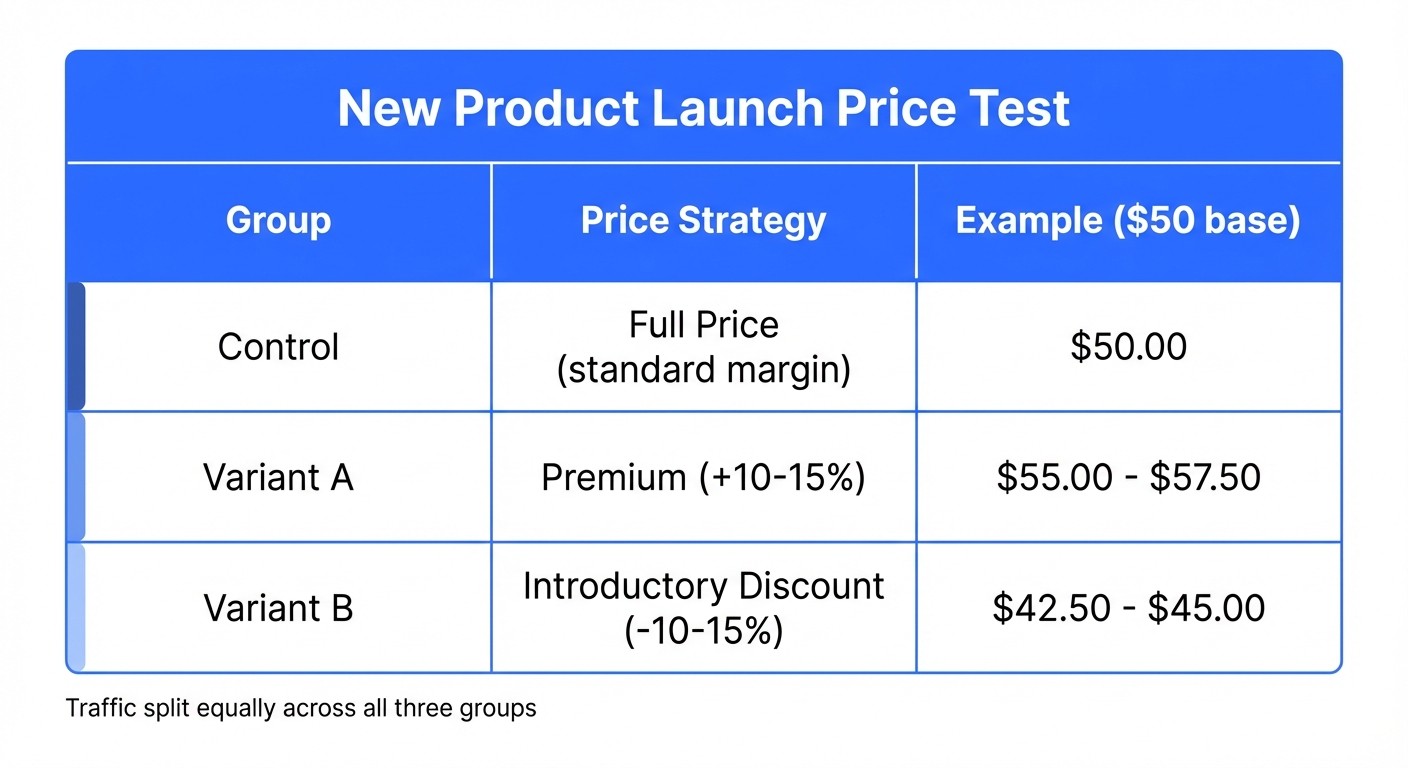
Set up three groups:
Control: Full price (your standard category margin)
Variant A: Premium pricing (+10-15% above category)
Variant B: Introductory discount (10-15% off full price)
This brackets the question. You'll learn whether customers reward scarcity, respond to discounts, or buy at full price regardless.
Step 2: Run During Your Launch Window
Start testing from day one. The launch period captures true launch behavior. Early adopters, first impressions, initial momentum. Testing later means different customer behavior. If you need help getting started, learn how to set up a price test in our documentation.
Step 3: Track What Matters
Pull your analytics and focus on:
Conversion rate: How many visitors buy
Average order value: How much they spend
Profit per visitor: The metric that matters most
Customer quality: Track repeat behavior by acquisition price
This foundational episode walks through the straddle approach to price testing—testing 5-10% above and below your current price—and explains why profit per visitor is the north star metric.
Step 4: Act on What the Data Shows
If premium wins: capture that margin. Your new products don't need discounts. If discount wins: now you know your minimum effective discount for launches. If full price wins: avoid unnecessary discounting entirely.
What Mistakes Keep Brands Uncertain About Launch Pricing?
Don't let these pitfalls mislead your launch strategy
Assuming new products need discounts. Scarcity and novelty might justify premium pricing. Test before defaulting to discounts.
Testing too late. The launch window is your best testing opportunity. Once you've established a price, changing it creates anchoring problems.
Ignoring customer quality. Discount-acquired customers might not return. Track lifetime value by acquisition price to understand the full picture.
Treating launch price as permanent. Your launch test informs launch strategy. As the product matures and gains reviews, optimal pricing might shift.
Only measuring conversion. A higher-converting discount strategy might generate less profit than a lower-converting premium strategy. Measure profit per visitor. Learn how to add profit to your analytics to ensure you're tracking the right metric.
Stop Guessing. Start Knowing.
Most brands default to introductory discounts because that's what feels safe. They worry that charging full price, or premium prices, will kill momentum before it starts.
The truth is more nuanced. Some products thrive at premium launch prices because scarcity and novelty justify the premium. Others need discounts to overcome the risk of buying something unproven. Your products might not need any discount at all.
Find certainty in your launch pricing:
Test three strategies: premium, full price, and introductory discount
Run the test during your launch window
Track profit per visitor, not just conversion
Monitor customer quality for long-term value signals
Act on what the data shows
Don't guess how to price your new product launches. Know!
Ready to discover the right launch strategy for your new products? When you're ready to know for sure, let's get you testing beyond what's typical.
AB Testing
AB Testing
AB Testing


