
AB Testing
When should I use multivariate testing instead of an A/B test?
Use it to test several versions.

Use a multi-variant test to compare several versions at the same time
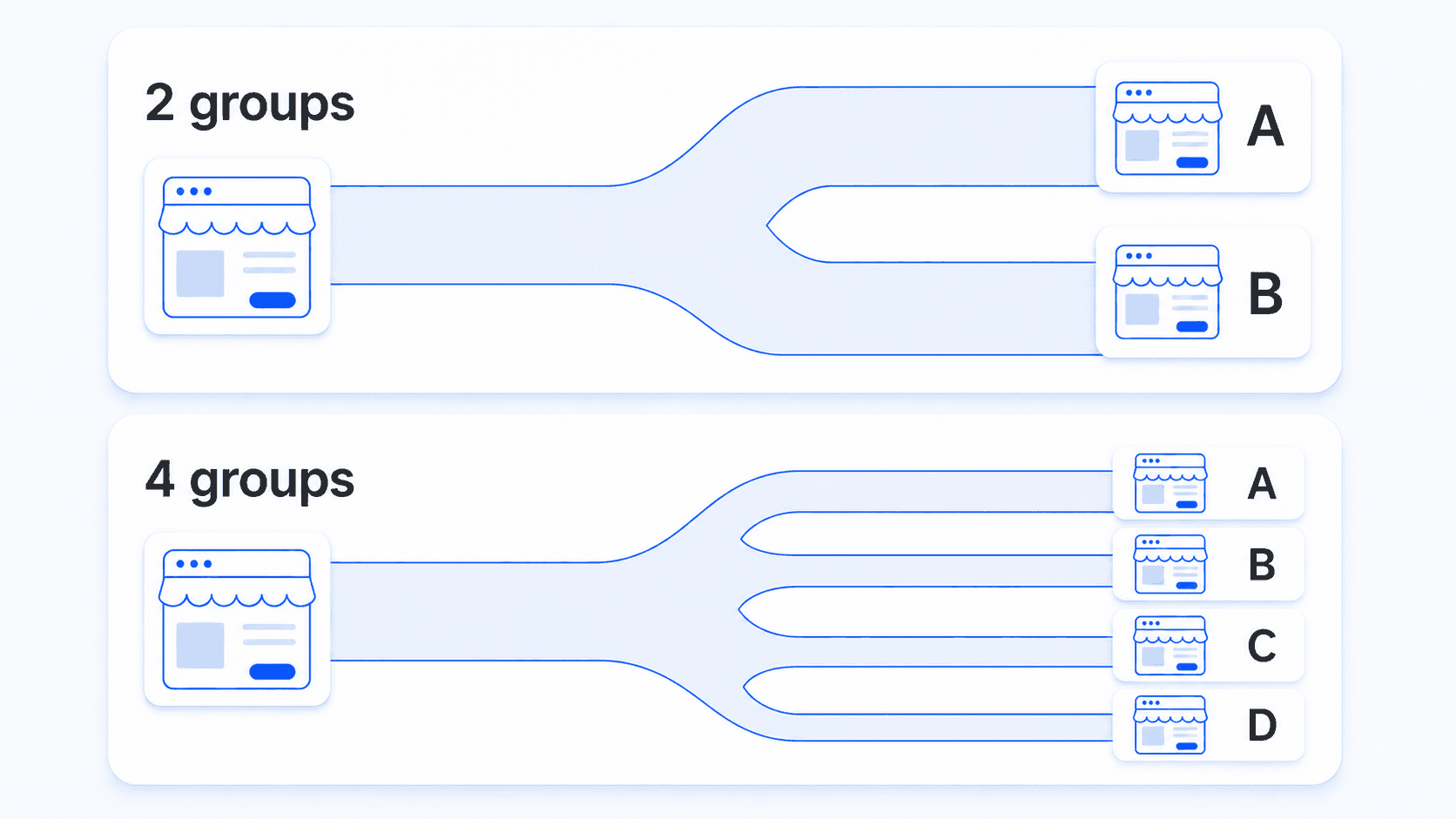
Here, multi-variant means one experiment with a control and several alternatives, such as A/B/C/D. Intelligems supports up to five groups in one experiment, including the control.
This setup fits when you have several serious versions ready, each can run under the same conditions, and the decision is which version to keep. A homepage test with three complete hero treatments has that shape. If you only need to compare one new treatment with the current experience, A/B gives you the same decision with fewer groups.
Every extra variant spends part of your learning budget
Adding a group does not add eligible traffic. It divides the same pool one more way. Intelligems engineering guidance confirms that an uneven random split does not by itself bias the result. The analytics account for how many visitors each group received.
The tradeoff is precision and speed. A group with less traffic learns more slowly and keeps wider confidence intervals for longer. That is why Intelligems generally recommends an even split, so groups learn at roughly the same rate.
Estimate orders per group before you add another variant
Estimate how many orders will enter the experiment, then divide by the planned group count. Current Intelligems guidance uses 200 to 300 orders per group as a planning range and recommends at least one full week.
Those numbers are guideposts, not a guarantee of significance. The size of the change and your chosen confidence threshold also affect the requirement. If every group cannot reach your preset minimum in time, cut the weakest options or run a simple A/B test first.
Keep the groups comparable and split traffic evenly
Set the experiment up around one decision:
Give every group the same primary success metric.
Keep one clear difference in each content treatment and hold other details steady.
Set the allocation, minimum orders, minimum duration, and confidence threshold before launch.
If a version exists only because the tool has room for it, remove it. Each group should be credible enough that you would act if it won.
When variables can interact, test each combination or separate them
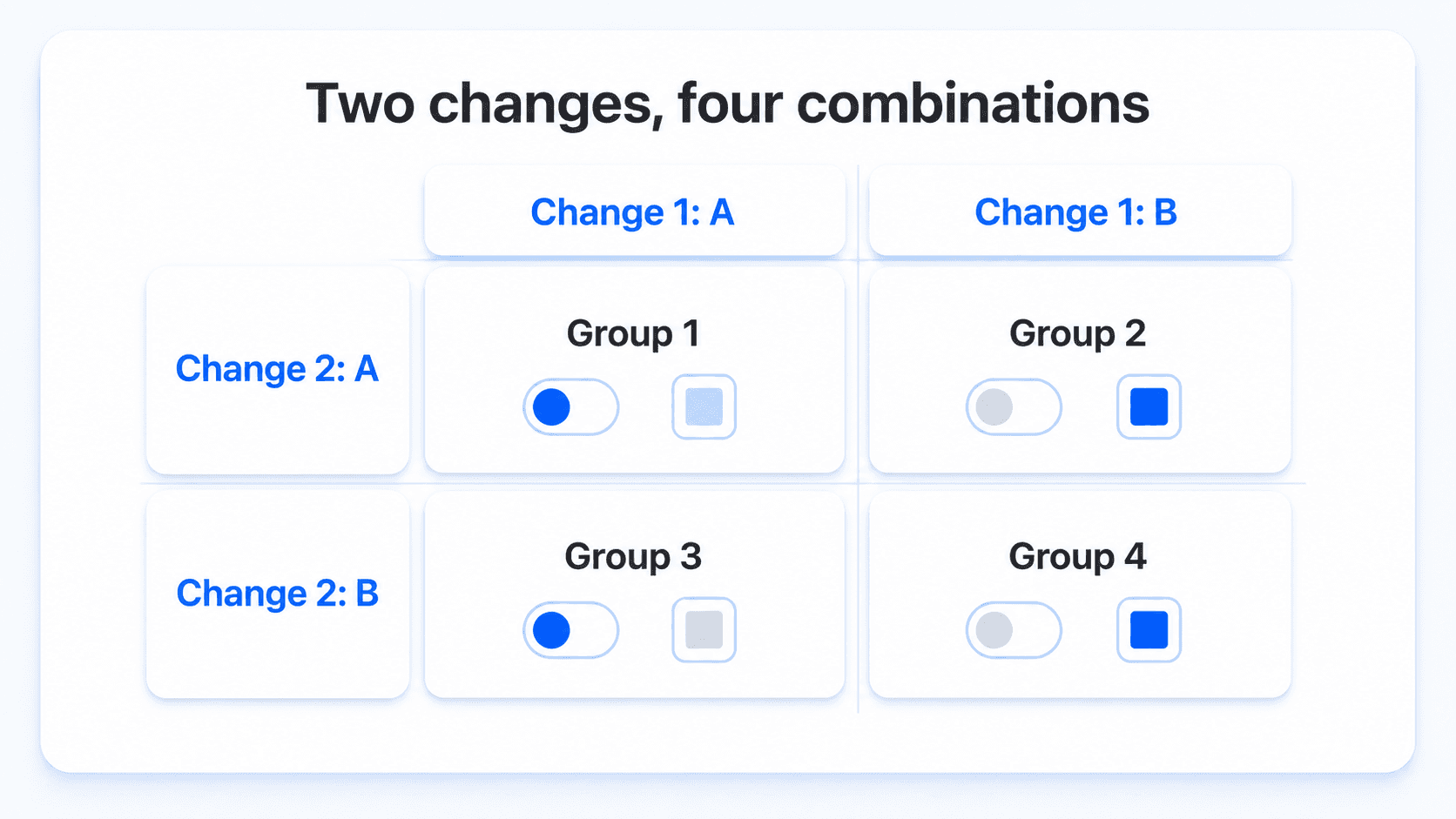
Sometimes multivariate means testing combinations of variables, rather than comparing several complete versions. If two changes could affect the same shopper decision, separate overlapping tests can create combinations you did not label or measure.
Intelligems’ current guidance offers three clean paths. Create one experiment with a group for each combination, run the tests in sequence, or make them mutually exclusive. Combinations multiply quickly. Two changes with two options each already create four groups, so check the per-group order estimate again.
Bring your hypothesis and traffic estimate to Intelligems
Write down the one decision the test must make and the groups you want to compare. Add the weekly orders likely to enter and the metric you will use to choose. Bring that short plan to Intelligems.
The team can help you decide whether the cleanest design is A/B, one multi-variant experiment, a full combination test, or a smaller sequence. The goal is the leanest group count that can answer your question while the answer is still useful.
AB Testing
Expert Guide
Ecommerce Strategy


