
AB Testing
What's the Minimum Traffic I Need to Run a Meaningful A/B Test?
Every low-traffic brand asks the same thing: am I big enough to test yet? It's the wrong question, and it's costing you tests you could already be running.

Carlos Trujillo

There's no magic visitor count that flips testing from pointless to worthwhile. When you're worried you don't have enough traffic, the more useful question is usually about the test itself: is the change you're running big enough to matter? A real price difference, a different shipping policy, a stronger offer, these show up in behavior fast, even on modest traffic. A button-color tweak barely moves anyone, so it needs a mountain of visitors before you can tell it did anything. More often than not, a volume worry is a sign the change is too small to be worth testing, not that your store is too small to test.
Why a Test Needs Traffic in the First Place
Traffic matters because a test has to be statistically sound before you act on it. Sales bounce around day to day no matter what you do, and with too little data you can get fooled in both directions: calling a fluke a winner, or missing a change that actually worked. Enough traffic is what lets you separate a real result from that noise and avoid those false signals.
As a rule of thumb, the more traffic and transactions a test collects, the more statistical power it has, and the more certainty you can take from it. That's the grain of truth inside the traffic worry. But it's only half the story, because the size of the change counts just as much. A big change stands out over the noise with far less traffic, while a small one stays buried in it. That's why two stores with identical traffic can land in completely different places: the one testing a 15% price move reads a clear result in a few weeks, while the one testing a headline font never does.
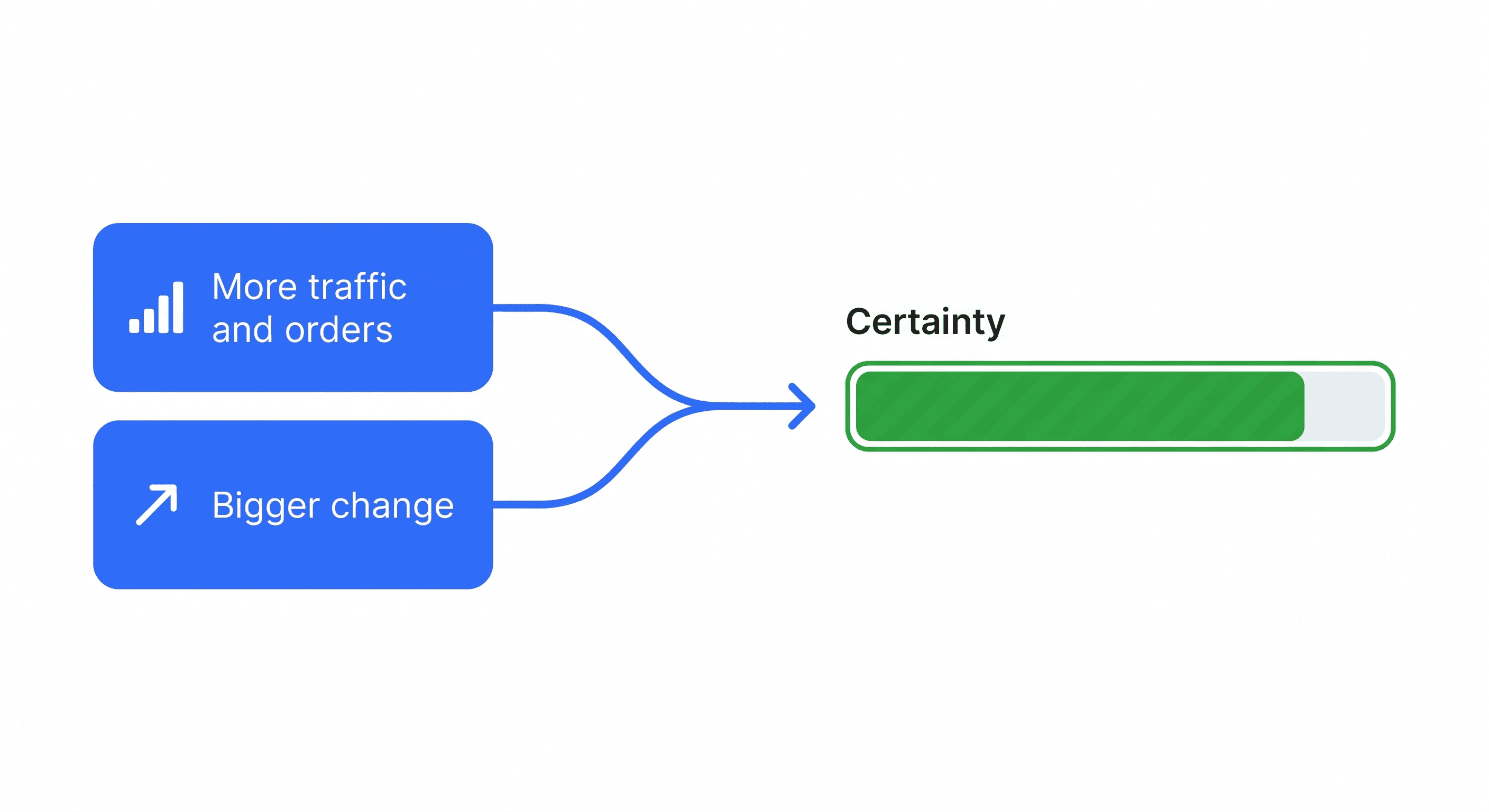
Whether your store has enough volume to run a testing program at all is a separate, store-wide question. This is about the single test in front of you, and there the size of the change matters more than the size of the store.
More on how much certainty you actually need before you make a call.
"Meaningful" Cuts Two Ways
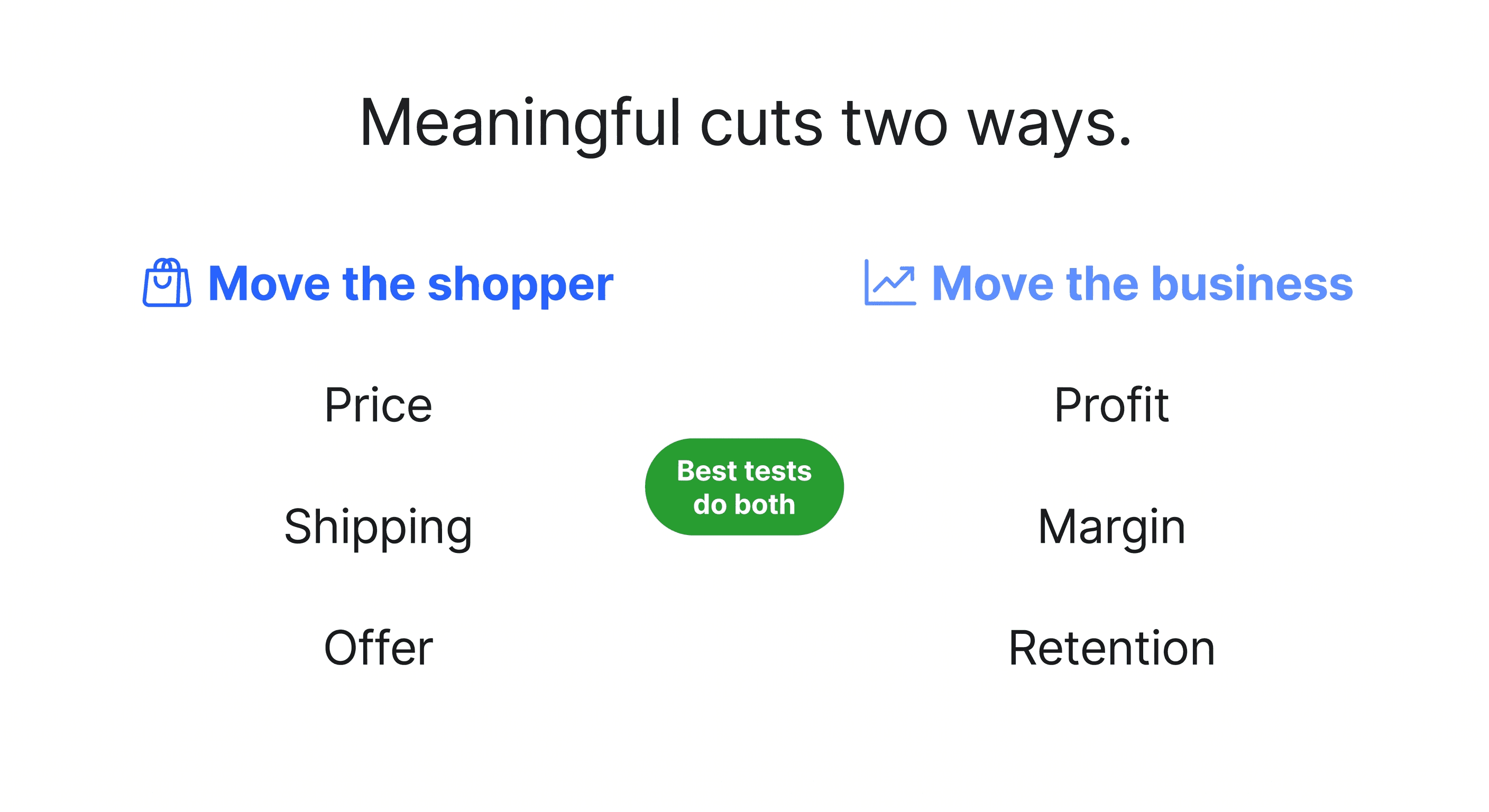
"Meaningful" is doing double duty in that question, and it helps to split the two halves.
One is whether the change is big enough to move the shopper. Does a real customer notice it and change what they do next? Price, shipping, a stronger offer. A different shade of blue won't, so it needs a flood of traffic before any difference appears.
The other is whether it's big enough to move the business. If this variant wins, does the outcome actually matter to your bottom line? You can run a spotless test on a change nobody would care about winning, and that's traffic spent on a clean answer that wasn't worth having.
The tests worth running on limited traffic clear both bars, and they tend to travel together. The changes big enough to move a customer are usually the same ones big enough to move your numbers. Before you launch, ask both: would a shopper notice and respond, and if it wins, would it move a number you care about?
Designing a Test That Reads on Low Traffic
So when traffic is tight, the fix isn't to test something small and safe. It's the opposite. Make the change bigger, and put it in front of more people.
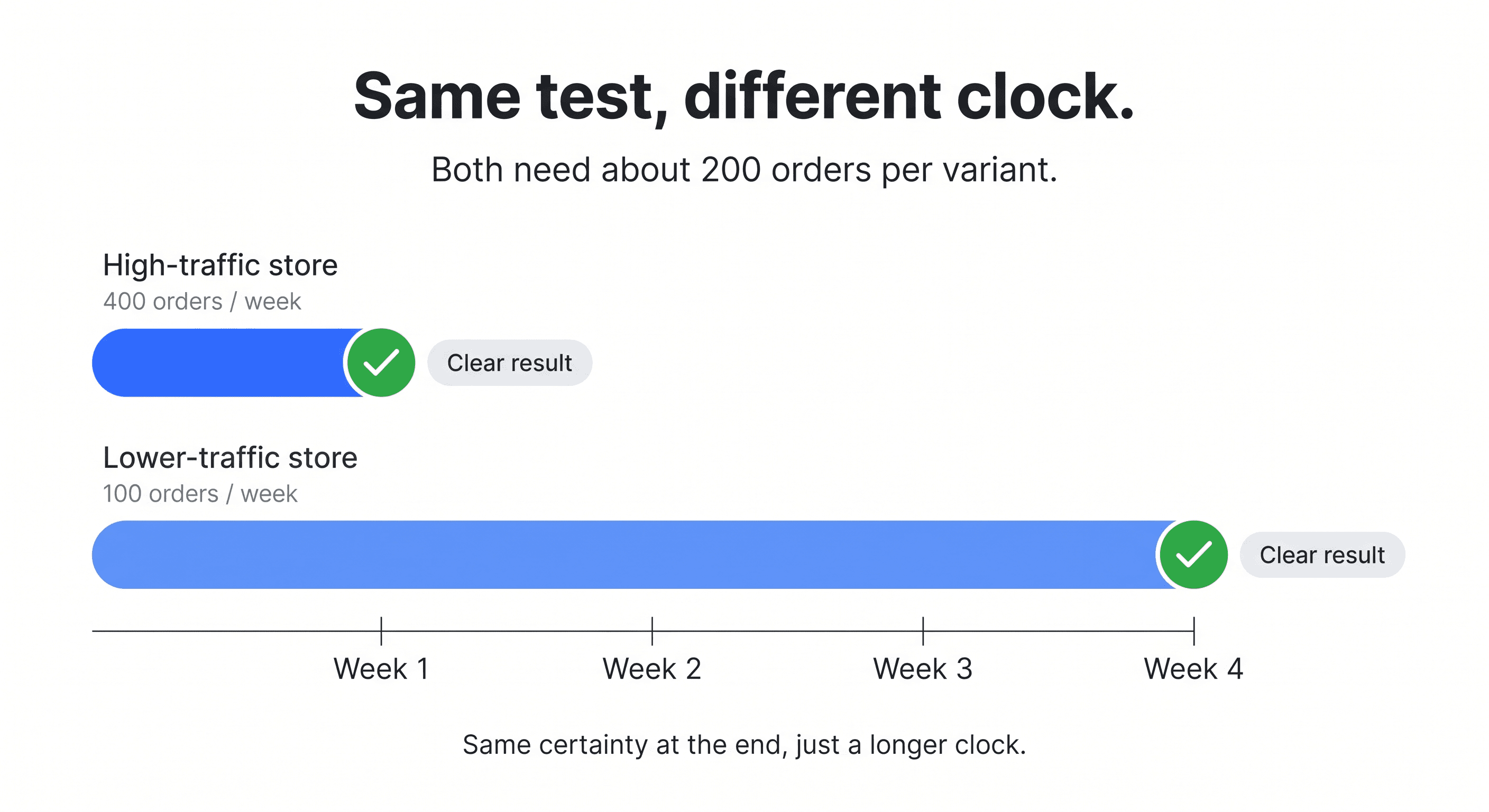
A loose guidepost is a couple hundred orders per variant before you trust a result, but treat that as a reference, not a gate. You get there two ways: more orders per week, or more weeks of running. To put rough numbers on it, a best-seller doing 100 orders a week might reach it in about a month, while a brand with four times the traffic gets there in a week. Same test, same certainty at the end, just a longer clock. That longer clock is the real cost of lower traffic, which is exactly why prioritizing matters. If a test is going to tie up a month, point it at something that can move the needle, not a coin-flip tweak.
Three moves make a test read on limited volume:
Put the change where the most people see it. A sitewide element or a product page reaches every visitor, while a checkout step only reaches the sliver who get that far.
Widen the contrast. A straddle price test with a 10% to 15% move creates a louder signal than a 2% nudge.
Keep the variant count lean. One against a control rather than five, so every order counts toward one clear comparison.
Start With the Change, Not the Traffic
The minimum traffic that matters isn't a property of your store. It's a property of what you choose to test. A change big enough to move your shoppers and your bottom line will usually give you an answer on the traffic you already have, even if it takes a few extra weeks to get there. A trivial one won't, no matter how many visitors see it. So don't wait until you're bigger. Pick the one change worth testing, and run it.
Price Testing
Expert Guide
Ecommerce Strategy


