
AB Testing
Where Should I Send Paid Traffic?
Paid visitors arrive with expectations set by your ad
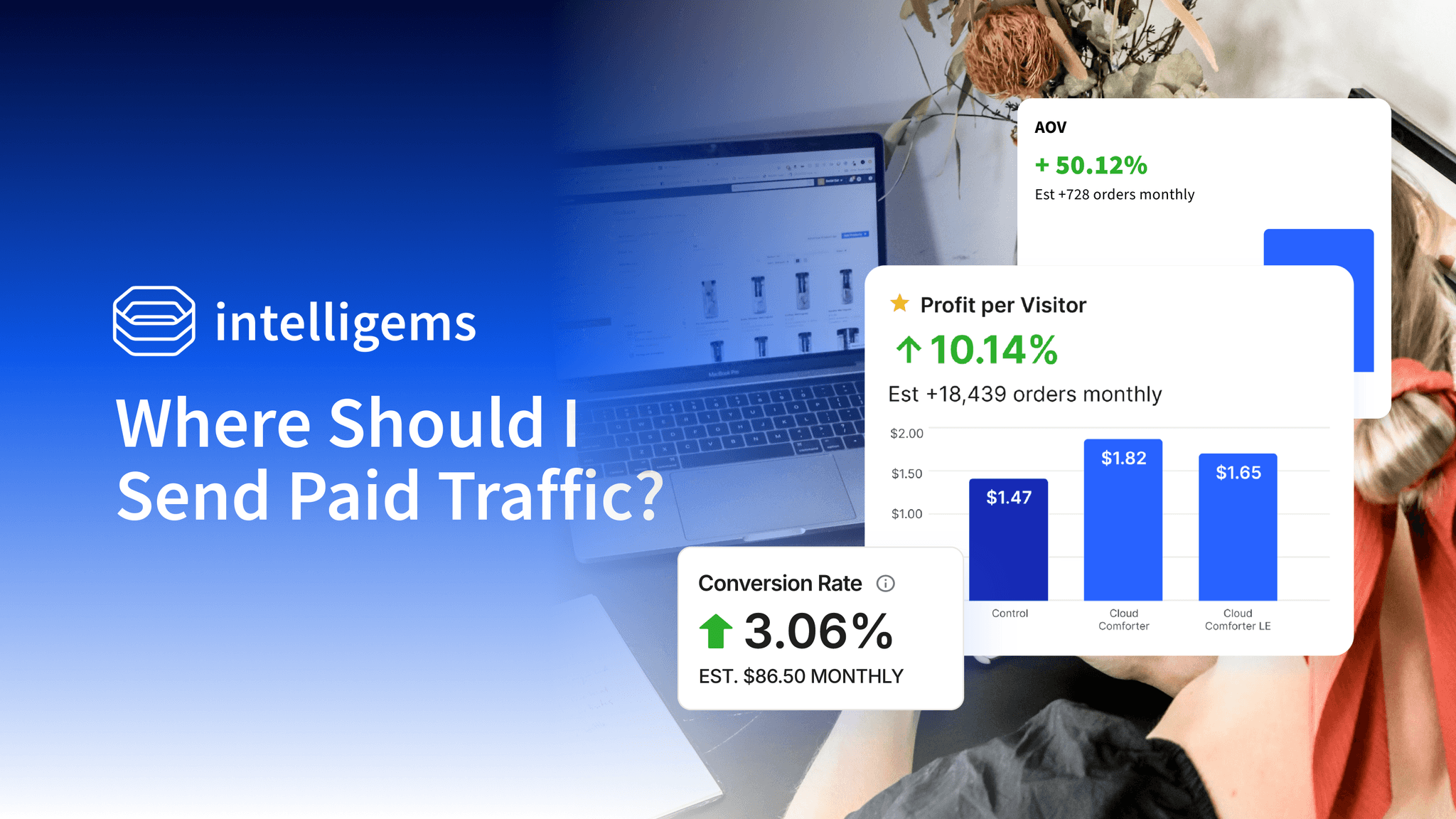
Send paid traffic where it converts best. Sounds obvious.
But paid traffic visitors behave differently than organic. They clicked an ad with a specific message, a specific promise. If the page they land on doesn't match what brought them there, friction increases and conversions drop.
The only way to know which page converts YOUR paid traffic best is to test.
What Actually Happens When Paid Traffic Lands?
Paid visitors arrive with expectations set by your ad
Organic visitors find you through search, browse around, and explore. They're in discovery mode. Paid visitors are different. They saw your ad, something caught their attention, and they clicked expecting to find what you promised.
This creates a specific challenge. Your landing page needs to match the ad's message, or you lose them. A visitor who clicked on a "Best-selling alpaca sweater" ad and lands on your homepage has to hunt for that sweater. Some will. Many won't.
One brand tested exactly this. They had a small catalog with one flagship product. They tested their dedicated landing page versus sending traffic straight to the PDP. The PDP won. They stopped building landing pages and focused on making their PDP stronger.
This episode discusses split URL testing, including how one brand discovered that sending paid traffic to the PDP outperformed their dedicated landing page.
Congruency matters just as much as which page you choose. If your ad promotes "Buy One Get One Free" but visitors land on a page showing "20% off" with no mention of BOGO, you've broken the experience. They clicked for one reason and found something different. That disconnect kills conversions.
Try the 3-second test: load your landing page and ask yourself whether a visitor can immediately understand why they should buy from you. If they clicked an ad about a specific product or offer, that product or offer should be front and center within three seconds.
This episode explores the critical importance of message alignment from ad click through checkout, including customer research fundamentals and why congruency drives conversions.
How Do Most Brands Decide Where to Send Paid Traffic?
Most approaches copy competitors or follow convention
When setting up ad campaigns, brands typically default to one of these approaches. Each has logic behind it, but none tells you what actually works for your specific customers.
Homepage: Safe but generic. Visitors must navigate to find what the ad promised.
Dedicated landing page: Matches your ad exactly, but requires building and maintaining separate pages for each campaign.
Product page (PDP): Gets visitors directly to the product. But might overwhelm first-time visitors with too much detail.
Collection page: Shows your range. But may dilute focus from the specific product in your ad.
Whatever competitors use: Easy benchmark. But you're optimizing for their customers, not yours.
None of these approaches tell you what YOUR customers actually respond to. Testing does.
Why Does Profit Per Visitor Matter More Than Clicks?
Your landing page affects more than the first click
Ad platforms optimize for clicks. Bounce rate. Engagement. These metrics help platforms sell more ads, but they don't tell you if you're making money.
A landing page with a higher bounce rate might drive better profit per visitor if the visitors who stay are more qualified and convert at higher values. The page that "performs" best by platform metrics might be the worst for your bottom line.
Profit per visitor is what actually matters: Profit per visitor = (Revenue - Costs) / Total visitors
Different landing pages attract different buying behavior. One might convert more visitors but at lower average order values. Another might convert fewer but at higher values with better margins. Only profit per visitor captures the full picture.
When your customer acquisition costs keep climbing, the answer isn't always better ads. Sometimes it's a better landing page.
What's the Simplest Test I Can Run?
Split URL testing shows you the truth
You can test landing pages the same way you'd test prices. Split your traffic, measure results, act on what you learn.
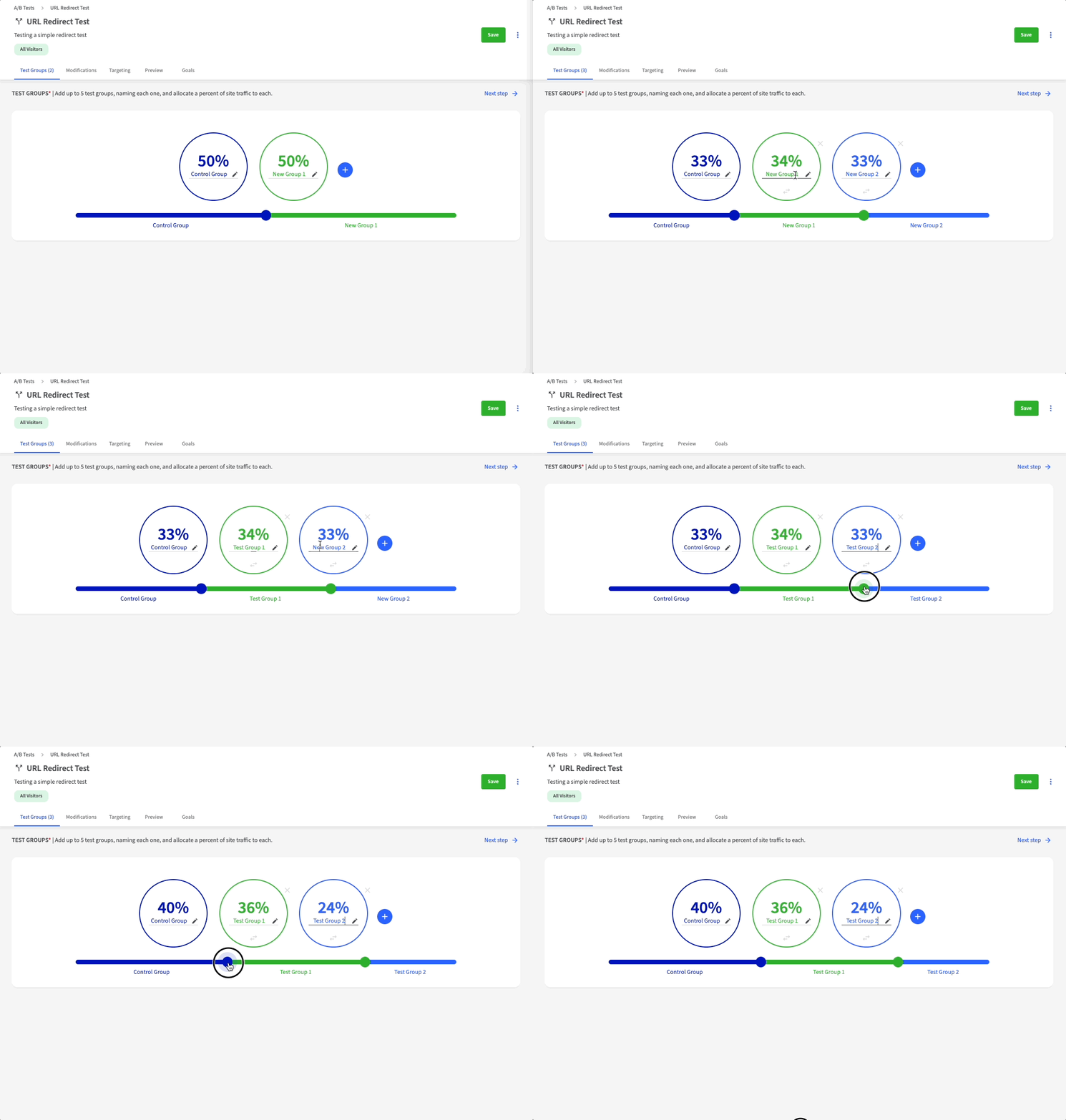
Step 1: Pick Your Campaign
Choose a campaign with consistent traffic. Enough volume to see patterns quickly. Avoid testing during major sales or seasonal spikes.
Step 2: Select 2-3 Landing Options
Don't test five pages at once. Start simple. Homepage versus PDP. Or landing page versus collection page. Two to three options gives you clear signal without overwhelming complexity.
Step 3: Split Traffic Evenly
Send equal portions of paid traffic to each destination. Same ad creative, same audience targeting, different landing URL. This isolates the landing page as the only variable.
Step 4: Track Profit Per Visitor
Pull your analytics data and focus on what matters. Not just clicks or bounce rate. Conversion rate, average order value, and profit per visitor for each landing destination.
Step 5: Run for 2-3 Weeks
Give your test time to capture full patterns. Weekday traffic behaves differently than weekend traffic. Let results stabilize before drawing conclusions.
What Mistakes Should I Avoid?
Don't let these pitfalls steer you wrong
Landing page tests seem straightforward, but small errors can mislead you. The biggest problem? Measuring the wrong thing. Ad platforms reward engagement metrics that don't correlate with profit.
Another common trap is changing variables mid-test. You want to isolate the landing page as the only difference. If your ad creative shifts or a promotion kicks in, your results become unreliable.
Optimizing for bounce rate. Low bounce doesn't mean high profit. A page might keep visitors engaged without converting them. Focus on profit per visitor.
Testing during promotions. Sale messaging creates noise. Run tests during normal traffic periods for reliable insights.
Ignoring ad message alignment. Keep ads consistent while testing landing pages.
Not tracking profit. Click-through rate doesn't pay the bills. Always measure profit per visitor.
Assuming competitors have the answer. Their catalog, customers, and margins are different. Test for your business.
Testing too many options at once. Start with two or three pages. Get clear results. Then refine.
Stop Guessing. Start Knowing.
Most brands send paid traffic to whatever page feels right, then wonder why their acquisition costs keep climbing. They assume the homepage is fine, or they build landing pages because "that's what you do."
The truth is your paid visitors have specific expectations from the ad they clicked. Testing reveals which page meets those expectations and converts profitably for YOUR business. What works for a brand with a flagship product might fail for a brand with a broad catalog. Only your data tells you what works for you.
Find your best landing page:
Pick one campaign with consistent traffic
Test 2-3 landing destinations
Track profit per visitor, not just clicks
Run 2-3 weeks for clear patterns
Act on what converts profitably
Don't guess where to send your paid traffic. Know!
Ecommerce Strategy
AB Testing
AB Testing


