
Ecommerce Strategy
Which personalizations should I run on my Black Friday site?
Who gets which offer comes first.

On Black Friday, the personalization question is who gets which offer: ad, email and direct shoppers arrive knowing different things about your sale. In Intelligems’ customer work, the sale pieces brands schedule are the same few: a top bar, product badges and a cart banner, switched on and off with the sale.
Picking which banners to schedule is the easy part; the costly part is giving every shopper the same discount.
One shared sale is the easy default
Your sale is set, and your top bar, badges and cart banner are scheduled. They switch on when the sale starts and off when it ends, so every shopper will see the same thing.
Those are the same few pieces brands schedule for every promotion, and the appeal is plain. You keep one set of pieces and copy the last promo’s version with a small edit. Nothing has to be coded into your site and taken out again.
One shared set of pieces also means one shared offer. Every shopper who sees it gets the same deal, whatever they already knew about your sale.
A shared sale pays shoppers who’d buy anyway
One sale shown to all your shoppers gives the full discount to those who would have bought with less. Not every shopper needs that depth to convert, so a full-depth sitewide discount can give away profit you didn’t need to spend.
The alternative is a layered sale. Every shopper gets a base offer, and richer offers sit above it for smaller groups you expect to repay them. That turns personalization into one question: which of your shoppers should get more than the base?
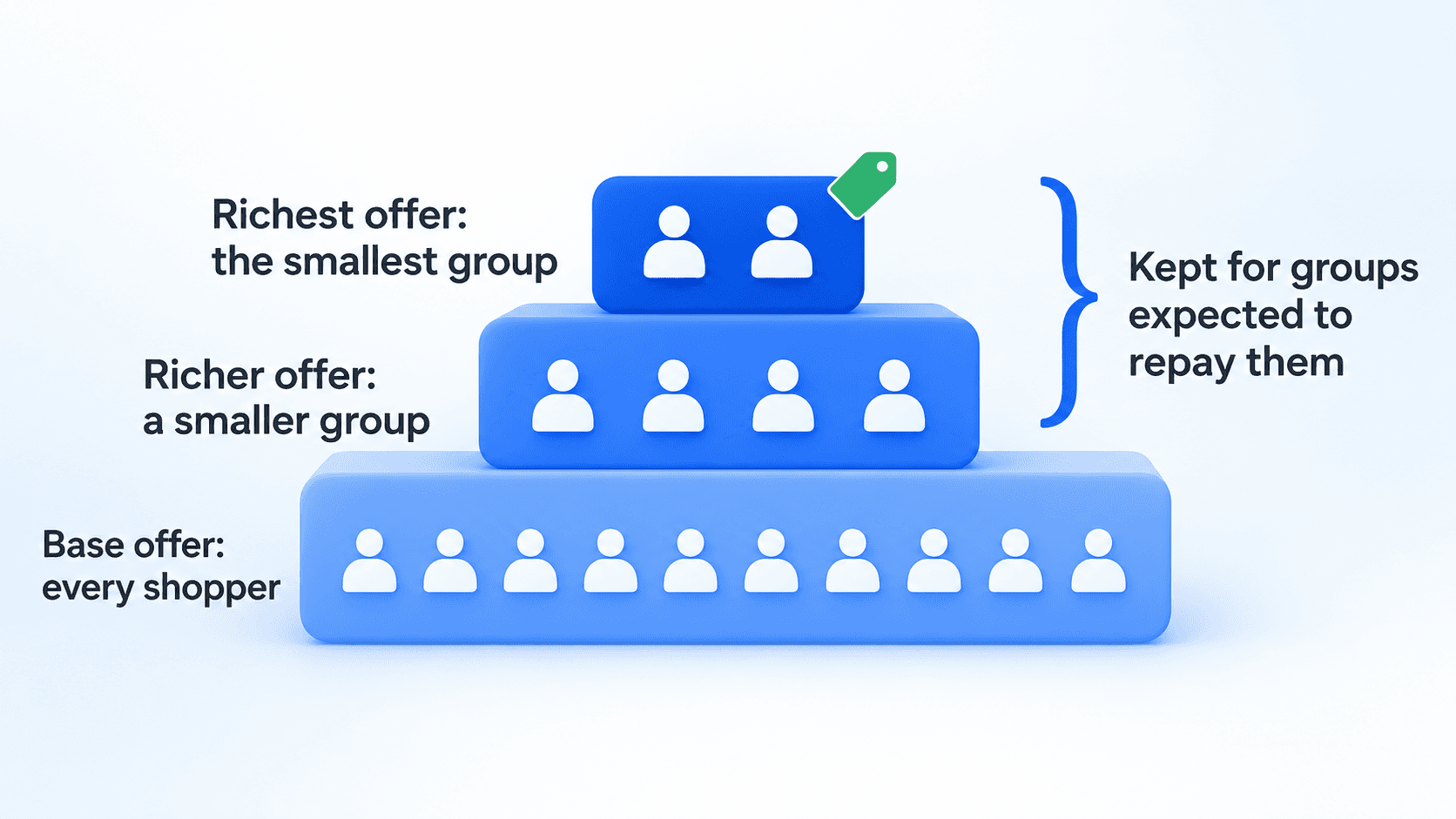
Offers by arrival path trade simplicity for fit
Your shoppers differ in intent and in how much discount they need, so one offer for all of them is a guess. A shopper who clicked your Black Friday email already knows the offer; one who tapped a cold social ad knows only what the ad said. That leaves three options, each with its own cost:
One sale for everyone is simple to run, but it pays shoppers who needed less.
One offer with the message matched to each path gives you one result to read, but every path still gets the same depth.
A different offer per path fits each group, but each group must be big enough to judge, and each new offer needs a rehearsal first.
An Intelligems co-founder explains why ad, email and direct traffic each call for a different Black Friday offer strategy; the discussion starts at 3:30.
A visible base offer comes before any variation
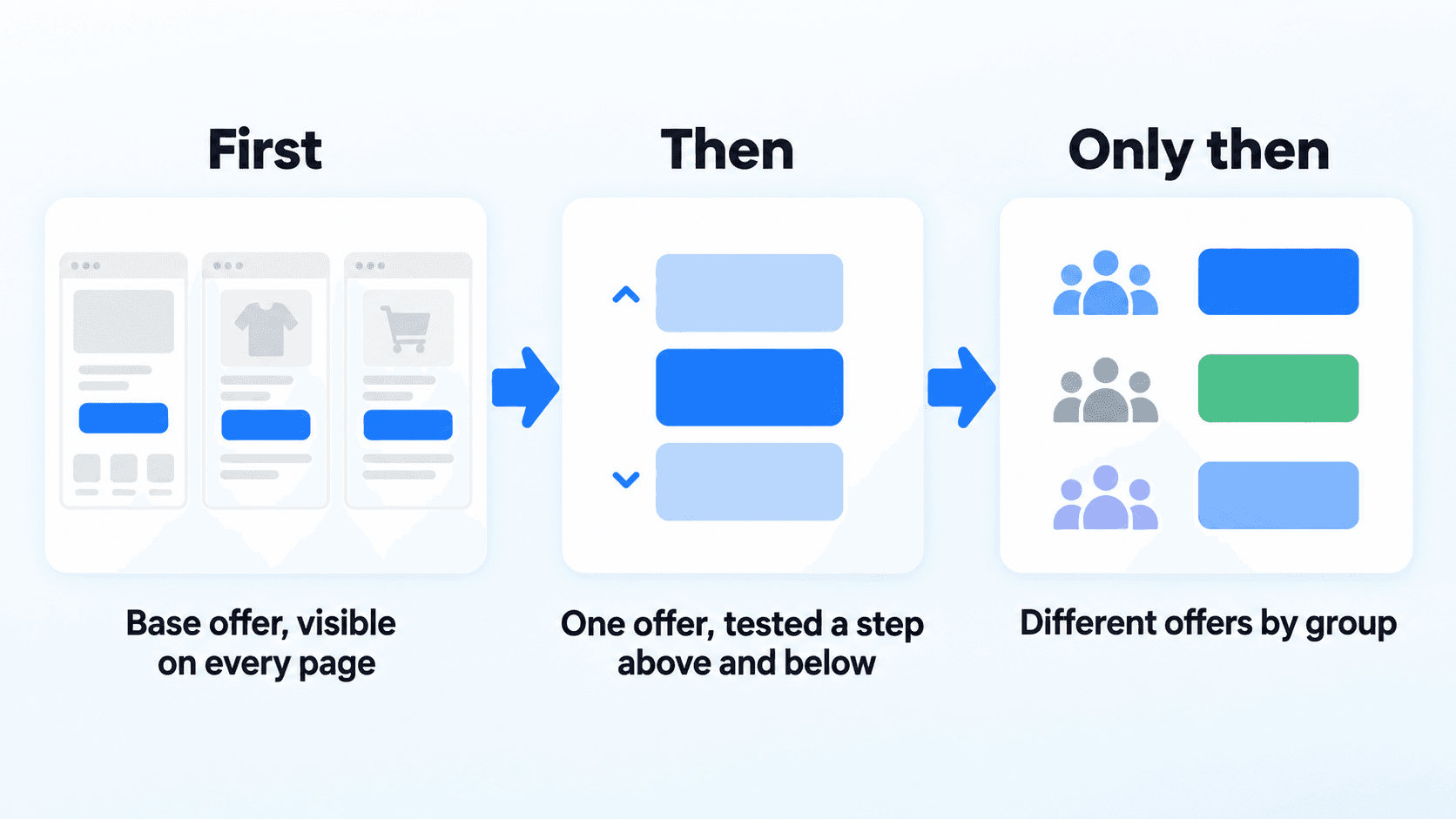
Where an offer shows on your site is part of the offer, so the work starts with a base offer your shoppers can see. The order has three steps.
Every shopper gets a base offer, visible where they decide: your homepage, product pages, badges and cart.
One offer for everyone is tested a little above and below your first instinct.
Offers differ by group only after that.
When a shopper clicks through your sale email to a product page that never mentions the offer, your store is still at step one.
Separate offers need groups big enough to judge
A group earns its own offer only when it is specific enough to matter and broad enough that you can judge its profit per visitor.
A sale lifts conversion for nearly every version, so conversion rate is the tempting number. Profit per visitor shows whether a group’s offer paid for the margin it gave away or only added orders.
Black Friday is a high-stakes day for new offers
You learn which offer each of your groups responds to while the stakes are lower. In one Intelligems co-founder’s practice, a new group’s offer is rehearsed on an earlier sale, because a mistake costs less there than on Black Friday itself. Presenting an offer you already run is a different case: it stays testable during the event.
Rehearse one group’s offer before Black Friday
Your decision comes down to three moves.
Decide which arrivals differ in what they know about your sale.
If one group differs enough to earn its own offer, make that offer the version you test against your base offer, visible where the group lands.
Rehearse it on an earlier sale and read profit per visitor by group.
Strong brands settle who gets which offer before Black Friday, not on it. Intelligems can show one traffic source its own offer, though its source matching may miss some visits. It can also help you design that test on an earlier sale and read the result.
Ecommerce Strategy
Campaigns
Content Testing


