
Ecommerce Strategy
Does every Black Friday ad need its own landing page?
Not every ad needs its own page.

Not necessarily: a Black Friday ad needs a page that keeps its promise, and ads that promise the same offer for the same reason can share one. One page that swaps in each ad’s offer by its link saves building pages, but it keeps each promise only if the links shoppers click still carry that ad’s tag.
Pointing every ad at your sale page is the easy default; the catch is the ads whose promise that page never shows.
A broken promise can make a good ad look bad
Your Black Friday ads are set: one promises free shipping, one a gift with purchase, one the sitewide sale. Every click lands on one sale page. Each shopper expects their ad’s offer from the first screen to the cart.
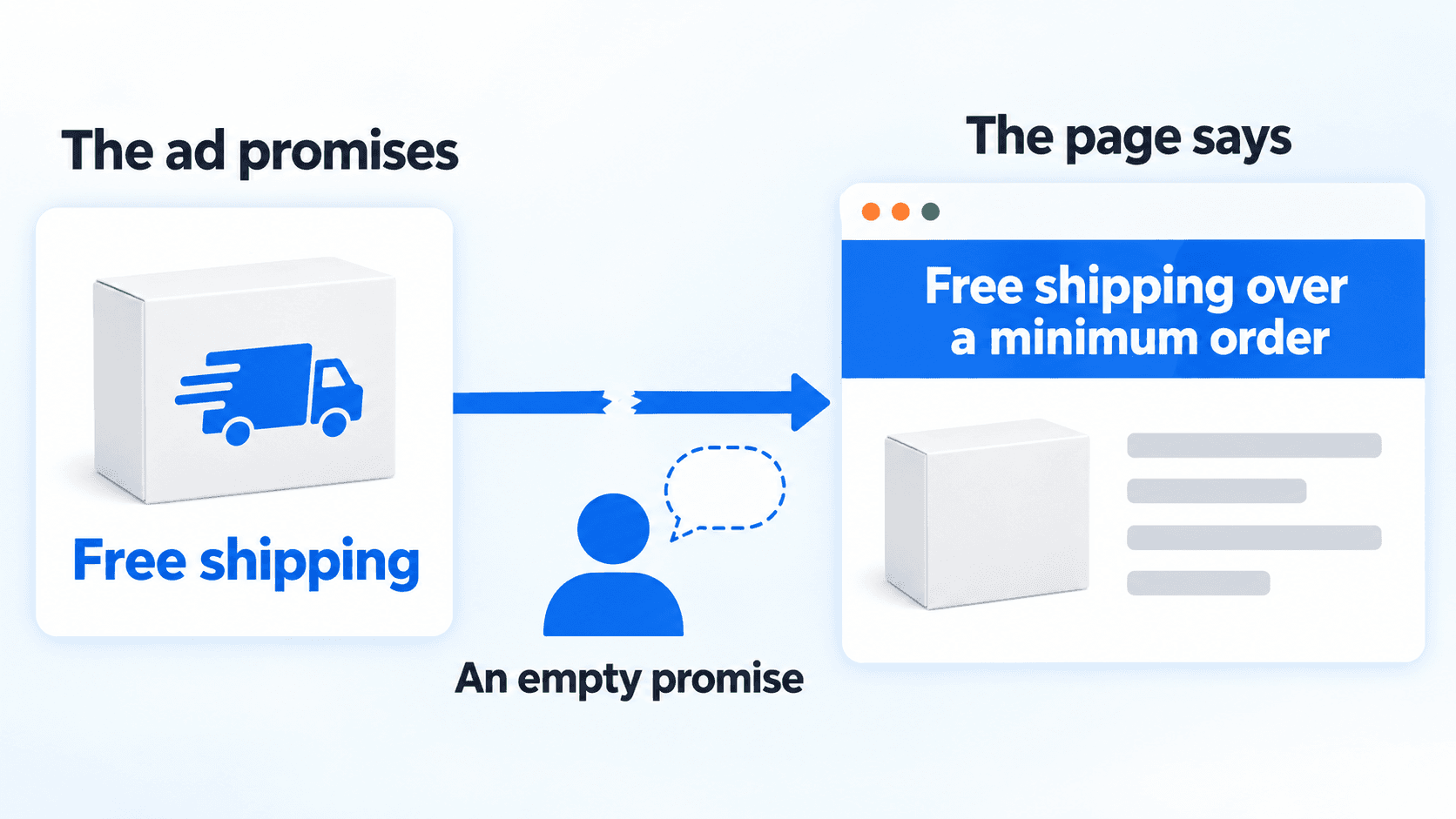
Say your free-shipping ad opens a page offering free shipping only above a minimum order. Your shopper reads that minimum as an empty promise. Your results then blame the ad, so your landing page can decide what they say about each ad.
Each landing choice trades fit against upkeep
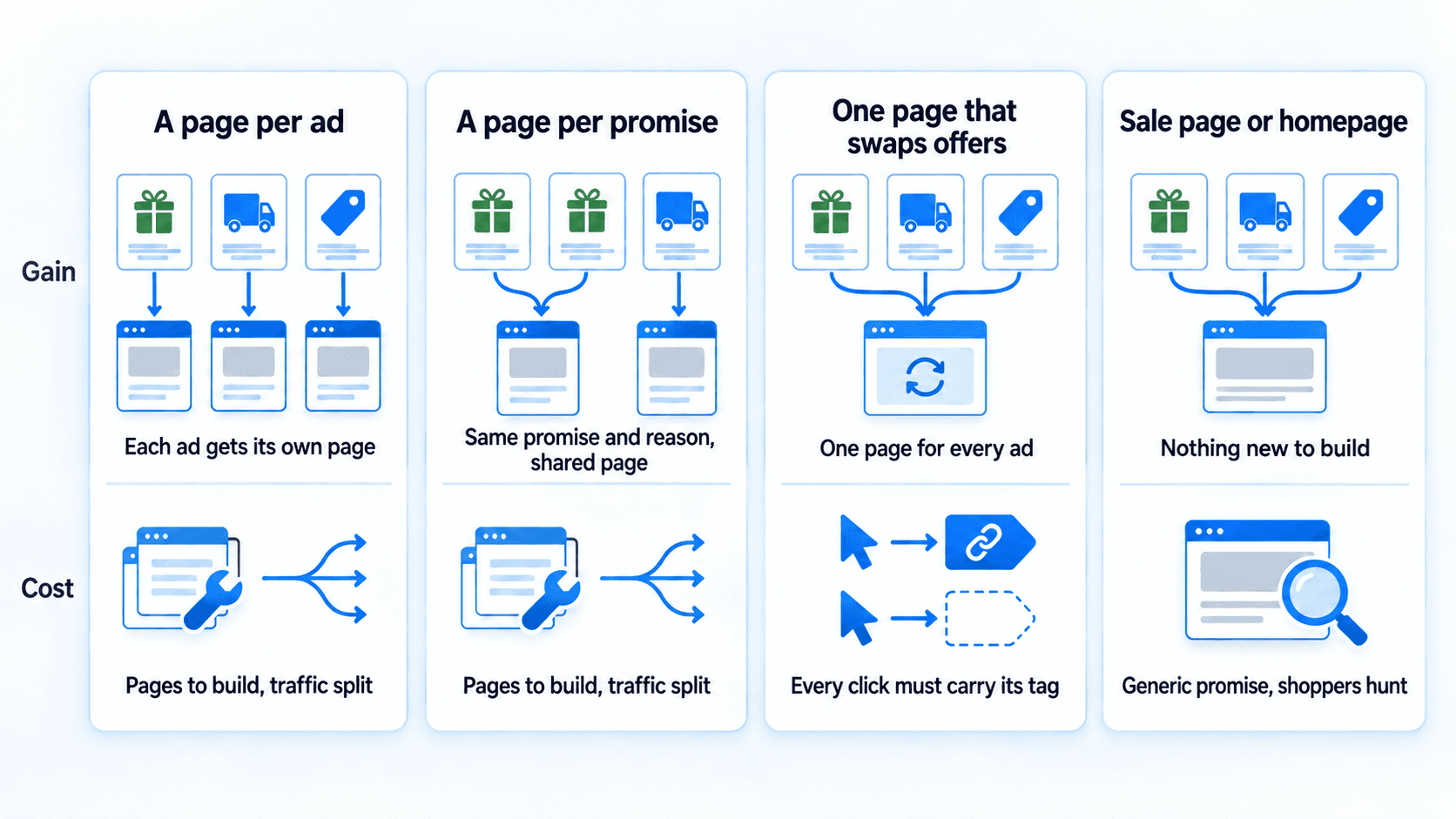
Your choices are a page per ad, a page per promise, one page that swaps offers, or your sale page. Each has a cost, and the question is which cost you can carry through the sale.
A page per ad fits each promise, but every page needs building and upkeep, and they split your traffic.
A page per promise covers ads with the same offer and reason, but it also needs building and upkeep, and splits your traffic.
One page that swaps offers needs no page per ad, but each promise holds only while every click carries its ad’s tag.
Your sale page or homepage needs nothing new, but the promise goes generic and shoppers hunt for the deal.
An Intelligems co-founder and the company’s podcast host weigh whether every ad needs its own landing page and how buyers’ reasons change the answer; the discussion starts at 3:45.
A different offer or reason earns a test
Your Black Friday product ad can bring one shopper buying for themselves and another buying it as a gift. Your page has to make a different case to each.
Signs an ad’s own page is worth testing:
Your ad promises an offer your shared page does not show from the first screen.
Your ad speaks to a different reason for buying, such as a gift.
Signs for caution:
Your ad makes the same promise, for the same reason, as ads a page already serves.
The page would get too thin a slice of your traffic to read.
Your team cannot build and keep that page up through the sale.
Profit per visitor shows whether a page pays
Ad clicks cannot show whether a page pays, because they say nothing about money and count bots and repeat impressions. Profit per visitor can, if the pages you compare serve the same ad’s shoppers, since your ads can reach different shoppers.
Each tailored page takes work to build and keep up. As one of Intelligems’ co-founders explains on its podcast, the first test splits one ad’s shoppers between a tailored page and the shared page; other ads may follow if it wins. That test reads cleanly on normal traffic before the sale, because sale messaging adds noise.
A page that swaps offers can fail quietly
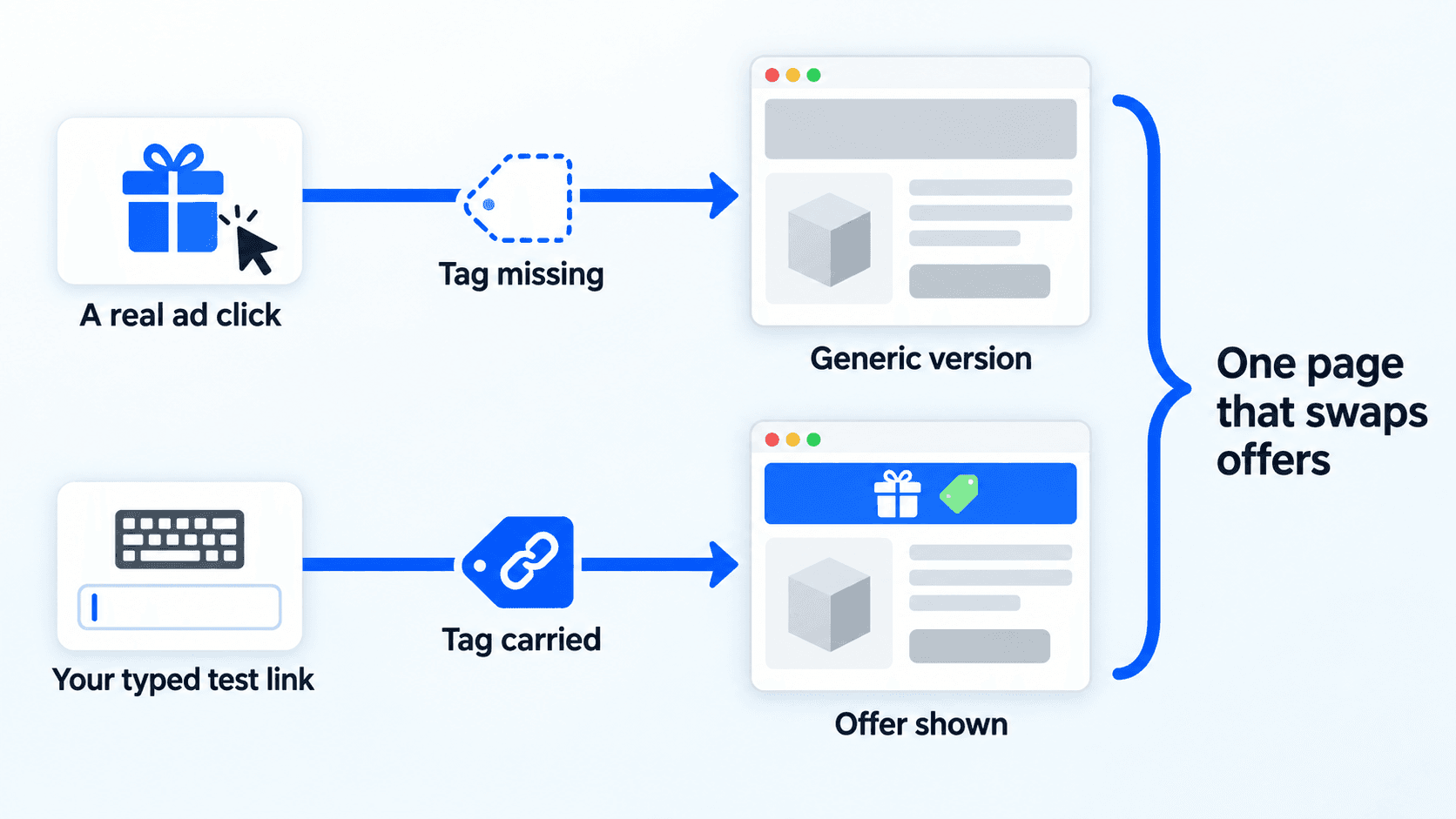
The promise can break with nothing on the page looking wrong, while a link you type yourself still shows the offer.
In a support case one day in August 2026, very few of one store’s ad visitors carried the tag its page looked for. The ad link it shared held the ad-set name instead. Your ad’s link settings can change that tag. So this page trades building pages for checking that real clicks keep their tag.
Test one tailored page before the sale
Map your ads’ promises first, then test one page on one ad’s shoppers:
List what each ad promises and why its shopper clicks.
Group ads with the same promise and reason, and note where each promise shows through to the cart.
Before spend rises, check that a real click on each ad lands on its promise, not only a link you typed.
On normal traffic before the sale, split one ad’s shoppers between a tailored page and the shared page, and read profit per visitor.
If mapping where your paid social clicks land sounds like work, Claude connected to the Intelligems MCP can pull a first read. Ask it: “Show how many paid social visitors landed on each page of my store in the last 30 days.”
What works depends on your shoppers, so strong brands test a page and judge it by the promise it keeps and the profit it earns. Intelligems can help you design that test and read the result, and show each ad’s offer on the page its click opens. Its Black Friday hub lays out other before-sale tests.
Campaigns
Ecommerce Strategy
AB Testing


