
AB Testing
What Should I Offer at Checkout to Improve Profit?
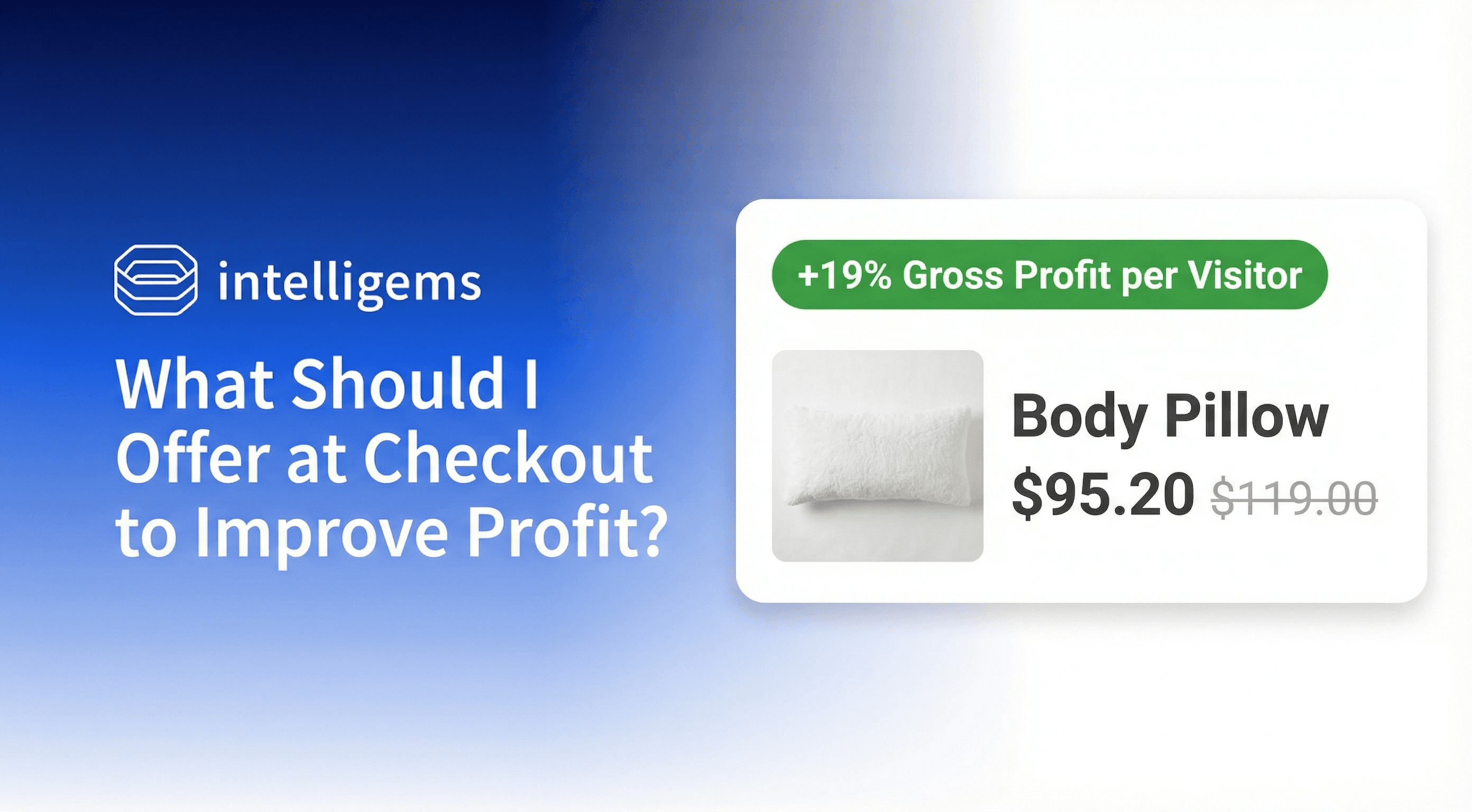
You've done the hard part. The customer found your store, browsed your products, and added something to their cart. Now they're at checkout.
You've done the hard part. The customer found your store, browsed your products, and added something to their cart. Now they're at checkout.
That moment is worth something. They're already committed enough to start the process. So the question a lot of brands ask is: what can I put in front of them right now to get more out of this visit?
The instinct is usually a free gift. A bonus item. Something to reward them for completing the order and maybe nudge a hesitant customer over the line.
But the real question isn't "what gets them to complete the order?" It's "what makes each completed order worth more to my business?"
Those are different questions. And they often point to different answers.
The Appeal of a Free Gift at Checkout
Gift with purchase has genuine psychological appeal. It doesn't feel like a discount — it feels like a bonus. You're adding something rather than reducing the price. For customers on the fence, that framing can tip the scale toward completing the purchase.
The COGS on a free item are also often low. A small accessory, a sample, a branded extra — the cost can feel manageable. So brands launch a GWP at checkout, see decent conversion numbers, and assume it's working.
But "working" is doing a lot of heavy lifting in that sentence. Working to convert, sure. Working to generate profit per visitor? That's a different calculation.
The cost of a free gift is real, even if the price is $0. Every free item ships with COGS attached.
If the GWP nudges a few extra customers to complete their order but doesn't move their cart value, you're paying for those conversions with margin. Sometimes that trade-off is worth it. Sometimes it isn't. The only way to know is to measure it correctly.
What Happened When Slumber Cloud Tested Something Different
Slumber Cloud was running a free Pillow Cover offer at checkout. It was a reasonable move — give customers a small bonus to complete their sleep-focused order.
Then they tested an alternative: replace the free Pillow Cover with a discounted Body Pillow upsell.
Here's what the data showed:
Metric | Control (Free Gift) | Variant (Discounted Upsell) |
|---|---|---|
Conversion Rate | 2.13% | 2.01% |
Average Order Value | $219.86 | $240.94 |
Gross Profit per Visitor | — | +19% uplift |
The discounted upsell had a lower conversion rate. Fewer customers completed the order.
And yet it generated 19% more gross profit per visitor with 91% probability to be the better option.
Why? Because the customers who did buy spent $21 more on average. That additional revenue, at healthy margins, more than offset the smaller number of completed orders.
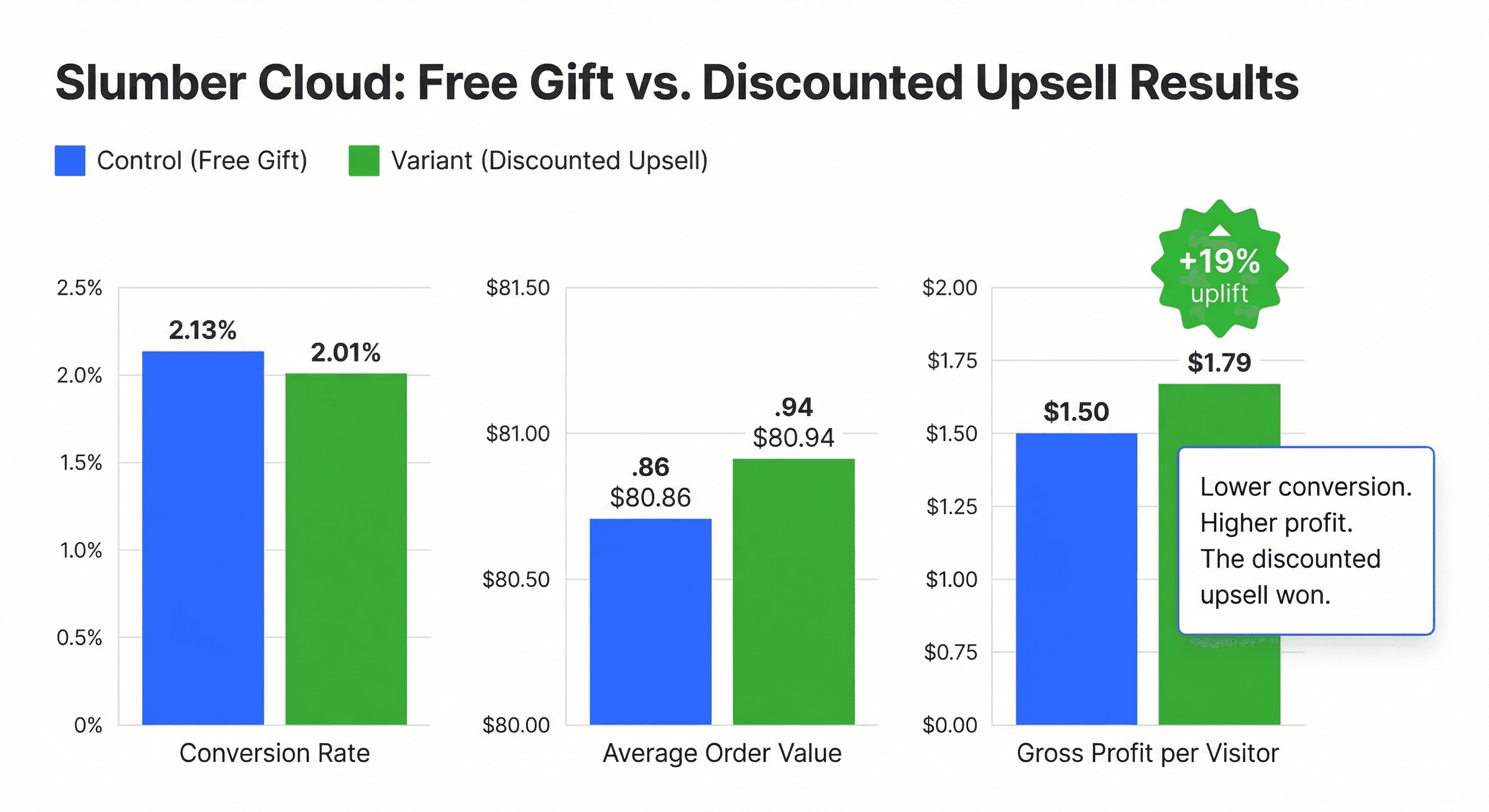
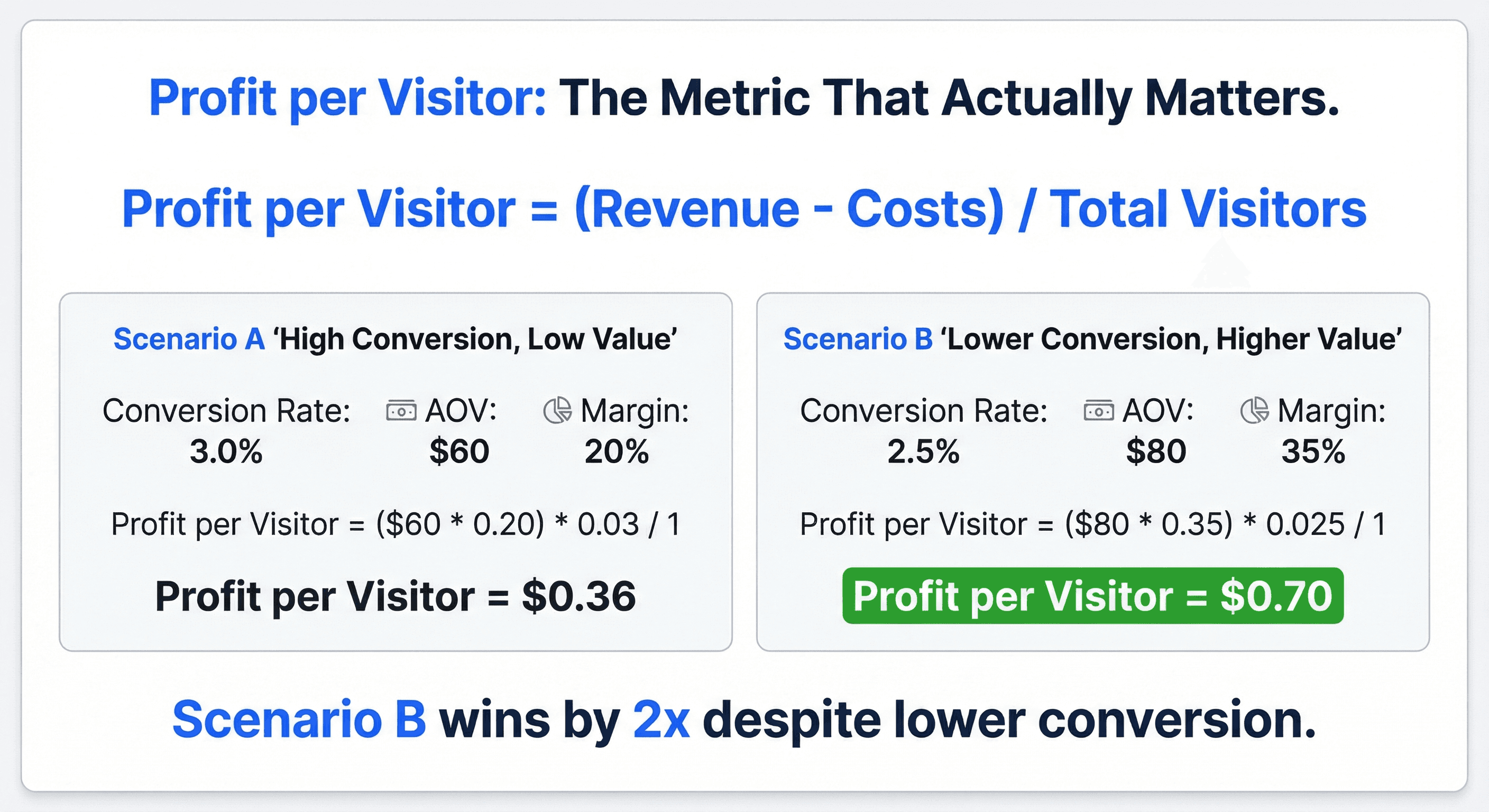
This is what profit per visitor actually measures: the full picture. Not just how many people bought, but how much profit each visitor to your checkout actually generated.
Why One Item Usually Beats Many
Once brands realize they can put something at checkout, the next instinct is often: why not offer several things? Give customers options. Let them pick what resonates. Maybe some add two items!
The problem is that checkout is a fragile moment. The customer is making a commitment. Adding choices can introduce hesitation that wasn't there before. "Do I want this? Or that? Or nothing?" is not a thought you want running through their head when they're about to click purchase.
A single, well-positioned offer is easier to evaluate and easier to act on. It's either appealing or it isn't.
Testing one item at a time also gives you clean data. If you're running three products at checkout simultaneously, you can't learn which one is driving lift — or friction. You're mixing signals in a place where clarity matters most.
So Which Item Should You Choose?
That depends on your catalog, your margins, and your customer.
A few things that typically make a strong checkout offer:
Complementary to what's already in the cart. Slumber Cloud's Body Pillow made sense next to sleep products. The customer had already decided to invest in their sleep — the upsell fit naturally into that intent.
High enough value to move AOV meaningfully. A $5 add-on won't shift your numbers the way a $40 discounted upsell might. Think about what actually changes the math.
A margin you can defend. A discounted upsell still needs to make sense at the discounted price. Factor in COGS before setting the offer price, not after.
One hypothesis at a time. Start with your best guess at a strong complementary item. Test it against your current experience. Then iterate from there.
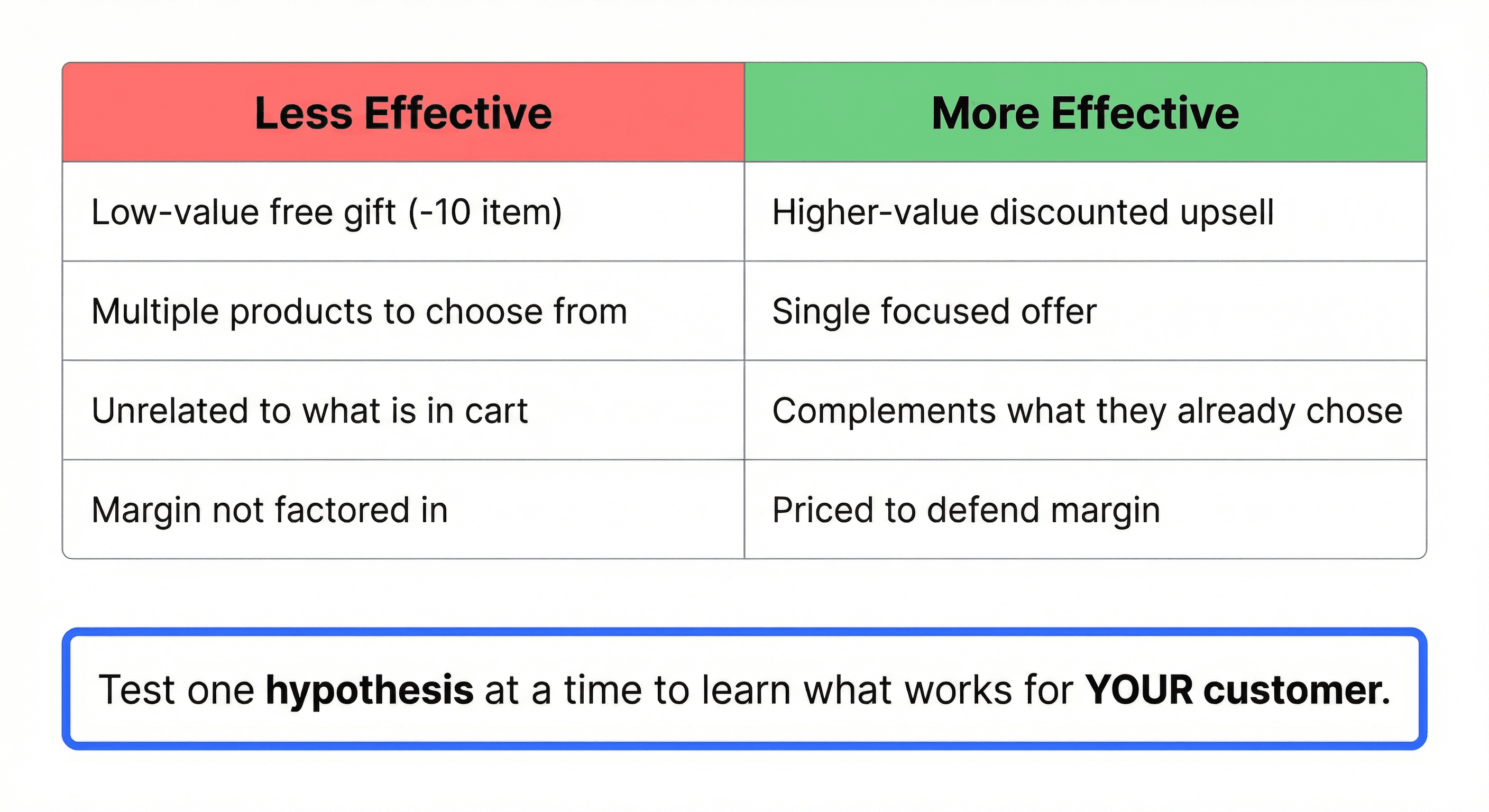
The goal isn't to find the perfect item on the first try. It's to find out, with data, which approach improves your AOV and profit per visitor for your brand.
How to Actually Test Checkout Offers
This is where brands often get stuck. They launch an offer at checkout and assume it's working based on a directional uptick in AOV. But they're not running a real test, so they're not really learning anything.
With Intelligems, you can launch checkout experiences and run proper A/B tests directly in your Shopify checkout. Show one group of customers a free gift. Show another a discounted upsell. Measure both groups on profit per visitor, not just conversion rate.
You can test:
A free gift vs. a discounted upsell (like Slumber Cloud did)
One product vs. a different product
A checkout offer vs. no checkout offer at all
Different discount levels on the same item
Pre-built components in the checkout library get you started quickly, without engineering work.
EP 036 of IntelliJAMS: "The truth about what actually converts in checkout" — worth a watch before you design your next checkout test:
The Conversion Rate Trap
There's one thing the Slumber Cloud result makes clear that's worth sitting with.
If you'd only looked at conversion rate, you'd have called the discounted upsell a failure. It converted at 2.01% vs. 2.13%. Down 6%. That looks like a step backwards.
But that framing misses what actually happened. The customers who bought spent more. The margin held up. And the overall profit generated per visitor to that checkout page was 19% higher.
Conversion rate tells you how many people bought. It doesn't tell you whether those purchases were profitable. A checkout offer that nudges an extra 1% of customers to complete a small order can look great in one dashboard and disastrous in another.
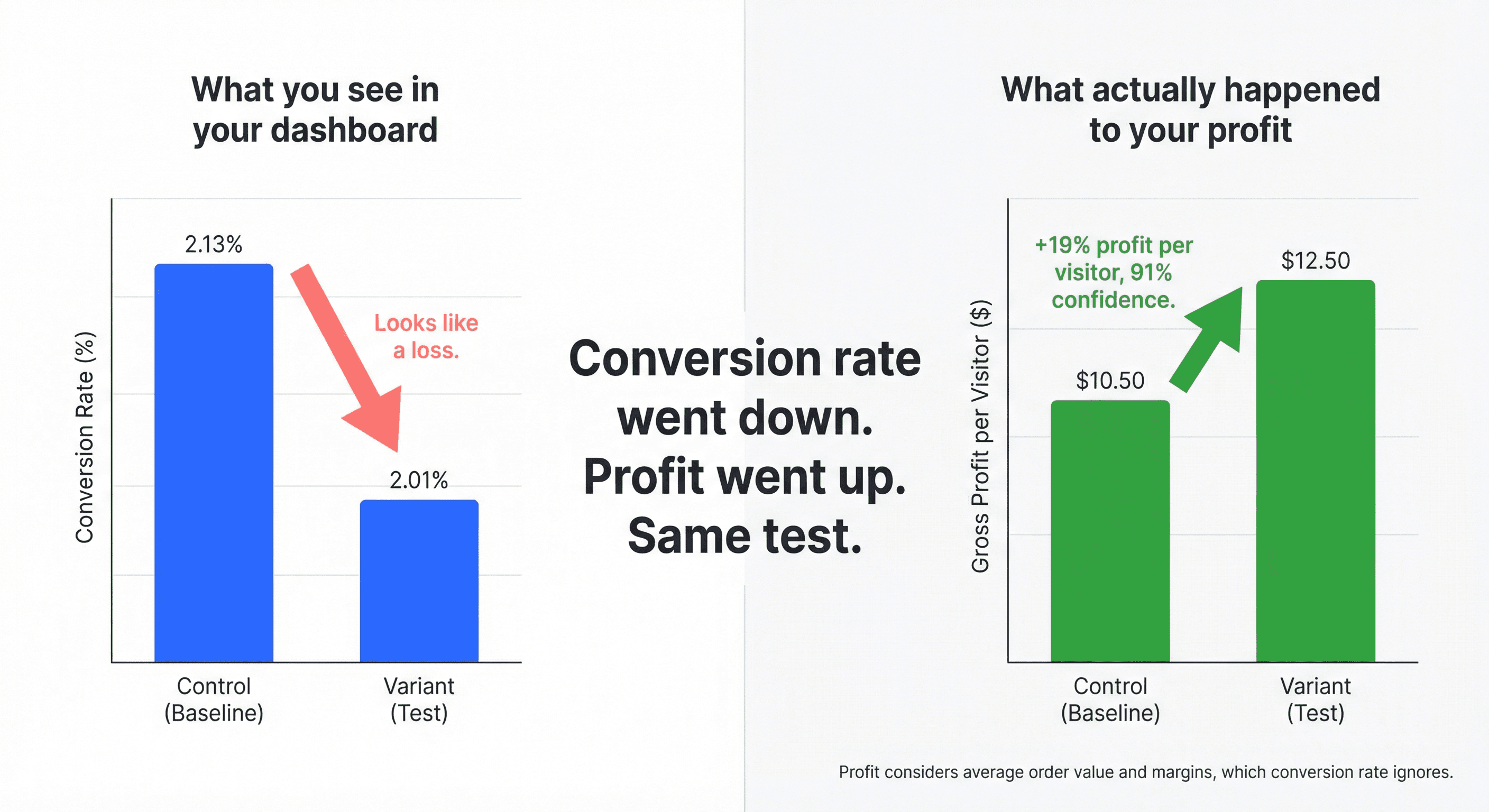
Track what you actually keep. Set up checkout testing so you're measuring profit per visitor alongside conversion rate and AOV. That's the only way to know which scenario you're actually in.
Your Data Points the Way
Before you launch anything, look at what you already know: what's already in those carts (your best checkout upsell candidate is usually something that pairs naturally with your most common cart combos), what your current checkout offer is doing to conversion vs. AOV, and what your margins look like on potential upsell items — a discounted upsell only works if the discounted price still clears your cost.
Once you've got a hypothesis, test it properly. Run a clean A/B test with profit per visitor as your primary metric. Let the data show you which version of checkout is actually building your business.
Stop Guessing. Start Knowing.
Pick a single checkout offer to test first — a free gift or a discounted upsell. Measure profit per visitor alongside conversion rate and AOV. Run it as a proper A/B test against your current checkout experience, and let the data tell you whether higher AOV offsets any dip in conversions.
Don't guess what to offer at checkout. Know.
Want to learn what actually moves profit at checkout? Join GEM Academy — free courses and a community of brands sharing what's working.
AB Testing
AB Testing
AB Testing


